
Gogic: Self-Determination will file an appeal against the decision to dissolve the assembly
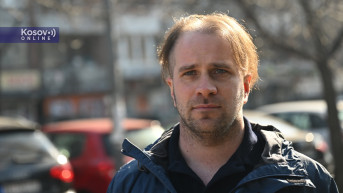
Political scientist Ognjen Gogic told Kosovo Online that he expects the Self-Determination Movement (Vetëvendosje) to file an appeal today against the decision of President Vjosa Osmani to dissolve the Assembly of Kosovo. At the same time, he believes that the entire situation surrounding the presidential election has demonstrated how little Albin Kurti respects Kosovo’s constitution and institutions.
As he explains, the act of the President of Kosovo, like any other act, may be subject to constitutional review.
“Vjosa Osmani issued a decree dissolving the Assembly and calling new parliamentary elections, and that act, like any other, can be subject to constitutional review. Therefore, it should be expected that Self-Determination will file an appeal with the Constitutional Court during the day and attempt to challenge the decision, arguing that the Assembly cannot be dissolved. Self-Determination already announced last night that it would address the Constitutional Court, claiming that MPs violated the Constitution by failing to provide a quorum for the presidential election. In other words, they wanted to act in advance and request the Constitutional Court to suspend the deadlines. They argued that MPs, by refusing to participate in the vote, effectively violated the Constitution and that the deadline for electing the president should therefore be extended,” Gogic said.
According to him, a legal battle between Vjosa Osmani and Albin Kurti should now be expected.
“On the one hand, she has taken the position that the conditions for dissolving the Assembly have been met and that new elections are necessary. Kurti, however, will likely argue the opposite — that the parliament should be given additional time to elect the president. Therefore, it is likely that the Constitutional Court will intervene and will have to issue a ruling. It is possible that it will introduce a temporary measure that would postpone the entire situation until it rules on the merits of the requests. The Constitutional Court will also have to address the request or complaint submitted by Assembly Speaker Haxhiu, who also established that the Constitution had been violated. From a legal standpoint, this issue is unlikely to be resolved quickly,” Gogic believes.
He recalls that even before this situation, a legal debate had emerged in Kosovo over whether the failure to elect a president within the constitutional deadline automatically leads to the dissolution of the Assembly.
“A legal opinion appeared suggesting that it is sufficient merely to initiate the procedure within that constitutional deadline and that MPs then have sixty days to vote on the president, after which the Assembly would be dissolved. Thus there is a conflict or contradiction between two constitutional provisions, and this will now be an opportunity for the Constitutional Court to address the issue and fill that legal gap. Once again, we find ourselves in the area of constitutional ambiguities that allow different interpretations,” Gogic explained.
According to him, none of this would have happened if there had been political agreement and political maturity among the political parties.
“The root cause of this crisis is the conflict between Prime Minister Kurti and President Osmani — namely, the fact that Prime Minister Kurti did not want to support Osmani for a second term as President of Kosovo. In other words, he did not want to support her re-election. When the debate about the presidency began, he never mentioned Vjosa Osmani, never uttered her name, nor did he say she was his candidate or that he believed she was the best choice. Individual voices within Self-Determination suggested that she might be re-elected, but that the problem was allegedly that she lacked sufficient support or votes. However, it was never specified whose votes she lacked. In reality, Osmani did not have the support of Self-Determination — it was Self-Determination that did not want to support her, not the opposition parties,” Gogic noted.
In Gogic’s assessment, Albin Kurti deliberately created an atmosphere suggesting that the problem lay with the opposition, although in reality the issue was that Self-Determination did not want Vjosa Osmani as president.
“The problem was that they did not want Osmani, but they had no alternative candidate. Kurti should have simply said that Osmani could not secure the votes and therefore he did not want to nominate her, but that, for example, Konjufca could be nominated even though he is less popular than Osmani. Instead, Kurti entangled himself in an absurd situation that ultimately led to this outcome. In other words, he turned a certainty into a liability. Had he proposed either Vjosa Osmani or someone else in time, the opposition would have participated in the process. They would not have obstructed it, because otherwise they would have been blamed for new elections and a new crisis. Instead, he placed the opposition in a humiliating situation — suddenly calling evening sessions and expecting them to provide candidates and quorum, without giving them reasonable time even to schedule such sessions,” Gogic said.
The Kosovo Online interlocutor believes that Kurti himself created this crisis and that it is hard to believe he was concerned about the opposition’s preferences regarding Osmani while simultaneously asking the opposition overnight to amend the Constitution.
According to him, precisely because Kurti did not want Vjosa Osmani and had no alternative, Osmani understood the message very clearly.
“It became evident that for Kurti, Osmani had become too strong a political figure on Kosovo’s political scene and that he no longer wanted her in his political environment. On the other hand, Osmani has political ambitions of her own. She is aware of the popularity she has gained among the Albanian public, particularly due to the support she received from the United States and from Donald Trump, and she will want to capitalize on that. Therefore, this should also be understood as her entry into the electoral race. She now has nothing to lose — she is a president whose mandate expires in a month, and she could even resign earlier if that were a condition to run. It is therefore likely that she will appear on a parliamentary list and participate in the elections, just as she did in 2021 when she became president after running on the Self-Determination list and receiving the highest number of individual votes. She will probably attempt to repeat that situation. That is why yesterday she also proposed constitutional amendments to introduce the direct election of the president, arguing that citizens should elect the president directly. In doing so, she effectively wanted to send a message that the people of Kosovo are on her side and that she could be directly elected if political parties do not want to support her in parliament,” Gogic emphasized.
He added that in the end it became clear that Kurti neither wanted to support Osmani’s re-election nor wanted new elections, because he already has a historic victory that provides him with a stable parliamentary majority, so he engaged in a series of improvisations to prevent the dissolution of the Assembly.
“At one moment the interests of Kurti and Osmani briefly aligned, because Osmani proposed constitutional amendments for the direct election of the president. However, Self-Determination supported that proposal not because it wanted to support her, but because it saw an opportunity to avoid elections and the dissolution of the Assembly. They believed that if they pushed constitutional amendments through overnight, they could prevent the dissolution of the Assembly in the event that the president was not elected. Whether such amendments would remain in force or pass the test of the Constitutional Court is a major question. The opposition MPs would certainly appeal to the Constitutional Court and challenge the amendments both substantively and procedurally. However, they were thinking only in the short term — their goal was simply to avoid the situation that occurred this morning,” Gogic said.
According to him, this demonstrates how far the political class is prepared to go — even to amend the Constitution in order to avoid political deadlock.
“The current political crisis was attempted to be resolved by changing the Constitution overnight,” Gogic emphasized.
In his view, the political class in Kosovo — particularly Albin Kurti and the Self-Determination Movement — has thereby demonstrated how little respect it has for the Constitution and Kosovo’s institutions.
“They show how lightly they treat procedures and norms, and that for them everything is subject to improvisation. They are ready to change the Constitution if it suits day-to-day politics. They do not see institutions as something that should be gradually strengthened and developed, but as something that can be manipulated. That is not surprising when it comes to Kurti,” Gogic stressed.
He also noted that the Serb List did not participate in last night’s sessions and that the entire opposition should have adopted the same position.
“This entire situation has shown how much the rule of law and democratic values are endangered in Kosovo. What can Serbs expect in terms of respect for their constitutionally guaranteed rights when even the basic provisions of the Constitution are not respected? The Serb List did not participate either in the session on constitutional amendments or in the one on electing the president, and that is the position all MPs should have taken — the entire opposition should have done what the Serb List did. Those invitations were sent at the last minute, even after the session had already started. The Constitution cannot be changed overnight, and that should have been the position of all MPs, not only the Serb List, which also wanted to demonstrate that it owes nothing to Self-Determination. By doing so, they also showed another important point — what the veto right of Serb MPs in parliament actually means,” Gogic concluded.


0 comments