
Gogic: Supreme Court ruling could overturn other Kosovo Government decisions, including the one on Ibar Bridges
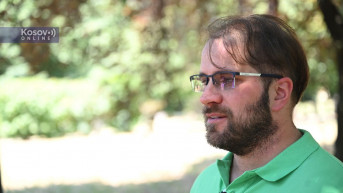
Political scientist Ognjen Gogic stated that the Supreme Court’s ruling, which establishes that a Member of Parliament cannot simultaneously serve as a minister, could have legal consequences that include the annulment of several recent government decisions. Speaking to Kosovo Online, he said that among those decisions could be ones directly affecting the Serbian community, such as revoking citizenship and the construction of new bridges over the Ibar River.
Gogic believes the Supreme Court’s ruling primarily revealed that the main opposition to Self-Determination is not other parties, but the judiciary.
“The judiciary has stepped in to resolve this political crisis. On one hand, there’s the Constitutional Court, which may finally bring an end to the current deadlock around forming the Assembly. Then we have the Specialist Prosecutor’s Office, which has raised questions regarding the construction of the Ibar bridges. And there is also the Supreme Court, which has questioned the legality of by-laws passed by acting ministers,” Gogic emphasized.
He explained that the biggest issue is that Kosovo’s Government is currently operating as a caretaker government.
“As such, it is limited in terms of what it can regulate. But even more problematic is the fact that some ministers are simultaneously members of parliament. This means they belong to both the executive and legislative branches, a clear conflict of interest. It is very likely that the Supreme Court will invalidate a series of by-laws passed by those ministers. They will no longer have legal effect. That’s the first legal consequence,” he said.
Gogic noted that these ministers in a technical mandate, who are also MPs, have recently made numerous decisions directly affecting the Serbian community.
“Everything those ministers decided while holding incompatible offices must be reverted to its prior state. This could apply to a wide range of decisions. For example, Minister Svecla issued decisions revoking the citizenship of certain individuals. That decision is already legally questionable and will very likely be overturned by the courts, but it also raises the question of whether he was even legally authorized to make such a decision in the first place. This could create legal confusion in Kosovo’s system about which decisions remain valid and which are nullified. Their consequences would also need to be reversed, if any exist. This could even lead to halting the construction of the Ibar bridges, which was initiated as a project by a ministry operating under a technical mandate,” Gogic explained.
He added that this situation has created a conflict between the executive and judicial branches.
“Harsh accusations and strong words have been directed at the judiciary by those in power, which has drawn disapproval and reaction from the international community as well, because it undermines the rule of law. All of this is creating a tense atmosphere in Kosovo, tensions among Albanians, between political parties, between the executive and judicial branches, and ultimately between the Kosovo government and the international community,” he said.
He believes the legal standoff will most likely end in favor of the judiciary.
“It is likely that judicial institutions will play the key role in resolving this situation, leading Kosovo to new elections, and nullifying a whole series of controversial decisions made by ministers during this period,” Gogic concluded.



0 comments