
Gogic: Surprising statements by Osmani, appeasing Trump – distancing from Kurti
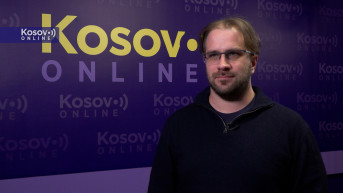
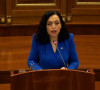
Political scientist Ognjen Gogic assessed that Vjosa Osmani's recent statements should be interpreted as an attempt to appease the incoming US administration of Donald Trump, as well as her effort to distance herself from the policies of Prime Minister Albin Kurti.
“Osmani has consistently tried to present herself as someone who differs from Kurti in international relations and occasionally distances herself from him, particularly regarding the unilateral actions taken by Kosovo's government that have strained relations with the US. Considering the fact that Trump is returning to the White House, Osmani has even more reason to portray herself as being more pro-American than Kurti,” Gogic said for Kosovo Online.
He adds that the reasoning lies in the belief that during Trump’s first term, his administration orchestrated the downfall of Kurti’s first government due to its intolerance of his "disobedience and unilateral actions."
“So, yes, Osmani is appealing to the new administration with these statements and trying to position herself as a more constructive partner from Kosovo compared to Kurti’s government,” Gogic emphasized.
Commenting on Osmani’s claims that the US should act as the mediator in the dialogue between Belgrade and Pristina and that “the signature of the US president carries far more weight than the signature of the president of Serbia,” Gogic described these views as surprising.
“These statements by Vjosa Osmani are somewhat surprising given the fact that Trump is returning to the US presidency. Her appeals and calls would have made more sense if they had been directed at Biden, who was believed to be more favorable toward Pristina and Kosovo Albanians. So, in that sense, Osmani’s approach seems delayed,” Gogic stated.
He also notes that it is unclear what Osmani specifically means when she speaks about the importance of the US president’s signature.
“It is not clear what exactly the US is supposed to endorse. Presumably, she wants the US to guarantee that Kosovo will gain membership in international organizations, particularly NATO. In her statements, she seems to offer a kind of bargain to the Americans: that Kosovo will fulfill some of its obligations, primarily the formation of the Community of Serb Municipalities, in exchange for US guarantees that Kosovo will be rewarded by becoming part of NATO,” Gogic pointed out.
However, he believes this is another case of a delayed appeal.
Recalling a previous statement by US Ambassador to Pristina Jeffrey Hovenier, who warned Kosovo’s authorities that they were "testing the patience" of the US and that there was diminishing motivation to promote Kosovo in international relations, Gogic says that it is unlikely the new administration would adopt the same approach as that under Joe Biden.
“On the other hand, it is important to note that NATO membership for Kosovo is not decided solely by the US, but also by other member states. If the Americans could have pressured the non-recognizing NATO members – Spain, Romania, Slovakia, and Greece – to recognize Kosovo and accept its membership, they would have done so during Biden’s presidency,” Gogic concluded.


0 comments