
Gogic: The vote in the Committee of the Parliamentary Assembly of the Council of Europe sends a message that precedents are being set again because of Kosovo
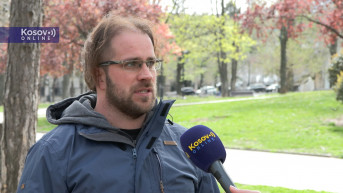
Political scientist Ognjen Gogic believes that Kosovo still faces a long road to membership in the Council of Europe after the positive vote in the Committee of the Parliamentary Assembly, indicating that precedents are continually being set because of Kosovo. Gogic also notes that countries pushing for Kosovo's membership in the Council of Europe will exert pressure on Serbia to accept that membership, providing a response to both those members who do not consider Kosovo a state and those who have recognized Kosovo's independence but are not in favor of its membership in the CoE.
Gogic tells Kosovo Online that the voting in the Committee demonstrates that Kosovo still has strong allies in the international community, especially in Germany and the USA, but the focus is primarily on European countries keen on pushing Kosovo into the Council of Europe outside established procedures.
"This situation demonstrates that precedents are being set because of Kosovo, and decisions are being made for Kosovo that are incomparable to other situations," Gogic emphasizes.
He recalls that a report by eminent legal experts was published in the Council of Europe at the end of last year, highlighting deficiencies Kosovo has in meeting the criteria for membership in the Council of Europe.
As he adds, the report clearly points out that there are issues with the rule of law and respect for human rights in Kosovo, which prevent Kosovo from becoming a member of the Council of Europe until this situation improves.
"The Council of Europe is abandoning its own membership criteria, as well as the criteria established for Kosovo in general. This has never happened in the history of the organization, where the Council of Europe itself disregards its legal heritage and practice to make room for Kosovo. This is controversial and will damage the reputation of the Council of Europe itself because it undermines its existence as an organization that should promote human rights on European soil and beyond," he states. Gogic belives that Kosovo's path will be longer than anticipated because, as he points out, after this decision of the Committee, there will be a discussion in the Parliamentary Assembly of the Council of Europe that cannot be entirely orchestrated and controlled.
He indicates that various delegates from different countries will participate in this debate, highlighting that Kosovo's acceptance is occurring outside all rules and procedures. Consequently, it will be very difficult for the proposers of this measure to defend their positions before the members and the European public.
He mentions that following the Parliamentary Assembly of the Council of Europe, there might be a vote in the Committee of Ministers, which he deems controversial and will cause internal complications due to the presence of Council of Europe member states that do not recognize Kosovo's independence, and those that do but are not willing to agree to Kosovo's membership at this time.
"This will create a certain division within the Council of Europe, which nobody needs, and I dare say that Kosovo is not worth causing conflict among European states, especially when it sets a precedent that could be used later for the separatist parts of Ukraine or Caucasian countries that also have unresolved territorial issues. This is unnecessary, especially because this decision is unreasonable," Gogic says.
What concerns him the most, as he notes, is that the states pushing for Kosovo's membership in the Council of Europe will continue to do so, but will also pressure Serbia to accept it along the way.
"It's the same as with the Brussels-Ohrid Agreement, as with other agreements - there's always this problem of Kosovo making decisions unilaterally. Kosovo's independence is a unilateral act of secession and it does pose a problem in international relations. Now, Kosovo is being pushed into the Council of Europe without consensus among the members regarding Kosovo's status as a state, or whether Kosovo should be in the Council of Europe. The easiest way to resolve the problem that will arise within Europe is to force Serbia to accept Kosovo's independence and membership in the Council of Europe because then it would address potential objections from other states. Paradoxically, this could lead to greater pressure on Serbia to accept Kosovo's membership in the Council of Europe so that other states do not raise objections, and Serbia will again be in a position where it faces the greatest pressure“, he notes.
Commenting on statements from certain international officials, including European Commission President Viola von Cramon, that the Kosovo-Serbia dialogue was not linked to Kosovo's membership in the Council of Europe, Gogic emphasizes that this is truly incomprehensible.
He points out that the fundamental principle in international relations is to respect the commitments made.
"The international order is based on the principle that all members of the international community assume obligations and then adhere to those obligations, implementing them. Without this, the world would be in free fall; that's firstly a worrying message sent that one is welcome in the community of European states while being able to violate the principle of respecting undertaken obligations. That's the first thing," Gogic says.
As the second important fact demonstrating the incomprehensibility of these statements and positions, Gogic emphasizes that these agreements being discussed are not just obligations arising from dialogue but are a part of Kosovo's internal legal framework.
"Kosovo has incorporated these matters into its legal framework because, for example, the CSM is not just a matter of agreements. The Constitutional Court of Kosovo has confirmed that the Community of Serb-majority Municipalities is a mandatory part of Kosovo's legal framework that must be formed because it is provided for by a law that has been ratified as an international agreement and has precedence even over the Constitution of Kosovo. Here, it's not just about respecting obligations arising from the dialogue, which should be done, but also about respecting obligations arising from its Constitution and legislation," Gogic states.
According to him, now the message being sent is that Kosovo doesn't have to respect the rule of law at all, and doesn't have to respect its own Constitution and the rulings of the Constitutional Court.
"In this situation, it's truly unimaginable for someone to expect Kosovo to be a constructive part of the dialogue, to assume obligations and implement them, while at the same time sending the message that Kosovo can ultimately disregard even the rulings of its own Constitutional Court," Gogic concludes.


0 comments