
Who determines the conditions for whom - the Council of Europe to Pristina, or vice versa?
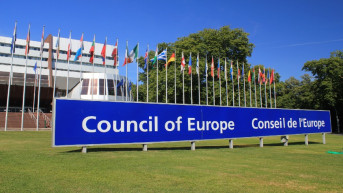
"Why haven't the Kosovo authorities fulfilled numerous obligations from the list so far, for which they are now sending comical promises to Strasbourg that they will faithfully adhere to it? But, with the note that CoE members, through connections, accept them into membership beforehand."
Edited by: Milos Garic
"What happened to the former Europe? Rule of law, human and civil rights, democratic values, respect for their own rules and procedures, basic decency, none of it matters anymore. It's not good, and it will get worse, as things stand.
When the absence of principles, trampling norms, and double standards become a common pattern of behavior in the international arena after some time, such a distorted reality takes on many bizarre forms. One of them is the current situation in the Council of Europe, which is currently being toyed with by people like Albin Kurti, Vjosa Osmani, Donika Gervalla, and their associates and helpers.
A few days ago, the Kosovo leadership informed the Council of Europe rapporteur Dora Bakoyannis by letter that they were ready for membership in this renowned forum, dedicated precisely to respecting legal and democratic principles, with a promise to faithfully adhere to the list of unfulfilled obligations "as soon as they are admitted." That list includes judicial independence, legislation in accordance with the Ahtisaari plan, easing tensions in the north, taking urgent measures for the reintegration of Serbs into the police forces, refraining from using special police forces for regular activities, protection of minorities, implementation of the Community of Serb-majority Municipalities, allocation of resources for language use, and ultimately even work on reconciliation between the Serbs and Albanians.
Promises as a cover
How "serious" they are in Pristina was reported to the Council of Europe services by Minister Gervalla ten days ago, with the information that they had accepted to implement the decision of their Constitutional Court to return 24 hectares to the Visoki Decani Monastery. After eight years, and that was an act of extreme sacrifice for membership in the CoE.
For the rest, one will have to take the word of the Kosovo authorities. If Kosovo becomes a member of the Council of Europe, they say, they will implement what they should have done long ago, both according to their own laws and according to the letter of the Brussels Agreement from 2013. Now, anyone who is not sufficiently familiar with the real situation in Kosovo will naturally ask, why haven't they done all of the above, or at least most of it, so far? Who has been stopping them?
Answering that question requires serious mental effort, and it was raised yesterday by Ramush Haradinaj, who, however, had the opportunity to achieve much of what is on the attached list during his own mandate in the government.
However, the explanation has already been offered by the Self-Determination MP Mimoza Kusari-Lila, who, in order to calm the domestic public, said that the letter was a "formality," obviously indicating that the promise, of course, will not be fulfilled, nor are officials in Pristina even thinking about it. Just to be clear.
In the Council of Europe, however, according to the latest news, they are preparing a seat for a representative of Kosovo. They want to believe in Albin Kurti's promises. Much more than he himself believes when he writes eloquent letters.
So who who determines the conditions for whom? The Council of Europe for Pristina, or Kurti for the CoE ministers?
Political analyst Ognjen Gogic told Kontekst that the promises made by Pristina officials in exchange for Kosovo's membership in the Council of Europe, once it was obtained, were made with the intention of never being fulfilled.
"The promises serve as a short-term cover for promoters of Kosovo's membership in the Council of Europe, for the uncomfortable questions they will inevitably face. When someone asks them how Kosovo can be admitted to the Council of Europe, even though it has not previously met the membership requirements, the answer will be that the Pristina authorities promised to do so. For those concerned that this is the initiation of a new European policy of conditioning, where it is no longer necessary to meet the conditions but only to promise that they will be met, the 'good news' will be that this approach will be applied only to Kosovo," Gogic points out.
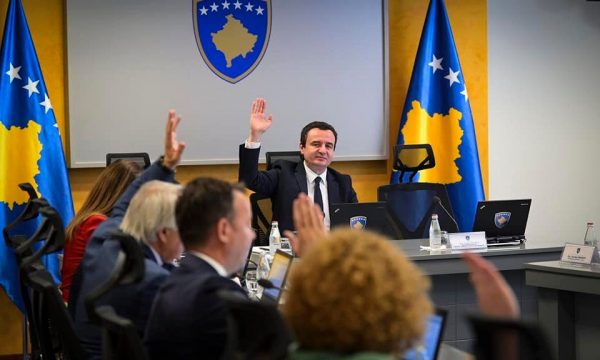
In order to answer the question of whether such promises can be trusted, it is first necessary to consider what prevents the authorities in Pristina from fulfilling those conditions even before being admitted to the membership of the Council of Europe.
"There is no adequate answer to this question. There is no other reason why Pristina refuses to respect obligations that ultimately stem from the Kosovo legal framework, except for lacking political will. In fact, it is a policy of reverse conditioning. Pristina is now setting a condition for the Council of Europe, that it will deign to respect its own legal norms if Kosovo is first admitted to membership," Gogic points out.
All the conditions that the Council of Europe initially set for Kosovo's membership in the Council of Europe, and then abandoned, relate to the rule of law and respect for the Kosovo Constitution and legislation.
"It's not about any demanding technical and logistical actions for which Kosovo might need the support that membership in the Council of Europe would bring. It's simply about the lack of political will to enforce its own legislation and respect the decisions of the Constitutional Court," the Kontekst interlocutor explains.
He adds that the promises of Pristina officials are not a new negotiating tactic.
"A similar trick was pulled by Kurti in early 2023 during negotiations over the Franco-German proposal. At that time, the original idea of the EU and US mediators was to first establish the CSM, as the remaining obligation from previous negotiation cycles, before entering into a new agreement. Since Kurti persistently refused to accept this, he was suggested to publicly state that the CSM would be formed to make it easier for the mediators to pressure Serbia to accept the agreement. After the agreement and annex were concluded in Brussels and Ohrid during February and March, Kurti returned to his old rhetoric against the CSM," Gogic reminds.
Gogic emphasized that no one can seriously take the promises made by Kurti and Osmani.
"No one in Europe is so naive as to stumble over the same stone for who knows how many times. It's about the fact that the Quint states consciously tolerate Pristina's refusal to fulfill the obligation it undertook 11 years ago. The formation of the CSM was agreed upon in the Brussels Agreement of 2013 as a concession to the Serbian side after Belgrade agreed to integrate four northern municipalities into the Kosovo system. The CSM was 'sold' again in 2015 in exchange for several agreements, including the one on telecommunications. The CSM was offered for the third time to persuade Belgrade to accept the Agreement on the Path to Normalization of Relations in early 2023. In the end, the promise that the CSM will be formed will serve as Kosovo's ticket to the Council of Europe," Ognjen Gogic emphasizes.
What are agreements for?
Pristina, he says, has shown no willingness whatsoever to work on the formation of the CSM.
"The draft statute of the CSM prepared by the EU remains in a drawer. The return of Serbs to municipal institutions in northern Kosovo is intentionally made difficult and prolonged, thereby further delaying the potential formation of the CSM. Rhetorical refusal to form the CSM is accompanied by concrete actions aimed at obstructing this process. Unlike last year, even the rhetoric of Pristina officials regarding the CSM is not softened now. It is completely unbelievable that anyone in Europe can find any indication that Pristina is willing to make a Copernican turn in its policy towards the CSM so that it can be taken at its word," Gogic concludes.
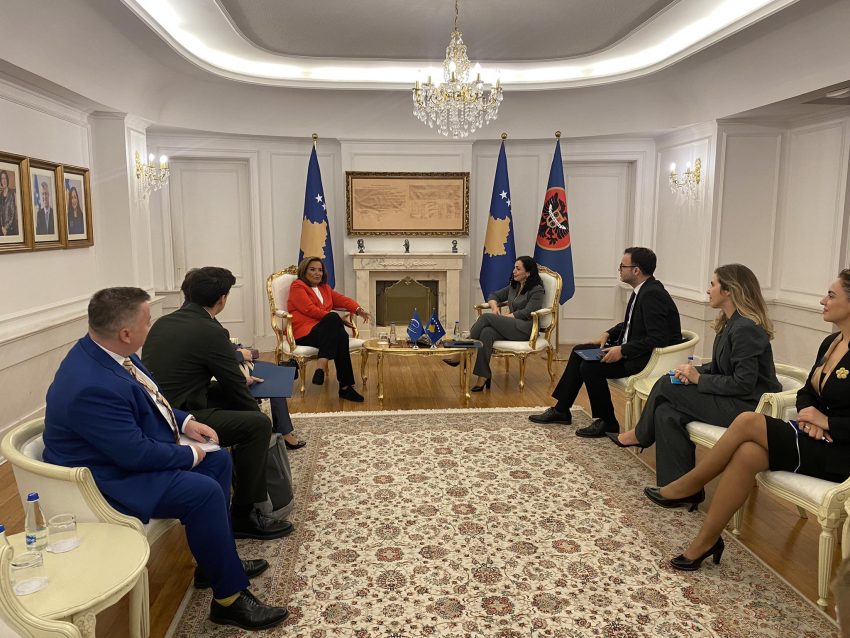
If Kosovo is admitted to the membership of the Council of Europe in May, Gogic warns, there will be no mechanism to compel Pristina to fulfill what it has promised. Moreover, Pristina will be disincentivized to show any willingness to compromise in resolving contentious issues because, in this way, it will be conveyed that it will be relieved of respecting any obligation and agreement only if it persistently avoids what it promised.
Zeljko Sain, a journalist from Skopje and a seasoned connoisseur of political developments in the Balkans, points out the double standards of Western politicians.
"More questions can be raised about how long Kyiv, Sarajevo, and Pristina will serve their mentors, rather than whether we should trust politicians like Kurti. As soon as they are put on the table in the new era of global military, political, security, and economic interests, Kurti and the like will not have a place alongside their mentors. The globe will spin on its axis without them because peace will not embrace them, and international law will assume its rightful role. We can hope for the beginning of that already in the first quarter of next year," Sain believes.
He emphasizes the negative role of intermediaries in the case of Kosovo.
"The current role of Kurti's Western mentors, and politicians like him, is to further complicate rather than calm the situation, and this will continue until talks begin based on the principles of balancing the interests of the two largest military powers in the world, the United States and the Russian Federation, where hegemonic interests will be marginalized. Then there will no longer be people like Kurti, Zelenskyy, or Schmidt on any political scene. 'The key concept of Europe after 1945 was and still is the rejection of the principle of balance of power and the hegemonic ambitions of individual states, which emerged after the Peace of Westphalia in 1648. This rejection took the form of interference in vital interests and the transfer of sovereign rights of nation-states to supranational European institutions.' Although this was stated by Joschka Fischer, former German Foreign Minister in 2000, it seems that this statement excluded from memory the role Germany played precisely when he was minister during the bombing of Yugoslavia in 1999. Germany was among the first to undermine the concept of peace based on the principles outlined by Fischer. And not only after the end of World War II but even since the Berlin Congress of 1878 when the Great Powers gave Austria-Hungary a mandate to enter Bosnia and Herzegovina with its army, under the pretext of establishing peace. This authority lasted until the end of the Great War in 1918," Sain points out.
Under the pretext of establishing peace, he adds, today in the modern era of Bosnia and Herzegovina, we have the Dayton Agreement signed in 1995.
"For the normalization of relations between Belgrade and Pristina, we have the Brussels Agreement of 2013. Also, the Minsk Agreement for Ukraine was signed in 2014. The Prespa Agreement signed in 2018, the implementation of which regarding the accession of North Macedonia to the EU is being blocked by a Bulgarian veto. These listed agreements can be called false peace agreements, behind which stand the Western powers with hegemonic ambitions. In Europe, primarily France and Germany, which have signed all these agreements, but have not implemented them legally, but replaced them with military implementation through political decisions. Therefore, if we consider the role of all these agreements, we will see that they are primarily false peace agreements, each with its own executors in every country. Western mentors have taken care of their establishment," Sain concludes.


comments