
Graovac: Firmer position of Belgrade in the dialogue if the West does not force Pristina to implement its obligations
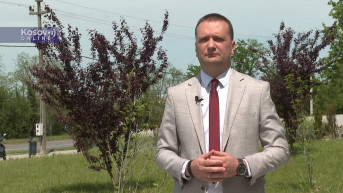
Radical changes in the policy of the new government of Serbia regarding the Kosovo issue should not be expected, however, if the West is not willing to take a firmer position towards Pristina and compel it to implement what was agreed upon within the dialogue, then it should be expected that Belgrade will take a firmer position in negotiations with Pristina and even towards Western countries, political analyst Srdjan Graovac from the Center for Social Stability says.
"What is completely clear is that the potentially firmer stance of the government will depend on the real situation on the ground and the attitudes of Western countries towards the Kosovo issue, as it is a fact that Western countries have so far had a nonchalant attitude towards the Albanians' compliance with the obligations they took on, which, to some extent, are also obligations of Western countries as they were guarantors of those agreements. We cannot tolerate this indifferent attitude of the West towards the position of Serbs in Kosovo and Metohija and Pristina's failure to fulfill its obligations indefinitely," Graovac assesses.
He emphasizes that Belgrade's strategic policy is that problems must be solved through negotiations and that conflicts and warlike solutions must be avoided.
"This does not work in our favor, and Albin Kurti's desire is to drag us into some kind of war solution. Our strategic policy is a commitment to peace, and we must not allow ourselves to be provoked because there is no doubt that at this moment Kurti is the only one who would benefit from conflict and who believes that this is an ideal moment for him to solve problems through war. The Serbian government will not fall into that trap, just as the previous one did not," Graovac says.
According to him, Albin Kurti's government will not view any government in Belgrade in a friendly manner unless that government is ready to recognize Kosovo, and the government of Milos Vucevic, he says, stands clearly on the position held by the previous government, that there is no chance that Serbia will agree to any explicit or implicit recognition of Kosovo's independence.
"This already determines the attitude of the Pristina administration towards the government in Belgrade. I would say that it is also important that when we had tragic events in Banjska, Kurti tried to use those circumstances primarily to attack President Aleksandar Vucic, whom he defined as the main culprit for everything that happened, and in fact, he wanted to discredit him in international relations. He also used that situation to attack the then Minister of Defense, who is now Prime Minister, Milos Vucevic, trying to link him to the events in Banjska and make his position more difficult. There is no doubt that for Albin Kurti, both Vucic and Vucevic are enemies because neither of them accepts his policy that leads towards excluding Serbs in Kosovo unless they are willing to comply with his aspirations to create a 'Greater Albania,' which is his key goal," Graovac believes.
As he concludes, in the coming period, a continuation of the hostile attitude of the Pristina administration towards the government in Belgrade can be expected, and even its intensification, as the nervousness in Pristina is increasing, along with the desire to confront Belgrade through war, and that, therefore, the pressure in that regard will increase.



0 comments