
Graovac: Funds from the Growth Plan are an EU instrument for renewing Belgrade-Pristina negotiations
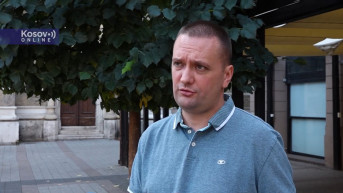
Srdjan Graovac, an associate of the Center for Social Stability, assessed that the EU will attempt to use the funds from the Growth Plan for the Western Balkans as a means of pressuring Belgrade and Pristina to resume the negotiation process and complete the Scholz-Macron plan, aiming for at least a temporary, if not permanent, solution to the Kosovo issue.
"It is obvious that the European Union will try to use these funds as an instrument of pressure on Belgrade and Pristina to renew the negotiation process, which is currently shelved, and it is unlikely to resume until the elections in Kosovo are over. But in any case, this will be a means of conditioning the continuation of the talks," Graovac stated for Kosovo Online.
According to him, the EU's goal is to stabilize the Balkans, which it sees through the previously proposed Scholz-Macron plan.
"The goal of the EU countries is to finalize the Scholz-Macron plan, which they consider key for at least a temporary, if not permanent, resolution of the Kosovo and Metohija issue. They believe this will stabilize the situation in the region. So, these funds will be used to pressure both Belgrade and Pristina," Graovac said.
He emphasizes that, at this moment, it will be a much heavier burden for Pristina than for Belgrade.
"Belgrade has fulfilled all its obligations under the Brussels Agreement, while Pristina hasn't even met its own obligations, even though it has been more than ten years since then. Everything has been stalled at the level of the Community of Serb Municipalities. Pristina will face significant difficulties in accessing or continuing to access these funds without fulfilling the obligation it accepted," Graovac assessed.
He believes that Pristina’s refusal to form the Community of Serb Municipalities could ultimately result in problems withdrawing funds from the Growth Plan.
Nevertheless, he does not expect any changes as long as Albin Kurti is in power.
"He neither has the intention nor shows any willingness to accept the Community of Serb Municipalities, nor do I believe it is in his political interest. This will be a serious problem and challenge for both Belgrade and Pristina when it comes to withdrawing these funds, but primarily for Pristina," Graovac stressed.
He believes that the Western Balkans will benefit from the Growth Plan funds not only because they are grants, but also because the second part involves the most favorable loans available at this time.
At the same time, the Growth Plan is also a clear message from the EU that it counts on the Western Balkans.
"We can understand that through this, the EU is trying to send a message to the Western Balkans that it counts on them, that they have a European future, no matter how improbable that may seem at this moment," Graovac said.
He reminds that the EU is not currently seriously considering any kind of expansion and that it is difficult to predict when that might happen.
Therefore, he emphasizes, the Growth Plan is a "small gesture" and a message to the Balkan nations that they can count on the EU.
"This is a small gesture that doesn't cost them much since these funds aren't too significant for them. But on the other hand, they are sending a message to the Balkan nations that they can count on them, that they shouldn't give up on their European future, and that the EU has no intention of leaving the Balkans to other powers, they see this region as primarily their own backyard. That is the message being sent to the Balkan nations. The Balkan nations, of course, primarily focus on the financial benefits they can gain, but they also understand this message," Graovac explained.
He adds that the EU is sincere in this regard, signaling through the Growth Plan that the Balkans are part of Europe and that they won’t abandon it. However, the key problem with the accession of new members is that the EU cannot resolve its own functioning and decision-making process.
"They cannot admit new countries to the EU until they resolve the decision-making principle, and we see how much trouble they have in making any strategic decision. When decisions are made by consensus, and there are so many countries, it only takes one country to veto a decision, making it clear that the EU cannot function in this way. This issue must first be resolved, and only then can the rest of the European integration process proceed. This is something that is awaited," Graovac concluded.



0 comments