
Graovac: The West supports all of Kurti's actions in the north, Pristina's goal is to provoke Belgrade
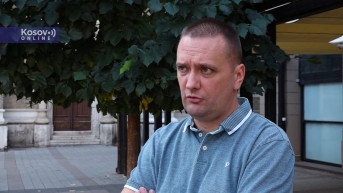
Srdjan Graovac, an associate of the Center for Social Stability, says that Western countries are supporting Pristina’s actions, including the takeover of temporary institutions in the north, despite the fact that Pristina's goal is to provoke a reaction from Serbia and drag it into a conflict with NATO. He also points out that the situation in the four municipalities will change once elections are held in which the Serbian community will participate.
Graovac emphasizes that through actions initiated on August 30, Prime Minister Albin Kurti is sending a three-tiered but clear message to the Serbs and Belgrade.
"There should be no doubt about that. The message he is sending to Belgrade is, first and foremost, that, as far as he is concerned, there is no place for Serbs in Kosovo. That is one message he is sending. The second message is that Belgrade's influence in Kosovo must be completely eliminated," Graovac said in a statement for Kosovo Online.
He highlights that the third message is the most important, as it serves, according to Graovac, as a form of terror against the Serbian population, aiming to humiliate and provoke a reaction from Serbia.
"When I say reaction, I primarily mean some armed action that would provoke a response from NATO. And that is the essence. Albin Kurti primarily wants war. He wants war with Belgrade because he believes this may be the last moment when he could win such a war. Not because he thinks Albanians could ever win a war against the Serbs, but because, at this moment, he can mobilize NATO against Serbia, and that is his priority," Graovac emphasizes.
He adds that Kosovo's Prime Minister Albin Kurti seeks to exploit the current geopolitical situation, which is why he is trying to portray Belgrade as an "extension of Russia."
"On the other hand, he is very insistent on arresting Serbs, beating them, and detaining children or young men. In this way, he also sends a message by infiltrating institutions. This violence is always aimed at sending a message to Belgrade that it must respond, that it must take some action. And to send a message to the Serbian public that Serbia is powerless. Essentially, he is trying to provoke a reaction by all means possible to bring about a war. In his view, this may be the last opportunity to deliver a strategic defeat to Serbia, because if such a war were to occur, he knows it would be a war between NATO and Serbia, not between Kosovo Albanians and Serbia," Graovac states.
On the other hand, he emphasizes that it is important to understand that the political West, which has recognized Kosovo's independence, sees Kurti's actions as legitimate.
"They believe that not just Albin Kurti, but whoever is in power in Pristina, should establish full control over the entire territory of Kosovo and Metohija. To them, it is an independent state," he clarifies.
Graovac adds that the conflict between the West and Prime Minister Albin Kurti is only about the method by which things should be implemented.
"At least part of the international community insists that this should happen through negotiations, through the Brussels dialogue, without violence, and without causing consequences for the security of the entire region or escalating any conflict. But in any case, there is no doubt that he should carry this out. And that he has the right to implement it. That is why the reactions are mild. They won't attack or severely punish him for enforcing something they believe he should be implementing," Graovac says.
He adds that Kurti, through his unilateral actions, sends a clear message to the political West that he knows "who he is accountable to."
"The ones he answers to are obviously in Washington. These are certain centers of power, whether they are in security services or other structures, it is not that important. But the fact is that they are influential, more so than the European countries, which, even if they wanted to impose something, clearly cannot," Graovac emphasizes.
He notes that although some of Kurti's actions may seem inappropriate, Kurti "knows his limits."
"He knows where his boundaries are and to whom he is accountable. And those he answers to are in Washington. Therefore, he listens carefully to their stance and opinions and will act in accordance with the messages he receives from Washington," Graovac believes.
He has no doubt that the situation in northern Kosovo will improve the moment the majority community regains control of the municipalities.
"The moment these unnatural circumstances are corrected — and by that, I mean that Albanians who don't live in northern Kosovo, who only represent a tiny percentage or a statistical anomaly in some municipalities, will no longer be the ones governing those municipalities — when the Serbs are once again in charge, when they return to the institutions, and when the electoral process is carried out, the situation will naturally change. Those institutions in northern Kosovo and Metohija are essentially Serbian. Serbs make up the dominant majority there, and naturally, when the normal, regular order is restored, where power is not based on illegal and illegitimate elections with less than 1% of the vote, those institutions will once again be what they have always been — Serbian institutions," Graovac concludes.


0 comments