
Graovac: By releasing the police officers, Kurti and the West lost their "trump card" against Belgrade; Orban is a great friend of Serbia
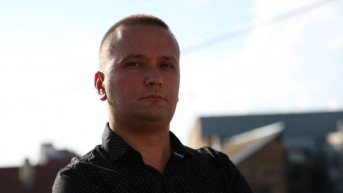
The analyst of the Center for Social Stability, Srdjan Graovac, assessed for Kosovo Online that with the decision to release three Kosovo police officers pending trial, Kosovo Prime Minister Albin Kurti was taken his "trump card" in the policy of constant accusations and shifting the blame to Serbia, but also certain western centers of power, who wanted to equalize the responsibility of Belgrade and Pristina for the events in the north of Kosovo.
Graovac particularly points to the role of Hungarian Prime Minister Viktor Orban, who, he says, as a friend of Serbia, conveyed to the President of Serbia Aleksandar Vucic the message that Belgrade had no foreign-political benefit from the arrest of three Kosovo policemen, but that this situation had served certain centers in the West to equally "redistribute" responsibility for what was happening in the north.
"Only their arrest served certain centers of power in the West to level the responsibility for everything that happens in the north of Kosovo and Metohija. We are witnessing the terror against the Serbs, who are being arrested for no reason, first of all in the north, and now we are also seeing it in the south from the Ibar, and the authorities in Pristina and some in the West used the arrest of Kosovo policemen to balance some responsibility. Essentially, in a political sense, we had no real benefits from that arrest, it had a good effect on our public, but nothing more than that; when we look at the wider story, we realize that we really did not get any political benefits from their retention," Graovac said.
He points out that Viktor Orbán is a proven friend of both Serbia and the Serbs and reminds that it was he who prevented EU sanctions against Milorad Dodik and Republika Srpska, which, he says, should not be ignored.
According to Graovac, Orban has really shown determination when it comes to defending the interests of his friends in the Balkans, and certainly, he adds, he considers President Vucic and Serbia to be friends.
"A lot has been done regarding Serbian-Hungarian relations, many mistakes from the past have been corrected. Both Orban and Vucic made it clear that they did not ignore the past, that they were aware of the past and everything that had happened, and that there was no reason to hide or cover up what happened in the past, and that should not be the reason why we could not build a common future," Gravoac says.
He believes that such a policy of the two leaders is a step forward in statesmanship, pointing out that Hungary intervened in European institutions to protect, as much as possible, the interests of the Serbs, and that it is certainly doing so now.
Orban, assesses Gravac, is still someone who warned the Serbian side at this moment that the fact was that Serbia could not have certain benefits from the arrest of three Kosovo policemen on the foreign policy level, and that, on the contrary, it could have significant damages.
"Not only do some power centers in the West draw a parallel between the brutal arrests and mistreatment of the Serbs in Kosovo and the arrests of Kosovo police officers deep in the territory of central Serbia, but many have tried to use it as some form of pressure on Serbia and the Serbs in the future. And even as an argument for punishing Serbia. When you take that into account, then it is clear that Orban, by pointing that out, made it clear that he was a friend of Serbia," Graovac states.
He adds that he does not expect that Kurti will change his narrative after the release of the Kosovo policemen, but that he will continue with accusations against Belgrade on other grounds.
"As we can see, even now he is talking about how good it is that Serbia released the policemen, but that they had to be punished for allegedly kidnapping them, even though it has been proven and the Serbian side has clearly shown that they were not kidnapped, but that they were arrested deep in the territory of central Serbia. Unfortunately, Kurti is comfortable with further escalation and he will not settle so easily unless he receives a strong reprimand from the West. If there is no such pressure, primarily from the US, he will continue to behave as he has until now, to raise tensions as high as possible. Everything is in the hands of the US," Graovac says.
He points out that by creating crises; Kurti avoids returning to the negotiating table because the Community of Serb-majority Municipalities is waiting for him there.
"He doesn't want to implement the CSM, that's why everything else is a better option for him than going that way. If there was a conflict, a war, that would be the best solution for him because nobody would even talk about the CSM anymore," Graovac concludes.


0 comments