
Grenell: Applying the agreements in the dialogue between Belgrade and Pristina; Kurti should not be rewarded
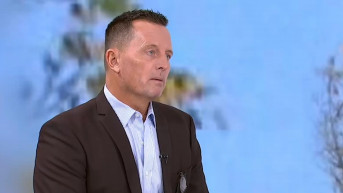
Former US Special Envoy for Dialogue Richard Grenell said that in the dialogue between Belgrade and Pristina, it was important to implement the agreements reached, with a focus on the formation of the Community of Serb-majority Municipalities, RTV reports.
Grenell said in an interview for Tanjug that Kosovo Prime Minister Albin Kurti should not be rewarded, because he refused to implement those agreements.
"The community (of Serb-majority municipalities) was negotiated several times and a long time ago. And that should be the focus. We should apply the agreements reached earlier. And the fact that Kurti rejects the agreements reached because he doesn't like them is not good for the people of Kosovo, it is not good for the Albanians, it is not good for the Serbs," Grenell said.
Grenell, when asked whether Pristina could be forced to implement the obligations from the agreement, said that he did not think that anyone could be forced to do something.
"If they don't have the political will to do it, then it simply won't be done. And it's a sad state of affairs and it's not helpful to the people of Kosovo," Grenell stated.
When asked to comment on the fact that the President of Serbia, Aleksandar Vucic, said that American representatives should revise the Brussels Agreement, which clearly stated in what way the CSM should be formed, and regarding Gabriel Escobar's statement that Pristina should give its own version of the statute, as well as recent Senate testimony and a New York Times op-ed, Grenell said it was important not to renegotiate agreements already reached, but to implement them.
He assessed that it was dangerous for Europeans or, as he stated, in this case, Americans to talk about the need to review or renegotiate what had been previously agreed upon.
"I don't believe we should reward Albin Kurti because he doesn't want to implement the previous agreements," Grenell stressed.
On the statement that the international community is making more and more concessions to Pristina, even though it is not fulfilling its obligations, and the question of whether it expects to make some concessions to Belgrade, Grenell said that concessions should not be made to anyone if the previously reached agreements were not respected.
"That's one of the things I did, to build on the previous agreements, to demand that, in order to move forward, we implement the agreements reached and look to work on economic development," Grenell said.
He assessed that Europeans and others were concentrating on mutual recognition while leaving aside the "important work" of job creation and economic development.
"Having political discussions and not giving people hope, a job, and a future will certainly not work," Grenell said.
In his opinion, dialogue needs American leadership because, as he stated, when there was no US leadership, "not much happens in the world."
In this context, he said that the US had tried to let the Europeans take control of the dialogue, but that there had been "a lot of talks and not much action" in that process.
"The Europeans criticized me a lot because I said that the Americans should have more competence, but I would ask people to look at the facts. Was more done in the dialogue between Kosovo and Serbia when the US took the lead or was more done when the Europeans were in charge? I think everybody knows the answer to that," Grenell said.
He also believes that much more was done in the dialogue while the former president of Kosovo, Hashim Thaci, led the negotiations on behalf of Pristina and assessed that it was "high time" for the special court in The Hague to release him.
"We need both sides to have partners, people who are trusted, who are looking to the future and not trying to renegotiate agreements. And we certainly don't need State Department officials from Washington, American officials to reward people who resist and don't implement the agreements reached earlier," Grenell said.
Grenell, in an interview given in Belgrade, where, at the Center for US Studies of the Faculty of Political Sciences, he held a lecture on the elections in the US in 2024 and the current state of Serbian-American relations, emphasized that he liked to come to Serbia and work with the Serbs and pointed out that the cooperation between the US and Serbia was further developing.
"When I was working for the (US) government, we were really working on some bigger issues. Now that I'm in the private sector, we're looking for investment opportunities in the Balkans and in Serbia," Grenell said.
He pointed out that he was focused, as he had been before, on job creation and economic development.
"It is important to me to see the growth of families and people of this region. And in order for families to stay in Serbia, they should give jobs to young people. We would like them to stay in this region, not to move to Germany or Hungary, but to really develop a good life here through good jobs," Grenell said.

0 comments