
Grubjesic and Surlic: The US understands that an imposed solution for Kosovo would distance Serbia from the West
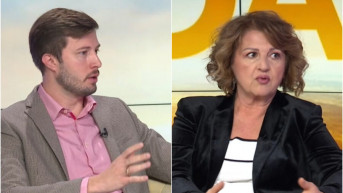
Vice President of the Center for Foreign Policy Suzana Grubjesic and assistant professor at the Faculty of Political Sciences Stefan Surlic estimated that the best scenario we could hope for at today's Belgrade-Pristina meeting in Brussels was the postponement of the Kosovo Government's decision on re-registration of vehicles. They also agreed that the US, unlike the EU, understood that an imposed solution would distance Serbia from the West, the N1 news channel reported.
They pointed out that postponing the decision would buy time to discuss more important topics within the dialogue on the normalization of the relations.
Grubjesic said that she assumed that Serbian President Aleksandar Vucic and Kosovo Prime Minister Albin Kurti would reach an agreement in Brussels today to postpone Pristina's decision on the re-registration of vehicles with the Serbian license plates for ten months.
"When the European Union cannot solve something, it postpones that problem. We will talk about it again in ten months. It is assumed that it would be postponed, to give time to the rest of the issues," said Grubjesic, emphasizing that ten months was an overly optimistic deadline for reaching an agreement on the normalization of Belgrade-Pristina relations.
Surlic agreed with the assessment that postponing the decision on re-registration was the best-case scenario that could be expected at today's round of dialogue, but also that the ambitions to reach a comprehensive agreement in the next ten months were unrealistic, as it was not reached in the previous ten years.
He reminded that two parallel processes were being conducted – one led by the head of European diplomacy Josep Borrell and the EU's special representative for dialogue Miroslav Lajcak, which involved a topic-by-topic normalization of relations; and the other, known in the public as the Franco-German proposal, which discarded the concept of comprehensive normalization and envisaged the resolution of the Kosovo status and its membership in international organizations first, and then the resolution of issues that had not been resolved for ten years.
"If Pristina did not have the will and desire to implement certain items of the Brussels Agreement, why would it have any willingness to fulfill anything now, when the status issue is actually being resolved and perhaps going towards a final agreement," Surlic asked.
The Brussels Agreement suspension is underway
Grubjesic and Surlic agreed that the suspension of the Brussels Agreement was underway and that after ten years of going around in circles, Belgrade and Pristina returned to a situation that was even worse than before the start of technical negotiations in 2011.
Therefore, they indicated the importance of the US participation in the dialogue on Kosovo, emphasizing that Washington was more pragmatic and they were aware that an imposed solution, which would not suit the Serbs in Kosovo and which would put Belgrade in a bad political position, would actually push Serbia even more into the arms of Russia.
"The Kosovar public is saying that Albin Kurti is losing the support of the US and we are coming to the same situation as the relationship between Albin Kurti's government and the administration of Donald Trump was and that the US will threaten his political stability in Kosovo, just like before," Surlic said and pointed out that it was precisely the story of the integration of the north of Kosovo that was Kurti's only remaining card up his sleeve in the electorate of Kosovo.
Unfortunately, the citizens of Serbia have reached the stage where they do not want the EU membership
Grubjesic said that the eventual accelerated integration of Serbia into the EU would be a small consolation for Kosovo's independence recognition or the acceptance of Pristina's membership in the UN.
She also added that parts of the allegedly leaked Franco-German document spoke quite imprecisely about Serbia's European integration, but also that, unfortunately, the majority of Serbian citizens had reached the stage where they did not even want membership in the European Union.
"Can it be reversed, if a solution is imposed - I doubt it. I don't even know who could implement that agreement, when the implementation of the Brussels Agreement, which brought good things, was difficult. If it could not have been fundamentally implemented for ten years, how do you think some future model would be implemented," Grubjesic asked.
Grubjesic and Surlic also indicated that the withdrawal of Serbs from institutions in Kosovo was a forced move, and the majority of Kosovan Serbs supported it, regardless of their political orientation.
They also emphasized that holding elections in the north of Kosovo, without the participation of the Serb List (Serb minority political party in Kosovo), would only add a new crisis to the already existing ones.

comments