
Gudzic: "Creating the conditions" for Serbs to disappear is underway in Kosovo, that is a system of apartheid
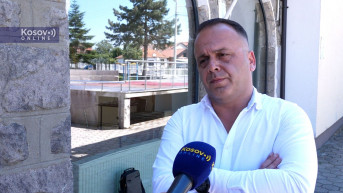
Historian Aleksandar Gudzic from Gracanica stated that what is happening in Kosovo is the “creation of conditions” for Serbs to disappear, and described it as a system of “fantastic apartheid being brought to perfection.”
“Today, a system of fantastic apartheid has been created in Kosovo. The system of discrimination and marginalization of Serbs has been brought to perfection,” Gudzic told Kosovo Online.
Commenting on the claim by Crisis Group representative Marko Prelec that “soft ethnic cleansing” is taking place in Kosovo and that the actions of acting Prime Minister Albin Kurti increasingly resemble the policies of Franjo Tudjman toward the Serbian community, Gudzic said there are many similarities in that comparison.
“If we allow ourselves to compare the position of Serbs in Croatia with that of Serbs in Kosovo, the systems and structures are quite similar. In essence, it is about creating the conditions for Serbs to practically disappear,” the historian stated.
He supports this claim by pointing out that in four Serb-majority municipalities in northern Kosovo, the mayors are Albanians, and that the authorities in Pristina, citing regulations and laws, refuse to organize new elections.
He compares this situation to the period of Slobodan Milosevic’s rule and his regime’s treatment of the Albanian community in Kosovo.
“So today, Albin Kurti is essentially doing everything the Milosevic regime did to Albanians in the 1990s. And that is the opinion not just of Serbs, but of some Albanians as well,” Gudzic claimed.
He added that this is also reflected in the fact that the authorities use every opportunity to worsen the position of Serbs in Kosovo.
In addition to similarities with Milosevic’s policies, he said that the treatment of the Serbian community in Kosovo can also be compared to the actions of Croatian President Franjo Tudjman.
“There are similarities, and Prelec is right when he says that Albin Kurti, the current prime minister, reminds him a lot of Franjo Tudjman. Tudjman made it difficult for Serbs to return in the 1990s and 2000s,” Gudzic said.
He specified that a key parallel lies in the “lists of indictments for war crimes.”
“We see that in Kosovo today as well – lists of indictments. The system is set up to hinder and marginalize Serbs,” the historian emphasized.
He sees the solution in economically empowering Serbs in Kosovo, as well as in insisting, through diplomatic means, on the respect of laws.
“There should be insistence on diplomatic efforts, on adherence to Kosovo’s regulations and laws, but above all on the economic strengthening and empowerment of Serbs. Serbs need to be made economically independent, and thereby less vulnerable to official Pristina,” Gudzic concluded.



0 comments