
Hasani: Blocking Kosovo’s Membership Agreement in the Board for Peace in Parliament reflects the immaturity of Self-Determination
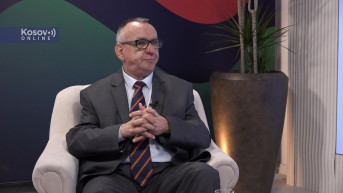
Professor of international law Enver Hasani stated today that the conduct of Self-Determination MPs in the Assembly’s Foreign Affairs Committee was entirely immature, as they prevented the adoption of the Agreement on Kosovo’s membership in the Board for Peace. He emphasized that while the parliament may amend its own laws, it cannot alter international obligations, Gazeta Express reported.
At yesterday’s session of the Foreign Affairs Committee of the Assembly of Kosovo, the draft law on the ratification of the Agreement on Kosovo’s membership in the Board for Peace was not adopted, following objections raised by a Self-Determination MP to Article 2 of the document, for which she requested amendments.
“This is complete immaturity. MPs should consult the legal department of the Ministry of Foreign Affairs if they are unsure, and they will be shown international standards regarding when and how a treaty signed by the head of state, head of government, or minister of foreign affairs may be amended, particularly if it has not yet undergone parliamentary ratification. The Assembly may unilaterally amend its own laws, but not Kosovo’s international obligations,” Hasani stated for Gazeta Express.
In the specific case, he explained that the Agreement on membership in the Board for Peace has the status of a treaty or international agreement under the Constitution of Kosovo.
“According to Article 18 of the Constitution of Kosovo, which is also reflected in Kosovo’s Law on International Agreements, any amendment or withdrawal from international agreements must follow the same decision-making procedure as their ratification. This is an international and constitutional standard of all civilized countries, and the same procedure under which the agreement or treaty was concluded must be respected,” Hasani stated.
When asked about the legal and international consequences if Kosovo attempts to ratify the agreement with unilateral amendments, he pointed out that such action produces no legal effect for the other party unless there is mutual agreement or the other party subsequently accepts such changes.
“In the absence of the other party’s consent, any attempt to amend a treaty or underlying agreement constitutes an affront to the other party, demonstrates a lack of seriousness on the part of the party undertaking such action, and is considered a withdrawal from a treaty or agreement lawfully signed by the head of state of Kosovo in accordance with the Constitution and the law. Withdrawal from an international treaty or agreement, under the Vienna Convention on the Law of Treaties, must follow the procedure provided for in the treaty itself (Article 54). In the absence of such provisions, withdrawal is permitted only in specific cases outlined in the Convention,” Hasani explained.
According to him, Kosovo should clarify with the United States whether it intends to withdraw from its commitment to membership in the Board for Peace. He added that membership in the Board for Peace cannot be implemented without full acceptance of every provision of its Charter.
“Here, too, the Constitution of Kosovo is clear, as it follows the standards of Western democracies. Article 20.2 of the Constitution, which regulates the transfer of sovereignty, explicitly provides that: ‘if a membership agreement ratified by the Republic of Kosovo for participation in an international organization explicitly requires the direct application of the norms of that organization, the law ratifying such an agreement shall be adopted by a two-thirds majority of all deputies, and those norms shall prevail over the laws of the Republic of Kosovo.’ A qualified two-thirds majority is required both for membership in an international organization and for the ratification of an international treaty or agreement under Article 18.1 of the Constitution. In this case, we are dealing with two specific situations related to the Board for Peace,” Hasani said.
U.S. President Donald Trump launched the Board for Peace initiative, which was formalized during a signing ceremony of its Statute on the margins of the World Economic Forum in Davos in January this year.
Among the first signatories was then-President of Kosovo Vjosa Osmani.


0 comments