
Hasani: Use of the term “Serbian people” cannot have legal consequences
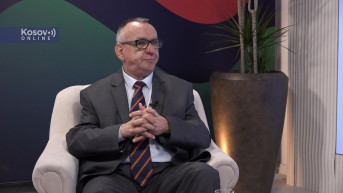
Former President of the Kosovo Constitutional Court Enver Hasani said that the term “Serbian people,” used by Serb List parliamentary group leader Igor Simic during the constitutive session of parliament, could not give rise to any legal consequences, Koha reported.
While nominating Slavko Simic for the position of Deputy Speaker of the Assembly, Serb List MP Igor Simic said that he was making the nomination “on behalf of the Serbian people,” prompting Assembly Speaker Albulena Haxhiu to adjourn the session.
“That is his right. He is speaking on behalf of the Serbian people in Kosovo. Yes, there is a Serbian people, a Bosniak people, a Turkish people and even a Montenegrin people in Kosovo, although the latter is not a constitutional category. There must be limits to this kind of rhetoric in the Assembly because the situation could one day escalate. Politics must not play the conflict card. There can never be legal consequences in this case. It is a matter of identity. It is enshrined in the Constitution,” Hasani said, according to Koha.
This is not exercising power, but an intention to rule over everyone
Hasani said that Self-Determination was attempting to rule over everyone.
According to him, Assembly Speaker Albulena Haxhiu’s explanation that there were insufficient votes to elect the Deputy Speakers nominated by the PDK and LDK was illogical.
“It makes no sense. This is not the exercise of power, but an intention to rule over everyone. The problem is trying to govern when you do not have 80 percent of the vote... Go to elections again, and perhaps you will win 80 or 100 percent. But you cannot use mechanisms to obstruct the process,” Hasani said.
He added that no one was paying attention to the Constitutional Court’s judgments.
“Only one body interprets the Constitution, and that is the Constitutional Court. Preventing a vote on the Deputy Speakers constitutes an element of the criminal offense of violating the constitutional order. They are abusing their positions,” Hasani said.
Kurti is degrading the institution of the president
Hasani assessed that caretaker Prime Minister Albin Kurti was degrading the institution of the president and that, by publicly mentioning names for the position, he was compromising and undermining the reputation of prominent figures in Kosovo.
He said that electing a president required broad political agreement and that a two-thirds majority should be secured throughout all three rounds of voting, rather than only in the first two.
“There should be a two-thirds majority in all three rounds because the president is an institution and should enjoy maximum support—two-thirds of the country’s political forces—since the powers of the office are such that the head of state should be useful to everyone and a threat to no one... the person who represents the face of the state must not be a militant, as has happened in our case,” Hasani stressed.
Ohrid Agreement and September 16 are reasons Kurti is blocking the system
Hasani believes that the primary cause of Albin Kurti’s “deviant political behavior” is the Ohrid Agreement.
According to him, Kurti is attempting to block the system at all costs because, as he put it, “he knows what he did with his signature” and knows that the agreement will eventually be implemented.
Hasani also said that September 16, when the Specialist Chambers are due to deliver the judgment against former KLA leaders Hashim Thaci, Kadri Veseli, Rexhep Selimi and Jakup Krasniqi, was another reason for Kurti’s conduct.
“I am certain that, as we speak, the judgment has already been reached and written, since I was a judge myself. A judgment is not written the day before it is delivered, and it is possible that certain circles already know what kind of judgment it will be,” Hasani said.
He explained that the Court was under no obligation to inform the Prime Minister or the Interior Minister of the nature of the judgment. However, according to Hasani, the Quint countries should have been informed because, as he put it, Kosovo and Bosnia and Herzegovina are security concerns.

0 comments