
From Kosovo to Donbas – could the Ukraine crisis have a Kosovo-style outcome?
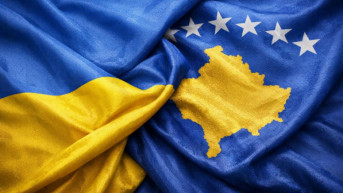
Delegations from Moscow, Kyiv and Washington are expected to hold talks in Abu Dhabi next week on ways to end the war in Ukraine. This raises the possibility of ending the conflict through some form of agreement under which the final status of the annexed Ukrainian territories would not be addressed for the time being—in other words, Russia would retain control on the ground while Ukraine would not accept any change to its territorial integrity. Such a scenario suggests certain parallels with the “Kosovo model,” although Kosovo Online’s interlocutors are not entirely convinced that this could provide a solution for ending the war that has been raging in Europe since February 2022.
Written by: Ivana Sanjevic
Rather than simply replicating the Kosovo model, a solution to the conflict in Ukraine would most likely have to be found through a unique set of arrangements involving firm security guarantees for Ukraine and a lengthy and complex diplomatic process to resolve the status of the occupied territories, without unilaterally recognizing aggression or changes of borders by force.
The Kosovo model required a substantial international presence in the form of UNMIK and KFOR following the end of the conflict. Similarly, a lasting peace in Ukraine would probably require demilitarized zones and international peacekeeping forces to serve as security guarantors.
Western countries have treated Kosovo as sui generis—a unique case—while opponents of Western intervention, particularly Russia, have frequently invoked it as a legal and political precedent for their own territorial claims regarding Crimea or Donbas.
Reality on the ground rather than one-size-fits-all solutions
The argument that Kosovo is a sui generis case remains relevant, given that the historical, legal and geopolitical contexts of the two crises are fundamentally different.
Stefan Surlic, a professor at the Faculty of Political Sciences, told Kosovo Online that the talks between the United States, Russia and Ukraine scheduled for November 10 and 11 in Abu Dhabi should address security guarantees, a halt to attacks on energy infrastructure and a ceasefire in the Black Sea.
He believes that, in the case of the conflict in Ukraine, the sequence of steps applied in the Kosovo case could be followed, with Kyiv and Moscow first agreeing to halt the fighting. Such steps would also include monitoring the line of separation and protecting civilians, while leaving the territorial issue for a later stage.
“In Kosovo, such a sequence was possible because the withdrawal of Yugoslav and Serbian forces in 1999 was followed by the establishment of the international UNMIK administration and the deployment of KFOR. The ‘standards before status’ policy came later and concerned, among other things, the functioning of institutions, freedom of movement and the return of displaced persons. The lesson for Ukraine is that postponing the status issue makes sense when a mechanism is already in place to protect people and implement what has been agreed,” Surlic stressed.
Surlic also pointed out that this was where the analogy with Kosovo ended, because if the Russian military and administration remained in the occupied territories, the arrangement would be different.
Victory does not always have to be reflected on the map
Former US Special Representative for the Western Balkans and current Senior Fellow at the Center for European Policy Analysis Matthew Palmer told Kosovo Online that it was important for the conflict between Russia and Ukraine to end with a clear and unequivocal Ukrainian victory, but that the way he defined such a victory had very little to do with borders on a map.
“What I would like to see, and what I believe we would all like to see, is a politically stable Ukraine, with a strong and dynamic economy, oriented toward the West and integrated into European and Euro-Atlantic institutions. In my view, that would be a victory for Ukraine, but also for the strategic West,” Palmer said.
He added that it was difficult to draw precise parallels between Kosovo and the annexed Ukrainian territories, and that he was not in a position to assess what concessions Russia might be prepared to make in negotiations or what the Ukrainians might be willing to accept.
“I hope that both sides will approach the negotiations seriously and reach a stable resolution of this conflict that will, I repeat, enable Ukraine to emerge as the victor,” Palmer reiterated.
Regarding the Western Balkans, Palmer said it was important for everyone in the region to have an open path toward EU and NATO membership, for those who aspire to join them.
“It is impossible to achieve that goal as long as the dispute between Belgrade and Pristina remains unresolved. I maintain, and firmly believe, that it is in the interests of both Serbia and Kosovo to resolve their differences, recognize one another and open the door to a European future for the citizens of both Serbia and Kosovo,” Palmer concluded.
Annexation and self-determination
Pristina-based analyst Armand Demaku said that under no circumstances could the Kosovo case be used as a model for resolving the conflict between Ukraine and Russia, arguing that “the authorities in Kyiv did not systematically repress the population of the territories annexed by Moscow, while Kosovo gained independence through a distinct historical process and on the basis of the right of peoples to self-determination.”
“Kosovo’s independence was declared as a result of a long history of injustice, repression and denial of the right to self-determination. Today, Kosovo is recognized by more than 100 countries and enjoys considerable international standing,” Demaku said in a written statement to Kosovo Online.
He added that Russia, and President Vladimir Putin in particular, had repeatedly invoked Kosovo as a precedent to justify the annexation of Ukrainian territories.
“In a way, by using Kosovo’s independence as an argument, Putin acknowledged Kosovo as a distinct case in international law, although he interpreted it in accordance with his own political interests. Ukraine, however, did not systematically repress the population of the territories annexed by Russia, which represents a fundamental difference compared with the Kosovo case,” Demaku said.
He also argued that it could not be claimed that, prior to the Russian intervention, residents of the territories in Ukraine had freely and independently pursued the right to freedom, independence or even unification with another state. He maintained that the process had unfolded under Moscow’s influence and in accordance with its geopolitical interests.
Russia and Ukraine from across the Atlantic
Petar Donic, an associate at the New Third Way organization, believes that it is theoretically possible to apply the Kosovo model to resolving the conflict in Ukraine, but says the problem is that possible solutions to the issue have not been discussed at all.
He predicts that the Republicans’ defeat in elections for both chambers of Congress will also affect efforts to resolve the war in Ukraine. He does not believe that establishing a ceasefire would amount to “too little” for Ukraine, but stresses that what follows such a ceasefire is equally important.
“If a ceasefire is established while issues such as the surrender of territory in Donbas remain on the table, the narrative and the context will be extremely important. If the context remains the same and a ceasefire is reached, the Ukrainians will almost certainly regard that ceasefire as an empty promise, as a carrot intended to induce them to do or concede something further,” Donic told Kosovo Online.
Donic reiterated that, following the congressional elections, US President Donald Trump had only a limited window until the end of the year to see through anything he might initiate. He therefore questioned how much room there was during that period for partial solutions for Ukraine, where expectations remained very high.
The Democrats in the United States are supportive of Ukraine, although Donic points out that the situation within the party itself has now changed.


0 comments