
Head of EULEX: According to our assessment, the presence of the Special Kosovo Police in the north has been extremely reduced
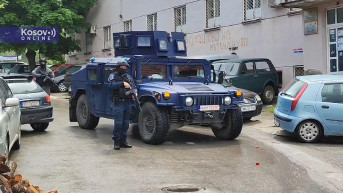
The head of EULEX, Giovanni Pietro Barbano, says that the Mission is working with the police and the Kosovo authorities in an effort to reduce the presence of the police in the areas of municipal buildings and administrations in four municipalities by some 25 percent, Euronews Serbia reports.
"We expected to help further reduce that presence by an additional 25 percent," Barbano said in an interview with Euronews Serbia, adding that yesterday he had attended a meeting with the KFOR Commander and the Director of the Kosovo Police.
As Barbano explained, the gradual withdrawal of the police would be a step from the so-called Bratislava Agreement, which included various steps for de-escalation in the north.
"We are currently engaged with the Kosovo Police and KFOR to define the technical aspects of the modality by which these security assessments will be carried out. But we can consider the process to have started," he points out, adding that "there are good indications".
When asked whether the European plan implied the complete withdrawal of Special Forces from the north of Kosovo, Barbano answered:
"According to our assessment, the presence of the Kosovo Special Police in the north has been extremely reduced and this was the first step taken by the authorities in Pristina. EULEX has also increased its presence in the north - now you have visible patrols that aim to fill the void created after the submission of resignations of Serbian police officers at the end of May 2023."
However, he says that EULEX is not able to take control of the security situation if the need arises.
"We are here to maintain the rule of law in Kosovo and its institutions in achieving more efficient work and better activities, with the aim of respecting human rights. Our job is not to replace those institutions. EULEX can only act in accordance with its mandate as a security actor of the second order according to a specific request of the first level security agent, which is the Kosovo Police when it comes to the area of maintaining public order," he says.
He adds that EULEX has not received such a request yet and that in any case, performing normal police duties is not a part of EULEX's mandate.
Barbano says that EULEX's current assessment is that the situation is "much more stable and peaceful", which is why it continues to monitor the situation.
Speaking about the detained Serbs, Barbano says that their treatment is monitored in various Kosovo correctional units and that so far "they have not had any complaints about the treatment by the Kosovo staff".
"Our monitoring is done through regular visits to those prisons, but also through direct contact with the detainees," he said.
Barbano also referred to the report of the liaison officer Dejan Pavicevic, in which it is stated that the Serbs who protested and were then arrested were also beaten by the Kosovo Police.
He confirmed that report, but pointed out that the injuries were related to the "arrest phase".
"The Kosovo Police said it was because they had resisted. Of course, the judicial authorities are investigating these issues. EULEX submitted a report to the EU officials about this situation, and the investigation is currently underway," he said.
He points out that EULEX reacted to the violation of human rights when it comes to the publication of photographs of persons deprived of their liberty, as well as the placing of hoods over their heads during arrests.
"Exactly, according to our findings and reports, we believed that there could have been the bad treatment of detained persons and disrespect for international practices. In that case, we spoke out loudly in order to respect human rights and be able to respond to this issue. Of course, these questions are not solved directly by EULEX because it has not had that authority since 2018, but only a limited executive mandate. However, all the findings of our observations have been sent to the competent authorities," Barbano said.
When asked if he saw a problem in the fact that some of them had been in detention for more than a year and did not know what they were charged with, Barbano answered:
"I would say that it is a very specific judicial aspect. The Kosovo judicial authorities can approve the extension of custody according to the Kosovo legislation, which is based on a case-by-case assessment and based on several factors."
He adds that they are currently monitoring 110 different cases and ongoing trials, but that from a strictly procedural point of view, everything is in accordance with the law.
Speaking about the relations between EULEX and official Belgrade, especially after Serbian President Aleksandar Vucic recently said that "EULEX lost its sense of reality, and that its only task is to protect Kosovo's independence and that it does not care about the tortured and beaten Serbs," Barbano says that such a thing is "absolutely not true".
"EULEX is committed to respecting the human rights of all citizens from whatever group they come from and carefully monitors the most sensitive cases, especially in the north - but not only there. The thing is that the public simply cannot see the current results of our activities because like I already said, EULEX does not have an executive mandate. This means that our reports are forwarded to the competent authorities and will eventually lead to consequences for certain behaviors. I repeat, the problem is that there are no immediate results that can be seen and evaluated," the head of the EULEX Mission, Giovanni Pietro Barbano concludes in an interview for Euronews Serbia.


0 comments