
Dasic: The European Union would like to be an architect, but practice has shown it was more often a firefighter
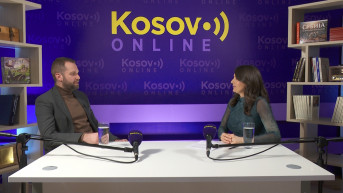
I think the pressure on the new Government of Kosovo might increase regarding the formation of the Community of Serb Municipalities, but the core issue is the founding act – what its competencies will be and how it would function today. The political elite and public opinion in Pristina fear the Community. I haven’t met a Kosovo Albanian who was moderate on the issue of the CSM because they fear the territorial and functional autonomy that would stem from it, assistant professor at the Faculty of Political Sciences Marko Dasic said in a Kosovo Online podcast.
Born in Pristina, Dasic analyzed developments in Kosovo from both a personal and academic perspective. He believes that resolving the Kosovo issue will be achieved through a policy of small steps.
"I think the current format of negotiations between Belgrade and Pristina has exposed all its flaws in terms of implementation, but I also don’t think a better format has been proposed. The only common ground between Pristina and our foreign policy is European integration, which means the EU envoy for dialogue is the only legitimate representative accepted by both sides, making it difficult to change this," Dasic assessed.
He rejects the claim that nothing changes during the dialogue.
"RKS license plates have now been normalized in Serbia. The dinar has been abolished, and it is being discussed less and less. In northern municipalities, you see the Kosovo flag. That’s why I don’t support the idea that we are witnessing a status quo – I see a deteriorating situation for the Serbian community. I hope that the renewed legitimacy of the EU’s mediation will steer the process in a more constructive direction, at least in terms of implementing what has been agreed upon," he said.
Regarding the new EU Envoy for dialogue, Peter Sorensen, Dasic describes him as a man with extensive Balkan experience who does not carry the burden that Miroslav Lajcak had, as Sorensen does not come from a country that has not recognized Kosovo.
However, he adds that Lajcak’s and Borrell’s mandates did not necessarily reflect this issue.
"Whenever I think about an EU mediator, I recall a statement made at a Chatham House Rules meeting, where we can’t disclose who said what, but the point was so universal that it won’t cause harm even if I repeat it, which I won’t verbatim. It was said that the European Union would much rather be an architect, but in practice, it has been more of a firefighter. And EU mediation has been successful in a firefighting sense – except for the Brussels-Ohrid agreement, which was more the work of French and German diplomacy than of the European External Action Service," Dasic noted.
Commenting on Lajcak’s tenure, Dasic observed an interesting pattern.
"There is a correlation worth investigating – after each of Lajcak’s visits to Pristina, within days or weeks, Kurti would implement a negative measure against the Serbian community. Whether it was a ROSU raid in the north, the establishment of a new base, or an intrusion into institutions, these events often coincided with his visits. It doesn’t necessarily mean causation, but it’s something worth examining," he said.
He does not believe the predictions of some analysts in Pristina that the new Kosovo government will be formed by former US Envoy Richard Grenell.
"I must admit, I’ve never been in meetings where political deals are made in that way, although we all know such things happen. Haradinaj once openly said that Kosovo does not have its own foreign policy – that it is American foreign policy. Kosovo hasn’t changed much under Kurti in this Euro-Atlantic domain, so the US still has the biggest influence on political processes in Pristina," Dasic assessed.
He described Grenell as a unique political figure and recalled hosting him at the Faculty of Political Sciences.
"His lack of knowledge about the region led to some clumsy statements, such as overestimating the importance of Thaci. You simply cannot justify the political achievements of someone who is now in prison for war crimes against non-Albanian populations to the Serbian public," Dasic pointed out.
During the Kosovo Online podcast, he also recalled an encounter with Grenell.
"He openly told us that Vucic and Thaci were very close to an agreement, but that some European countries sabotaged it. We interpreted that as Germany, even though he didn’t explicitly say so, but he had just come from Berlin. He was very angry that they had disrupted something that could have been a deal, without suggesting what the nature of that deal would have been. We kept wondering whether it involved territorial exchange or demarcation – he certainly gave us material to think about," Dasic revealed.
Regarding the new US administration under Donald Trump, he expects a different negotiation style, though the essence of America’s stance on Kosovo will remain unchanged.
"I’m not sure how much Kosovo Serbs can hope for in terms of Kosovo’s legal status, as the US recognizes Kosovo as an independent state, and that remains a sticking point in US-Serbia bilateral relations. What they might hope for is the reinstatement of some Serbian state functions for the Serbian community. Anything beyond that, in terms of greater autonomy, is unrealistic," Dasic concluded.
New elections or a new government and who will be in it – Dasic analyzed all possible scenarios in detail in our podcast. He concluded that preliminary election results indicate a political and governance crisis that will negatively impact broader processes in the region.
He also discussed how the topic of Kosovo is perceived among students and how they approach it.
The full conversation between Marko Dasic and Dragana Biberovic can be watched in the video segment.
0 comments