
Hoxha: Kurti hopes for a united opposition, then he could play "alone against everyone"
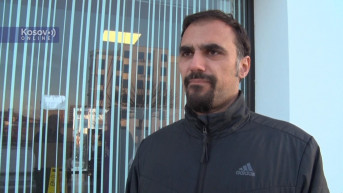
Political analyst Leart Hoxha assesses that Albin Kurti hopes for opposition unity because, in that case, he would "play alone against everyone," but it is still unlikely that a united bloc of political parties will oppose Self-Determination in the upcoming elections.
Commenting on the formation of a "united opposition front" currently led by the leaders of the Alliance for the Future of Kosovo, Ramush Haradinaj, and the Social Democratic Initiative, Fatmir Limaj, Leart Hoxha tells Kosovo Online that this is an idea Limaj has been discussing for over a year.
"He initially wanted to include the PDK in this front, then there were some talks, speculations, about how he might return to the PDK, maybe even take over the party, but nothing came of it, and in the end, he united with Haradinaj to ensure that he would pass the five percent threshold and survive on the Kosovo political scene," Hoxha said.
He emphasizes that there is a small chance of opposition unity in Kosovo, despite Kosovo's prime minister hoping for it, because, as he said, in that case, "he would play alone against everyone."
"That would make things much easier for Albin Kurti because it would then be clear to everyone that he's playing alone against everyone, and that's what he wants and what he hopes for. It would be much easier for him to beat all the others on the same ballot. Then he would more easily chase those 50 percent, rather than the Democratic Party of Kosovo and the Democratic League of Kosovo fighting against Self-Determination for their voters. It would be observed where each lost in the previous elections, and where they compensated for that loss in the local elections. He would have a clearer picture. Otherwise, if they unite, Kurti will fare much better than now in this situation," Hoxha said.
He notes that the Democratic Party of Kosovo (PDK) and the Democratic League of Kosovo (LDK) have already begun to build a "new image," considering their public appearances, but the newly formed coalition will not succeed in attracting their voters.
"As for the LDK, they cannot take away any votes, but they can take away some votes from the PDK, which are mostly inherited from the KLA or those structures that were close to the past governments or the KLA. There is a small pool of votes that Limaj and Haradinaj can target, so probably that's the idea of going into polemics with the PDK, but even that won't make much of a difference. Those are votes that the PDK could lose rather than Haradinaj or Limaj gain them. If the PDK cannot maintain its structure and those regions where they are strong, then it's a problem for the PDK," Hoxha said.
For now, according to Hoxha's opinion, Self-Determination remains the leading party, but he emphasizes that we have a long and interesting year ahead.
"It's inconceivable that someone who has 50 percent will fall to less than 25 percent. So, that drop, it's almost impossible, even mathematically impossible. When Kurti says that the race is for second place, he's about right. But first place doesn't mean automatic victory, first place doesn't mean he'll even form the government because then other calculations come into play, into the math for forming a coalition. And that's not easy, surprises are possible there,” Hoxha believes.
He says the result will depend not only on when the elections will be called but also on whether some important and controversial laws will be changed beforehand, such as the Civil Code, which the Self-Determination Movement opposes.
For the Serbian community, Hoxha emphasizes, local elections in the north are more important, which, as he said, "are a good chance for democratization and pluralization within the Serbian community in Kosovo."
"I think those elections in the north are much more important than parliamentary elections in general, and if they pass that first test properly, then there is a good chance that more than one political subject of the Serbian nationality will be in the Kosovo parliament, and that will give them more room for political benefit and maybe even more power on the Kosovo political scene. If a deal is made only with one party, then one party holds one community in its grip, they have a monopoly, and this way, if there is more than one Serbian party in the Kosovo parliament, then simply there are more opportunities for political agreement, political bargaining, or some coalition, and that will mean more options and more representation for the Serbian community in Kosovo institutions," Hoxha concluded.



0 comments