
Ibishi: Government and citizens have condemned the attack by Hamas; no high risk of extremist groups in Kosovo
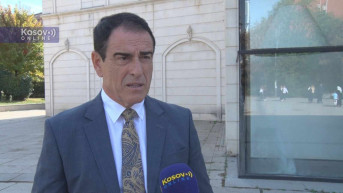
Following Hamas's action and the conflict in the Gaza Strip, the question of the danger of the "awakening" of radical Islam in the region has been raised again, however, security expert Nuredin Ibishi believes that this risk is not high in Kosovo because, as he states, both the government and citizens have condemned terrorist attacks on Israel.
He reminds that Kosovo is part of the Coalition Against Terrorism and that the Kosovo Assembly adopted the Law on Prohibition of Participation in Foreign Conflicts in 2015.
"As to whether there is an awakening among extremist Islamists, I don't think so because the correct information is that Hamas carried out a terrorist act in residential areas and kidnapped children. Therefore, it makes no sense for Islamists to support certain terrorist organizations anymore. Hence, there is no support or announcement in that regard because the terrorist act itself has been condemned by the Government of Kosovo and the coalition we belong to, the anti-terrorism coalition. Additionally, the citizens have accepted such an act and support the Israeli Government's efforts to stabilize this situation," Ibishi emphasizes.
According to the Kosovo Police, around 200 individuals suspected of terrorism-related crimes have been arrested in Kosovo since 2013, mostly for participating in conflict zones. It is now believed that no one from Kosovo goes to foreign battlefields. Ibishi also says that those who have returned have been convicted by Kosovo's judicial institutions and are going through a process of deradicalization and reintegration.
"The Government of Kosovo has taken measures and initiated the process of deradicalization and reintegration, which, based on special programs in line with the standards of all countries with developed democracies, European countries, and the US, is ongoing. They are taking all the necessary measures for the deradicalization and reintegration of all these participants. Those who directly participated are held criminally responsible, in accordance with the law, while families, women, and children go through a deradicalization and reintegration program," Ibishi said.
When asked about the profile of people most commonly recruited by extremist organizations, Ibishi emphasizes that efforts were made to indoctrinate young people.
"These are usually young people who are susceptible to indoctrination, and this has been ongoing since right after Kosovo's liberation. Mainly Iraqi organizations began to approach young people, recruiting them into terrorist organizations like ISIS and others. I think that back then, there was a lack of measures when it came to their activities and joining such organizations. However, after the adoption and entry into force of very strict laws, this was reduced to a minimum. I'm not sure if there were even one or two cases of participation. Therefore, the adoption of the law and other repressive measures have yielded results," Ibishi concluded.



0 comments