
Milivojevic: Hamas attack on Israel shows the full danger of frozen conflicts, such as the Kosovo one
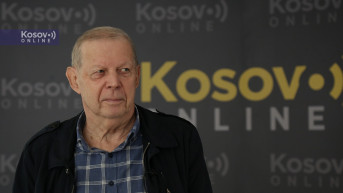
In the Hamas attack on Israel and the escalation of the Israeli-Palestinian conflict, we can see the full danger of frozen conflicts, such as the current one in Kosovo, diplomat Zoran Milivojevic points out, especially, he adds, when there is a policy of extremism and exclusivity on one side, in this case, of Pristina, which is not open to dialogue. Milivojevic says for Kosovo Online that there are elements that suggest that the events in Israel, as well as in other global hotspots, could influence major powers to expedite the resolution of the Kosovo issue.
"And the Kosovo issue is currently a frozen conflict, and after everything, the dangers of such conflicts are evident. In this sense, we have an interest in resolving this issue and remaining in the dialogue arena. For the simple reason that we have elements that pose a risk. We've seen what can happen in the case of Hamas. In the case of Pristina, we have extremism, we have a policy of exclusivity that is not conducive to dialogue and can lead to further conflicts. We already see an escalation in northern Kosovo and Metohija, and we can see where it's headed. In that sense, there's always a danger, especially if this policy is tolerated, as it is, and if there are no measures taken to respond adequately and prevent it," Milivojevic warns.
Another factor that could affect the speed of resolving the Kosovo issue, according to Milivojevic, is that Western centers of power are running out of time; they are in a kind of a "rush".
"There is a serious burden with the Russo-Ukrainian war, which is not unfolding as desired and as expected, and it tends to continue without elements that would favor a solution that would be in line with Western interests in the short term," he says.
He points out that next year is an election year because there will be voting for EU institutions in the spring and presidential elections in the United States in the fall.
"There are serious disturbances on both the domestic scene in the United States and in the EU. Therefore, these elections, to put it mildly, are uncertain, and the conditions are far less favorable than they were during the previous elections. So the clock is ticking for them to somehow conclude matters in this region, especially when it comes to the Western Balkans, the Kosovo issue, due to the uncertainty surrounding Ukraine and because some strategic goals have not been achieved," Milivojevic believes.
He expects that in the coming period, there will be increased pressure, primarily on Belgrade, especially from Brussels.
"Because the EU risks ending the mandate of this political set unsuccessfully, which lowers the Union's rating as a factor of broader significance. Second, the US administration also wants to complete the Kosovo story here and achieve some strategic goals before the situation escalates with Russia and Ukraine, the expansion of NATO into Kosovo... So, we will face pressure. That's entirely certain. Politically, it will reflect everything that happens on a global scale. Some measures towards political-diplomatic pressure are also possible. This should not be excluded. Because when things do not go as desired for the major powers, the methodology changes, and in addition to political and diplomatic pressure, they resort to other types of pressure and measures that should be more persuasive in trying to change Serbia's stance," Milivojevic emphasizes.
Regarding Pristina, Milivojevic believes that the pressure on them will be less.
"Unfortunately, Banjska has now provided arguments for the Pristina side to somehow improve its position. They will now practically treat both sides at least equally. It should also always be kept in mind that Pristina and the collective West share the same goal, which is the affirmation of Kosovo's statehood. Therefore, regardless of Albin Kurti's character and actions, he will always be protected in one way or another because the goal of his policy aligns with Washington's policy and that of the majority in Brussels. They differ in methodology, but he can always count on understanding and support, as we have witnessed so far, unlike us. Because we challenge that goal, remaining committed to our state and national interest, which rules out Kosovo's recognition. Therefore, pressure is directed towards us, while Kurti faces only verbal pressure, which lacks effectiveness. Moreover, we've seen that the sanctions imposed on Kosovo have no effect, not even in terms of the position of the Government in Pristina and their actions. On the contrary, repression continues, and the policy remains unchanged, and this should be taken into account in the coming period," Milivojevic concludes.


0 comments