
Igrutinovic: The Belgrade–Pristina dialogue is not a priority for Denmark as EU Council president
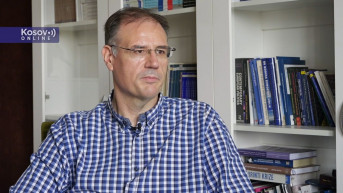
Any potential synergy between Peter Sorensen, as a Danish diplomat, and Denmark’s presidency of the Council of the European Union until the end of the year might have some effect on a lower tactical level in the dialogue, if they are even interested in focusing on a topic that is far from being a priority for them, Milan Igrutinovic, associate of the Institute for European Studies in Belgrade, says for Kosovo Online.
He believes that as the presiding country of the EU Council, Denmark could possibly give a boost to the Belgrade–Pristina dialogue, but only in relation to topics that belong more to the technical dialogue rather than to high-level political issues.
"Some practical steps within the topic of missing persons could earn Sorensen some personal points and allow the EU to say: ‘Here, we’ve made some concrete progress,’" Igrutinovic notes.
At the high political level, he points out, the relationship between President Vucic and Albin Kurti is very poor.
"Kosovo’s stance toward the overall negotiations and its previously undertaken obligations is well known, very negative, in fact. That is how it's perceived within the EU diplomatic corps. So if they keep their ambitions relatively low and practical, they can present some progress, such as dealing with integrated border management, procedural matters concerning vehicle crossings or trade. But if they aim higher and expect some major political breakthrough, I really don’t think that is going to happen," he assesses.
Regarding the EU enlargement policy, Igrutinovic says that Denmark, in principle, supports its continuation, but places Ukraine and Moldova as “more urgent cases” compared to the Western Balkans, due to the geopolitical situation, the war in Ukraine, and security concerns.
"Denmark is very emotionally and mentally invested in that conflict, and the level of Danish military aid and total capacity is significantly above the EU average. In that context, it definitely seeks to strengthen the positions of both Ukraine and Moldova. Denmark also insists that the whole enlargement process must be merit-based. So, whatever a candidate country achieves, it should be validated, but there will be no turning a blind eye, that is their message," Igrutinovic says.
He also adds that Denmark remained opposed to opening Cluster 3 for Serbia right up to the very end and is one of the few countries still holding that position, believing that the rule of law and democratic freedoms in Serbia are deteriorating and sliding in a negative direction, which cannot be tolerated.
"They cannot deviate from those positions even as the EU Council President, and it is questionable whether Denmark brings any real momentum for Serbia. For Ukraine and Moldova, probably. And the two countries that are already sort of mini champions of EU integration in the Balkans, Montenegro and, to some extent, Albania, can likely expect some kind of positive impulse. Serbia, considering our internal political situation, probably cannot expect that," he concludes.
He also says that Kosovo should not have high expectations regarding EU integration, as it awaits a decision on its application for EU candidate status.
"Denmark is neither a particularly outspoken critic nor a strong supporter of Kosovo, it mostly follows the will of the majority. But if they insist on merit-based criteria, it won’t be easy for Kosovo to convince them. On the other hand, they will see a kind of political crisis in Pristina, whether there will be new parliamentary elections or not, and their practical question will be: ‘Who are we actually supposed to talk to?’ Second, the perception and position of the Serb community in Kosovo, which is under pressure, combined with Serbia’s assertive policy to keep this issue on the agenda and not allow it to be ignored or presented as if everything is fine, seems to have had some effect in Brussels. So I don’t expect Denmark’s EU presidency to offer any real momentum to Kosovo’s ambitions in the current context," Igrutinovic concludes.
0 comments