
Barduani: Dialogue is the only path to stability in Kosovo and the region

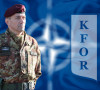
KFOR Commander Major General Enrico Barduani stated that the solution to the Belgrade–Pristina dialogue must be political, not military, emphasizing that dialogue is the only path to stability in Kosovo and the region. He noted that the situation in Kosovo is generally calm but fragile. Without interfering in Kosovo's internal affairs, Barduani said, regarding the situation in parliament, that they are closely monitoring developments and that the security environment also depends on political stability.
“NATO strongly supports the EU-facilitated dialogue. Willingness and flexibility from both Belgrade and Pristina to implement agreements are needed. Only then can long-term security for all communities be ensured,” the KFOR commander said in an interview for Dukagjini.
He stated that although the situation is generally calm, it remains fragile, which means it is vulnerable to any sudden outbreak of violence or instability.
“I have shared this assessment with the NATO command chain and with European leaders, including Kaja Kallas during a recent visit. The violence that occurred in Zvecan in 2023 against KFOR and the Kosovo Police, as well as the incident in the Ibar–Lepenac canal in 2024, show just how sensitive the situation remains. KFOR has taken preventive measures to encourage cooperation and dialogue, including a constant presence, patrols, and engagement with local communities. We remain vigilant and present throughout Kosovo, including the use of NATO reserve forces, in accordance with the UN’s long-term mandate. However, stability depends on the choice of political dialogue, not violence. NATO, through KFOR, provides important military support, but the path to lasting peace is political. That’s why we strongly support the EU-mediated dialogue — the only framework for resolving outstanding issues and protecting the rights of all communities. We are in close contact with the new EU leadership, including the EU Special Representative for the Belgrade–Pristina dialogue, Peter Sørensen,” Barduani emphasized.
He also said that the violence that took place in Zvecan and Banjska during the 2023 protests was unacceptable.
“On May 29, we recorded the highest number of KFOR injuries in a single day in over a decade. NATO, including then-Secretary General Jens Stoltenberg and current Secretary Mark Rutte, publicly called for those responsible to be brought to justice. Unfortunately, we have not seen significant progress in that regard. In response, NATO deployed an additional 1,000 soldiers and heavy equipment, thereby strengthening KFOR’s presence in the north and along the administrative line, marking one of the largest reinforcements in the past ten years. I will repeat that what happened in Zvecan and Banjska was unacceptable. Those responsible must be brought to justice. But investigations fall under the jurisdiction of law enforcement authorities, namely the Kosovo Police, and are outside KFOR’s mandate, so I cannot comment further,” the KFOR commander stated.
Speaking about the explosion that occurred in November last year in the Ibar–Lepenac canal, Barduani emphasized that he remembers the incident well, as it took place just a few weeks after he assumed command.
“KFOR provided logistical support in neutralizing explosive devices. The Kosovo Police handled the situation effectively. Investigations are still ongoing, and as I said before, responsibility lies with law enforcement authorities. It’s not for me to speculate about events that have not yet been clarified,” Barduani pointed out.
He reminded that, in accordance with the technical-military agreement with NATO, the Serbian Army regularly informs KFOR about its activities near the administrative line.
“Since I became commander, I have not recorded any procedural violations or significant changes in deployment. The situation along the administrative line is calm and under KFOR’s control. We have regular contacts and joint patrols with the Serbian Army. I have personally met several times with the Serbian Chief of General Staff in Belgrade, as well as with Kosovo security institutions. Regular and transparent communication is key to maintaining stability and avoiding misunderstandings,” the KFOR commander underlined.
Barduani pointed out that cooperation between KFOR and Kosovo security institutions is of essential importance, as there is a shared interest and responsibility to maintain stability. According to him, although coordination can sometimes be challenging, overall relations with the Kosovo Police and KSF have been good.
“We have regular joint patrols and exercises. With the KSF, we work through the NATO Liaison and Advisory Team, which supports the development of the KSF within its original mandate — capacity building, education, and training. At my request, the KSF participated on June 10 in the joint field exercise ‘Silver Sword 2025’ in the field of explosive ordnance disposal, and did an excellent job. According to existing arrangements, the KSF must receive approval from the KFOR commander for any deployment or mission in northern Kosovo. This principle is important to NATO because it contributes to a peaceful and stable environment,” Barduani said.
He noted that American officials have repeatedly confirmed their commitment to the Alliance, including its presence in Europe. He added that NATO constantly adapts to changes in the security environment.
“As for Kosovo and the Western Balkans, NATO remains firmly committed to regional stability. The visit of the North Atlantic Council and the NATO Secretary General to KFOR in March is a testament to this commitment. Today, KFOR includes troops from 33 countries — NATO members and partners — including the United States, which plays a key role and continues to contribute strongly, as it has until now,” Barduani stated.
Speaking about the political deadlock caused by the failure to constitute the parliament and government, Barduani emphasized that his responsibilities are primarily military, but he cannot avoid noting that the security environment also depends on political stability.
“We do not interfere in Kosovo’s internal politics, but we are closely monitoring developments, including the February elections. Although the political stalemate has not yet had a direct impact on security, we encourage all sides to find a solution in the interest of all citizens of Kosovo,” Barduani concluded.
0 comments