
Igrutinovic: Kurti's concern about Trump is due to his personal position and to show himself to be part of the main European trends
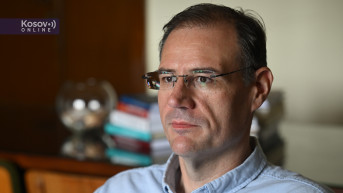
Milan Igrutinovic, a research associate at the Institute for European Studies, believes that Albin Kurti is "concerned about his personal position" when he says that the possible return of Donald Trump to the White House "worries the leaders of European countries, but also Kosovo." He suggests that with such statements, Kurti is signaling that he is politically aligned with the main European concerns and fears about what will happen if Trump wins the presidential election in America.
"Kurti is primarily concerned about his personal position and the position of his party in maintaining power. He fears some specific American pressure on him, but he probably also thinks that he can always threaten with new elections, in which, given the state of affairs in Kosovo, he would likely again be the main party in power. With this criticism and arrows aimed at Trump, he also shows another thing - that he is part of the broader European mainstream in which Trump's potential return to power is followed with apprehension and negative expectations about what he will do, especially regarding the war in Ukraine and NATO relations. With these statements, he is essentially telling most European capitals: I am on the same wavelength as you," Igrutinovic tells Kosovo Online.
He also believes that Kurti is less interested in the consequences for the Belgrade-Pristina dialogue if Trump returns to the White House because the dialogue, he says, does not resemble a true dialogue. Instead, it is more of a dialogue between Brussels and Pristina and Brussels and Belgrade.
"Rarely is it a dialogue between the two sides, and even when they meet, it does not lead to concrete solutions, especially not those good for our community in Kosovo. The dialogue will probably not be a focus of the new US administration. In the broader scheme of things, Europe will likely be subordinate in relation to China," Igrutinovic assesses.
What could, he says, raise the profile of Kosovo, or the Belgrade-Pristina relationship, is the perception that there may be some easy points to score relatively quickly.
"To say: The European Union is doing this very slowly, it's inefficient, nothing is happening, let's show that we are powerful and capable enough to accomplish a new agreement after 2020, after the Washington Agreement, which is not a formal-legal agreement but more political points for discussion, and which in reality has not been particularly realized. But if it is possible, to show this as a success point relatively quickly after the new administration takes office, which can be flaunted before the American public as a small success of the new administration, it is possible to operationalize this," Igrutinovic says.
Regarding US foreign policy in general, in the event of Trump's return to power, our interlocutor says that he will likely carry with him a policy more focused on China, with less concern for Europe and the war in Ukraine, but this will also partly depend on the personnel divisions within the new administration itself.
"In the European context, of course, the Ukrainian issue will take up the vast majority of attention and political energy, while Kosovo, Serbia, and the Western Balkans will likely be of third-tier interest and concern for the future Republican administration, which is actually not much different from how it is today," Igrutinovic emphasizes.



0 comments