
Ilic: On several occasions, they tried to take away our premises, the only space where Serbs could come

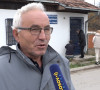
The premises used by the remaining Serbs in Pristina as a clinic, which Kosovo Police entered today, are used by the non-governmental organization "Center for Peace and Tolerance Pristina", and as Sasa Ilic, the President of the board of that organization, explained, the space had been used since 1999 for the distribution of humanitarian aid, a place for the daily activities and gatherings of elderly members of minority communities in the city of Pristina.
Ilic emphasizes that these premises have never belonged to the Kosovo Ministry of Internal Affairs. He explains that initially, it was used by the fire department, then by Komercijalna Banka, and according to the cadaster, it belongs to the City of Pristina.
"Now the Minister of Internal Affairs has accused us of engaging in illegal activities; these are serious accusations and it is not right. This is the only center that has existed since 1999. In 2002, it was registered in Pristina as a non-governmental organization 'Center for Peace and Tolerance Pristina'. This is a community center, organized with the help of UNMIK, KFOR, Doctors Without Borders, and other international organizations. They financed it, bought equipment, and renovated the premises. UN adapted the bank for us to create a community center," Ilic explained.
According to him, today's attempt to take away these premises is not the first one.
"I have been to discussions several times; we had interventions where OSCE, UNMIK, KFOR, everyone negotiated with us not to touch that space because it was the only place where Serbs could come. It was organized for a doctor to come once or twice a week, depending on the need. We had a contract with KFOR that doctors from the Health Center in Gracanica or Uglare would visit patients from house to house, immobile, older people. On those premises, there is only one bed where an examination can be performed, there are no instruments, medicines, or anything. There is one bed where the patient can lie down, one desk, and a chair; the blood pressure monitor was there; I don't know if it still is," he said.
He points out that Turks and Gorani people, all minorities living in Pristina, also came to the center, especially those who, at a certain moment, couldn't communicate in Albanian to go to health centers.
They would come to the center where, as beneficiaries, they received a free examination.
"There was no organized transport to Gracanica or any other Serbian enclave where they could exercise their right to treatment. It is a humanitarian center that provided that for them," he said.
He mentions that in 2000, with KFOR, he went to get books from the main library in Pristina to enable people of Serbian nationality, numbering between 120 and 150, to read.
He emphasizes that at that time, the Serbs were confined to their apartments and houses.
"I was denied getting those books, then we collected from Serbs whatever they had; the library in Pristina, which was moved to Gracanica, and the library from Belgrade, all contributed, and we collected up to 400 books. We organized the arrival of the Serbian daily press to enable them to be informed. They didn't have a television, they didn't have phones, and they didn't even have mobile phones at that time. We would buy newspapers in Gracanica, and it wasn't possible every day, only when someone could bring them. We have many friends in all foreign organizations who came there to socialize with people; it was like a gerontological center. No surgery was performed there; they received a basic examination and further instructions on where to go for treatment," he emphasizes.
This was the only place, as Ilic tells, where Serbs could exercise all their rights - the right to speech, language use, freedom of movement, socializing, and where they would receive food because, as he explains, pensions they received in dinars could not be used in Pristina. For this reason, food was distributed to the Center for Peace and Tolerance by other international humanitarian organizations, and they would further distribute it to the end-users.
According to Ilic, archives from 1999 remain on the premises, and in that archive, there is a list of people who received humanitarian aid, and unfortunately, some of them are no longer alive.
"It's like sending a team to Africa, to Congo, that can provide assistance to people in need, that's how Serbs were at that moment in Priština. I emphasize that Turks and Gorani people also came there, even Albanians, friends of those people who gathered to socialize," he says.
Ilic says that today, without any notice or warning, they came, broke into the premises, and did not send an email or a phone call to the organization.
"I don't know who was there; I haven't been there for a long time. The number of Serbs has decreased so much that I found out today that only four or five people in Pristina use that space. For that reason, activities have been reduced for years in that space. Our offices have been moved to Gracanica, precisely because we could not find people who would work for the center and work in Pristina for security reasons, especially after 2004," he says.
Stating that this is not the first time they want to take over the premises, Ilic says that they first removed the stickers from the door that read "Center for Peace and Tolerance".
He explains that for security reasons, due to the people who came to the Center and according to the then agreement with the security forces present - KFOR, UNMIK, the police, and the Kosovo Police, they did not put a large sign saying "Center for Peace and Tolerance".
The sticker, he notes, was trilingual - in Serbian, Albanian, and English.
"And they managed to take that off," he emphasizes.
Ilic says he doesn't know which time this is in a row that they want to take those premises.
"They want that space. First, they wanted to take it as if it belonged to the Ministry of Internal Affairs. When the then mayor of Pristina proved to the Ministry of Internal Affairs that it did not belong to them, they came up with another reason, namely that the community center should not be within the police station. I then said, okay, provide us with a secure space in the city center where Serbs can gather freely. They said, it's not up to us, it's up to you, you should seek space. The third justification was that they wanted to keep bicycles there as a part of the police bicycle unit. We told them at the time, do you know how it would sound if we say that Serbs were expelled because of bicycles? We went every time with good intentions, just to keep Serbs there," he said.
He adds that since there was a police unit responsible for communities, every morning from seven or eight o'clock, they were there with the community, and it was the Kosovo Police Service.
"Their police officers, two, three, sometimes even more, because there was a mini coffee bar where they could make coffee. Everyone volunteered there, people who lived there. However, especially after 2004, when the church was burned, that was the only refuge where Serbs could come. Before 2004, they could go to the church as well, so we had two centers, but after 2004, they could only come to that community center. Nowhere else could they go; these were already elderly people, over 70 and 80 years old. It would be better for that minister to focus on how to protect these people, and how to provide them with a better life, rather than fighting for 40 square meters and saying that humanitarian work is an illegal activity. What, did they find a kilogram of cocaine, a hundred kilograms?! They don't even distribute pills. Inside, they provide basic check-ups, measuring blood pressure and sugar, and nothing more," Ilic concludes.

0 comments