
Issue of protection of Serb rights in Kosovo raised in the Swiss Parliament
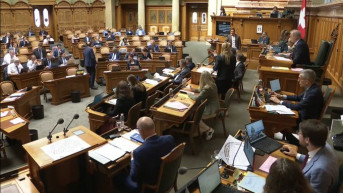
During a debate in the Swiss Parliament on extending the mandate of the Swiss contingent within KFOR, the issue of protecting the rights of the Serbian community in Kosovo was raised. Several members of parliament pointed to alleged violations of the human rights of Serbs by the majority Albanian community and asked the competent authorities to explain what Switzerland is doing in response.
For the first time, the position of the Serbian community in Kosovo was discussed in the Swiss Parliament.
Although a majority of lawmakers supported the continuation of Switzerland’s military engagement in KFOR, the debate was marked by members of the Swiss People's Party insisting that it is impossible to speak of stabilizing the situation in Kosovo without openly addressing the vulnerability of the Serbian community.
The Swiss People’s Party generally advocated the swift return of Swiss troops from abroad and opposed the long-term, effectively open-ended deployment of the Swiss Armed Forces overseas. However, during the debate, party representatives emphasized that any reduction or termination of KFOR’s presence must be directly linked to genuine progress in security and the protection of human rights, particularly with regard to the Serbian community in Kosovo.
Pointing to alleged human rights violations against Serbs in Kosovo, members of the Swiss People’s Party asked Defence Minister Martin Pfister and representatives of the relevant parliamentary committee to explain what concrete measures Switzerland has undertaken in this regard.
The issue of the Serbian community’s position was raised most directly by MPs Christian Imark, Roland Rino Büchel, and Andreas Glarner.
Addressing committee rapporteur Andrea Criad, Imark stated that there is a long list of human rights violations against the Serbian minority in Kosovo, including cases documented by the United Nations. He asked whether the issue had been discussed within the committee and how it assesses the human rights situation in Kosovo.
Roland Rino Büchel subsequently requested that the discussion move beyond general assessments and provide a clear explanation of what Switzerland has actually done to address the situation.
In response, officials emphasized the role of Swiss soldiers on the ground, their close contact with the local population, and the trust and respect they enjoy within the peacekeeping mission.
Addressing Defence Minister Pfister, Imark recalled that he had submitted a list of documented human rights violations in Kosovo the previous week and stressed that the issue was not merely one of abstract “tensions between ethnic groups,” but rather of specific violations of the rights of the Serbian minority allegedly committed by Kosovo authorities.
“After 27 years of international presence, what concrete steps are being taken to prevent such irregularities and violations of rights?” Imark asked.
Minister Pfister replied that Switzerland operates on two levels. The first is diplomatic, through intensive efforts aimed at improving the human rights situation in Kosovo, including through the Solothurn Process, which is intended to contribute to tangible progress.
The second, he explained, is through the activities of troops on the ground. He stressed that Swiss soldiers serving in KFOR do not represent either the Kosovo Albanian or Serbian side, but rather implement the United Nations mandate, which includes promoting human rights and maintaining security.
Andreas Glarner argued that references to “monitoring” the human rights situation were insufficiently concrete and requested clarification on what is actually being done to prevent harassment and mistreatment of minority communities.
Pfister responded that there are numerous diplomatic measures that fall outside his area of responsibility and which he could not discuss in detail. Nevertheless, he emphasized that KFOR’s very presence remains an important precondition for improving the human rights situation and ensuring respect for guarantees afforded to all communities.
The debate thus acquired a clear political dimension, as violations of the rights of the Serbian minority and instability on the ground became arguments both for maintaining KFOR’s presence and for questioning what Switzerland is doing to create the conditions under which that presence could eventually be reduced or terminated.
The discussion was also influenced by a preparatory working lunch of the Switzerland–Serbia Friendship Group, held two days earlier and attended by 14 members of the Swiss Parliament. During that meeting, representatives of the Serbian Embassy and invited speakers discussed the situation on the ground, with particular attention devoted to the position of the Serbian community in Kosovo, minority security, and ways of creating conditions under which KFOR’s presence would no longer be necessary.
Swiss Troops’ KFOR Mandate Extended
Following the debate, the Swiss Parliament approved the extension of the mandate of SWISSCOY until 2029. The government proposal was supported by a majority of lawmakers, while members of the Swiss People’s Party voted against it.
The Swiss government argues that maintaining a presence in KFOR remains necessary because the situation in Kosovo continues to be unstable, particularly in the north.
Among the reasons cited for extending the mission were the preservation of peace and stability, preventing a deterioration of the security situation that could also affect Switzerland, and the importance of international peacekeeping missions for Swiss security policy.
The Swiss People’s Party, by contrast, maintains that Swiss troops should not remain abroad indefinitely without a clear timeframe and that the costs and purpose of such a prolonged deployment must be questioned.
The debate therefore went beyond the question of whether Swiss soldiers should remain in Kosovo or return home. It also focused on what must be done to make their eventual withdrawal possible: ending pressure on the Serbian community, ensuring respect for human rights, protecting minority communities, and achieving de-escalation on the ground.
The Embassy of Serbia in Switzerland later stated on the social media platform X that several members of parliament had highlighted alleged human rights violations against Serbs in Kosovo.
“During today’s debate in the Swiss Parliament on extending the mandate of the Swiss contingent SWISSCOY within the KFOR mission, the issue of the position of the Serbian community in Kosovo and Metohija was raised for the first time. Several parliamentarians pointed to documented human rights concerns and questioned what concrete measures have been taken to address them after nearly three decades of international presence,” the embassy said in its post.
The embassy added that, although the majority of lawmakers supported the continuation of the mission, the debate demonstrated that the protection of the rights of the Serbian community remains an important issue in the Swiss Parliament as well.
The debate was observed from the parliamentary gallery by Ivan Trifunovic, Serbia’s Ambassador to Switzerland, and Bojan Stojanovic, First Counsellor at the Serbian Embassy.


0 comments