
Ivkovic: Michel's resignation will not impact the Belgrade-Pristina dialogue
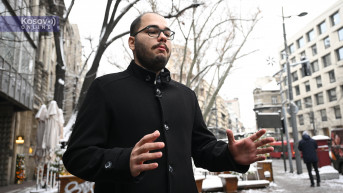
Aleksandar Ivkovic from the Center for Contemporary Politics says for Kosovo Online that the decision of the President of the European Council, Charles Michel, to run in the elections for the European Parliament shortened his mandate, which, he points out, is an unprecedented decision since this position exists. This personnel maneuver, as he believes, will not have a significant impact on the Belgrade-Pristina dialogue.
He also assesses that there are slim chances for Viktor Orban, the Hungarian Prime Minister, to replace Michel in the position of the European Council, as has been suggested, given that Budapest takes over the presidency of the European Union in July.
"The point is that the European Council is a body in which the presidents and prime ministers of EU member states sit, and it makes political decisions and conclusions about the directions the EU should take in the coming period on all important issues of foreign and economic policy... The role of the President of the European Council is to preside over these sessions and try to reach some consensus and common conclusions on all these issues through mediation. What is important in the context of this decision is that the President of the European Council does not have any kind of legal authority to impose his will on the presidents and prime ministers of the EU. His role is to mediate in meetings," Ivkovic notes.
As he explains, this means that even if Viktor Orban becomes the President of the European Council, he will not be able to implement some of his policies in that way.
"His role should be just to preside over those meetings. If he tried to implement some of his policies that would be unpopular for the political center of the EU, the leaders would reject them. And that would only increase the dysfunctionality of that body. But, I repeat, he would not be able to implement some of his policies that would not have consensus at the EU level. That function would primarily mean prestige for Hungary and him personally, and I don't think he will be allowed to do that for that reason. Because his policies in many areas deviate from what the political center of the EU represents. I think there will be no consensus among the leaders to allow him to take on that role for that reason," Ivkovic says.
He points out that there are ways to elect a new President of the European Council after Charles Michel resigns – either to immediately elect a new president with a full mandate or to change the rules and then elect a temporary president until a permanent president of the European Council is elected at the end of the year.
Regarding the possible effects of Michel's resignation on events in the Western Balkans, especially the Belgrade-Pristina dialogue, as well as the European path of Serbia and Kosovo, Ivkovic recalls that this is an election year for the EU when all processes are slowed down.
"Usually, in an election year, we shouldn't expect much regarding the enlargement policy or the Belgrade-Pristina dialogue. Because the EU will be occupied with elections and the formation of institutions. Elections are held in June, the new President of the European Commission is usually elected in July, and then the formation of the European Commission lasts until November or December. When we go back, for example, to 2019, when it last happened, there were no specific decisions regarding the Balkans, Serbia, or the Belgrade-Pristina dialogue. Because that period was marked by 100% tariffs on goods from Serbia imposed by Kosovo. Even pressure from the EU on the government in Pristina to repeal that decision was not possible during that period; it happened only in 2020," he emphasizes.
Based on that experience, Ivkovic does not expect, whoever becomes the President of the European Council, whether it's Viktor Orban or someone else, that the EU will make any significant decisions regarding Kosovo after spring, when the campaign for the European Parliament starts, until the end of the year.
"Especially since this year, in November, presidential elections are held in the United States. The EU is trying to coordinate with the US on its policy toward Kosovo, and considering that the outcome of the US presidential elections will be awaited, I think probably no significant decisions will be made, especially regarding the Belgrade-Pristina dialogue," he is convinced.
What is expected from Belgrade and Pristina is clear – the implementation of the Ohrid Agreement from March of last year, Ivkovic believes.
"How much will be implemented by, let's say, March, when the European Parliament dissolves – we will see. Probably not much is expected from Belgrade, given that the decision on license plates has now been implemented, buying some time in a way, so I assume that further concessions in the dialogue are not expected from the Belgrade side. The Pristina side will still feel pressure about establishing the Community of Serb Municipalities, but again, so far, European institutions have not had much success in implementing that step. Mr. Borrell and Mr. Lajcak will remain in their positions at least until the end of this year, but they will be in a technical mandate from spring, and therefore no further progress in that regard is expected," Ivkovic concludes.



0 comments