
Janjic: The deportation of Abbot Fotije is an attempt to expel all Serbs from Kosovo
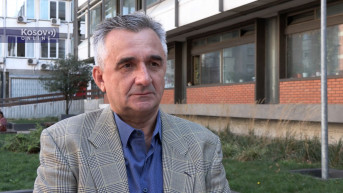
The deportation of the Abbot of the Devina Voda Monastery near Zvecan, Archimandrite Fotije, is not just his expulsion but all Serbs from Kosovo and Metohija, according to culturologist and religious analyst Jovan Janjic, noting that international organizations must react to this matter since it threatens one of the fundamental human rights, the freedom of religion if there is any justice or morality left in the modern world.
On October 20, the Kosovo Police, following an emergency procedure, without any explanation, deported Archimandrite Fotije from Kosovo, the long-term abbot of the Devina Voda Monastery in the municipality of Zvecan, and Janjic sees it as an act of violence that this time is being perpetrated against the Serbian Orthodox Church.
"The message is clear - the temporary Pristina institutions are using this act to send a message to the Serbian Orthodox Church that its clergy, monastics, and therefore the faithful people are not welcome in Kosovo. They want to consolidate it as their independent state. After ethnic cleansing and various forms of violence, they are now trying to carry out spiritual violence, attempting to change the spiritual code of this Serbian province to claim it as their own state," Janjic said to Kosovo Online.
Janjic points out that the Serbian Church was present in Kosovo even before it received autocephaly in 1219, recognized as autonomous by the Ecumenical Orthodox world.
He states that they are now trying to either remove this church, which has such deep roots or appropriate its heritage for the sake of establishing a new identity.
"With this, they are sending a message that they will continue to deal with the Serbs and the Serbian Church. The Church, aside from the monastic community, consists of faithful people, so this message is directed at all Serbs. In this way, they attempt to demonstrate their authority to the outside world. What might be even more paradoxical is that they follow the satanic circles from around the world that target the Orthodox Church. Whenever attacks on Orthodoxy occur anywhere in the world, these so-called authorities in Pristina follow suit," he added.
In that regard, he notes that the recent violence in Ukraine, where the country's parliament banned the canonical Ukrainian Orthodox Church, serves as an example. He emphasizes that immediately after this event, "these scoundrels from Pristina quickly sought to curry favor with their masters in Brussels, Washington, and other centers of power where Satanism is cultivated, and violence against the international order is promoted".
According to him, while the deportation of Abbot Fotije might appear to be an isolated case, it has a general character because it is a message to the entire SOC in Kosovo and, at the same time, to the Serbs.
"They don't know how to implement anything new or constructive, quite the opposite, they only know how to follow destruction and what some of the worst elements in the modern world do, which is to conduct violence. They adopted this pattern from the former Montenegrin president Milo Djukanovic, who persecuted those priests who allegedly were not Montenegrin citizens and were not born there. Whom did Abbot Fotije disturb? He had all the proper documents and was planning to extend his stay with all the necessary documents after 13 years, but they deported him immediately. This is an obvious act of violence with a clear message sent to multiple addresses," Janjic said.
As he points out, if there was any justice or morality left in the modern world, which, according to the Bible, "lies wholly in evil", various international organizations, especially those with representatives in Kosovo, should react to this situation.
"This endangers one of the fundamental human rights - the right to freedom of belief, and freedom of religion, which is one of the guaranteed rights by the Charter of Human Rights. This act should prompt a response from all those whose responsibility it is, and every person is obliged to advocate for the respect of these rights because if you expel priests, monks, or, in this case, the abbot of a monastery, you are essentially acting against the believers who belong to that church, who follow that clergy, and who visit that monastery," he says.
He emphasizes that this is not just the deportation of Abbot Fotije but an attempt to expel all Serbs from Kosovo.
"In their violence, they will continue as long as they can, and unfortunately, they have tacit support from those in the West who allow the international order to be created based on lies and violence," he adds.
He also points out that the Eparchy of Raska and Prizren should certainly address international institutions because even the silence of these institutions will be a response, legitimizing themselves as if they are on the side of the persecutors and on the side of disorder.
He notes that the first step should be to request intervention from international organizations present in Kosovo - UNMIK, and OSCE. He also expects a response from local Orthodox churches because, as he explains, when one Orthodox church is attacked, it is an attack on the entire order of all Orthodox churches worldwide.
"All local churches make up one entity, which is the Ecumenical Orthodox Church. This is an attack on all Orthodox churches, so I presume they will all react, and I believe that countries where the Orthodox Church is the majority will also react," he stated.
He also notes that perhaps the essential question is how the believers will react.
"Everything has its limits of endurance. Look at the First Serbian Uprising, the Belgrade Pashaluk had only about 368,000 inhabitants, and the people scattered in various directions. However, from this small population, a group of courageous people emerged, led by Karadjordje, and they rose up because it was a 'to be or not to be' situation. They rebelled against one of the world's most powerful countries - the Ottoman Empire. I'm not saying this will happen now, but such acts provoke and trigger self-defense by the people. How, I don't know, I don't live in Kosovo and Metohija, but I empathize with all the people who suffer, especially with our people in Kosovo and Metohija, who endure so much suffering, shed so much blood, and have watered that land with their blood, tears, and sweat, while Satanists rejoice and remain silent in the face of such violence," he concluded.


0 comments