
Janjic: EULEX essential for data exchange between Belgrade and Pristina regarding policeman's murder
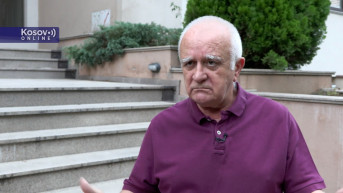
The murder of a policeman in Loznica does not have long-term consequences on the relations between Belgrade and Pristina, according to Dusan Janjic from the Forum for Ethnic Relations. However, he advises that the moment should be used to address some issues that have been long avoided, particularly the exchange of information related to organized crime and human security issues.
All indicators, from the perpetrator, the networks through which he moved while escaping from prison in Kosovo, and finally the confrontation with the policeman, point to criminal motives, Janjic tells Kosovo Online.
"There is no doubt that there was full awareness of killing a policeman performing his official duty. The political element is inherent in the perpetrator's biography, as he was a member of the KLA. But his business, dealing with marijuana, and his escape, and when you see the channels that helped him, they actually point to the Balkan route for marijuana and drug trafficking, coming from Italy through Albania, Kosovo, Montenegro, Serbia, and Republika Srpska, and likely he was aiming to escape to Spain or Germany. So, the political aspect highlighted by the Foreign Minister doesn't hold. This cannot be taken as evidence of terrorist activity from Kosovo against Serbia," he assesses.
He emphasizes that it is "incredible" how much EULEX has not been doing its job in recent years.
"EULEX simply sees itself as a service making the Kosovo police more efficient, with very little involvement in data exchange between the police of Serbia, Kosovo, and investigative authorities. Take the case of Oliver Ivanovic's murder or Banjska. Dacic and the government need to demand from someone like Lajcak and Borrell that this must be a topic of conversation. EULEX is crucial in data exchange when it comes to crime, human security, crimes against women, and similar issues," Janjic states.
According to him, NATO is responsible for the military aspect, and Serbs are currently genuinely troubled by security, relations with the police, and crime. He adds that since 2013, security has not been discussed in dialogues at all, and when such incidents occur, "politicization starts, and everyone goes to their elections, while citizens die."
"The murder was indeed motivated by crime, but it has political consequences too, especially when it happens in the context of Albanian-Serbian relations. Political consequences always exist, and when it comes to interethnic relations, one must always be cautious. That is why it is important that this does not turn into a conflict, because we won't get a solution or justice. That man was killed, but the network that carried him will not be uncovered, and I am sure his escape is part of organized crime, it is not an ordinary criminal act, many people are involved," our interlocutor says.
He points out that if in Mitrovica – where Hajrizi escaped from prison – "there is such repression and supposed efficiency of the Kosovo Police Forces when they need to close pharmacies, hand over companies to the Kosovo Privatization Agency, it creates a new distance of Serbs from that police and adds to the feeling of being threatened."
"Nationalistic motivation should not be excluded, but first, all data should be gathered, and the first priority is to get to the facts. Without EULEX, we will not be able to do this," Janjic concludes.



0 comments