
Jeremic: Germany is not withdrawing from the Western Balkans, foreign policy returning to Chancellor’s office
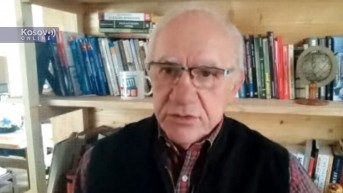
Former Ambassador to Germany Zoran Jeremic stated that the abolition of the position of Special Envoy for the Western Balkans does not signal Germany’s withdrawal from the region. Rather, it marks the return of foreign policy responsibilities to the Chancellor’s Office, which will contribute to a more direct continuation of Germany’s efforts to pursue its strategic interests in the Western Balkans.
“This development primarily signals that Germany is not abandoning this region. On the contrary, by shifting competences back to the Chancellor’s Office, it gains additional weight and demonstrates Germany’s intention to strengthen its influence here—whether through the EU’s enlargement policy or through more direct economic engagement and alignment of aspiring EU members with the Union’s policies, especially regarding Russia and Kosovo,” Jeremic said in an interview with Kosovo Online.
The newly formed German government under Chancellor Friedrich Merz has decided, as part of its initial measures, to eliminate the positions of special envoys—including the role of Special Envoy for the Western Balkans, previously held by Manuel Sarrazin.
According to Jeremic, this move represents a new and more direct continuation of Germany’s existing policy.
“It brings a more integrated approach with European ideas, less dependence on American policy—whatever form it may take—and an effort to guide the entire process in a direction favorable to Germany, particularly with regard to EU enlargement in the Western Balkans,” Jeremic explained.
He also noted with concern that the Western Balkans were only mentioned twice in the coalition agreement of the new German government, and that EU enlargement in this region is not listed among the top priorities.
“This reflects the direction and intensity of future cooperation, though the German government continues to place clear emphasis on maintaining its presence in the region,” Jeremic underlined.
He added that the abolition of special envoys is also part of a broader austerity initiative introduced with Chancellor Merz’s administration. In total, 27 special envoy positions covering various portfolios have been eliminated.
However, Jeremic emphasized that the move also serves a strategic purpose: to bring the activities of the Foreign Ministry in line with the Chancellor’s policy priorities—something that had not always been the case in recent decades.
“This is clearly part of cost-saving measures, but also a strategic effort to return control over foreign policy to the Chancellor’s Office. For the past sixty years, the Foreign Ministry was held by different coalition partners—from the Liberals to the Greens—which led to tensions between the Ministry and the Chancellor’s Office, often resulting in conflicting foreign policy approaches. The Foreign Ministry has historically been more exposed to U.S. influence. With the appointment of a Foreign Minister from the CDU, the Ministry now comes under the Chancellor’s authority, which is standard in countries with a chancellery-based system,” he explained.
Jeremic added that Merz is thus reclaiming a decisive role in both domestic and foreign policymaking.
“This move limits the influence of external actors, including the EU, and reestablishes the Ministry of Foreign Affairs as an executive body under the Chancellor’s direction,” he said.
As a result, Jeremic expects embassies to receive broader mandates and responsibilities, alongside greater engagement from NGOs funded through the Foreign Ministry.
“This marks a new, more direct mode of operation for the Foreign Ministry, and I firmly believe it does not represent a German retreat from the Balkans. On the contrary, it reflects stronger coordination and a more assertive, stable German presence—particularly when it comes to Serbia and the issue of Kosovo,” Jeremic concluded.



0 comments