
Curcic: The Western Balkans remain a focus for the new government in Berlin
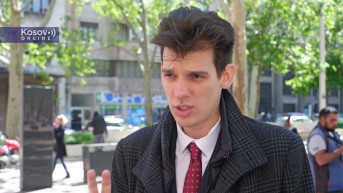
Petar Curcic, a researcher at the Institute for European Studies in Belgrade, stated that the Western Balkans remain a focus for the new government in Berlin, with Germany being the most important sponsor of Kosovo’s independence.
“Germany remains present and is very interested in the Western Balkans region. That doesn’t change the fact that with this withdrawal of its presence, there will be changes, especially considering that the new foreign minister is Johann Wadephul, who has shown particular interest in the Western Balkans. So, this region remains in focus for Germany,” Curcic said to Kosovo Online.
He interprets the decision of the new German government to abolish the position of special envoy for the Western Balkans as a “cost rationalization.”
“Not only was this position, introduced by the previous government, abolished, but other roles were also cut, such as the portfolios for feminist foreign policy, climate policy... and within the foreign ministry, logistics in the transport sector. So, rationalization was necessary, and that is the essence,” Curcic said.
He recalls that Germany appointed a special envoy for the Balkans during Olaf Scholz’s government, and that the choice of Manuel Sarrazin “was a kind of compromise” between the Social Democrats and the Greens.
“In a way, the position of the special envoy served as a ‘vent’ for the Greens, but also for some parts of the Social Democrats, to express their policies. But I think that fundamentally, especially considering that the CDU, since Angela Merkel, has shown some policies it doesn't abandon, this is actually part of continuity, and that Germany’s approach to the Western Balkans will remain largely unchanged,” the analyst noted.
When asked whether the new German government will change its approach to Belgrade and Pristina, Curcic said that it is unlikely.
“Germany remains one of the most important sponsors of the self-declared independence of Kosovo. Kosovo, in that sense, should expect continued support from Berlin. However, in its relations with Belgrade, Germany remains interested not only in the dialogue with Pristina but also in other areas of bilateral relations with Serbia. Chief among these is the EU accession negotiation process, and Germany will continue to support the enlargement process,” Curcic emphasized.
He is convinced that the new German government will continue its interest in lithium exploitation, as well as in other critical raw materials in Serbia, which reflects a continuity started by Angela Merkel and continued by Olaf Scholz.
“We should expect this to continue under Chancellor Merz as well. And that is nothing new,” Curcic believes.
He specifies that among the more significant issues that will be on the table for the new German chancellor regarding the Western Balkans is Bosnia and Herzegovina.
“Among the more significant issues will also be understanding the situation in Bosnia and Herzegovina. Serbia will be expected to support peace efforts in that country,” Curcic concluded.


0 comments