
Jeremic: The phenomenon of force is becoming a new element in international relations, equal in weight to law
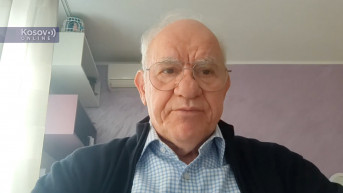
Former FR Yugoslavia Ambassador to Germany Zoran Jeremic believes that a new world order is in the making, although no one has a fully clear idea of how it will take shape or where its forms and boundaries will lie. What is evident, he says, is the emergence of a new system of relations primarily shaped by the great powers—the United States, Russia, and China. In such circumstances, Europe is not assigned the role of a great power, which is why Jeremic does not expect a more significant or more active role for the EU in the continuation of the Belgrade–Pristina dialogue in the period ahead, beyond exerting pressure aimed at opening the European path for Serbia and Kosovo.
Asked whether developments in Venezuela and the issue of Greenland could influence new recognitions or withdrawals of recognition of Kosovo, Jeremic says they will not have such an impact, but they will certainly affect how countries that participated in the creation of an independent Kosovo think about what constitutes a precedent.
“Recently, false news appeared on social media claiming that Denmark was withdrawing its recognition of Kosovo, which proved to be untrue. That is something that must be considered unrealistic under the present circumstances. However, it has opened a question that everyone is now considering—what constitutes a precedent,” Jeremic told Kosovo Online.
He explains that the deeply rooted understanding in Europe has been that the precedent disrupting international law was set by Russia’s aggression against Ukraine, while there is a strong reluctance to recall 24 March 1999, which in fact represents the true starting point of the erosion of international law and opened the door to legitimizing a range of different violations of territorial integrity both in Europe and beyond.
“This is now becoming particularly relevant, since after Ukraine the issue is being raised again for the first time within Europe itself, which in the case of Denmark and Greenland feels threatened and invokes the preservation of territorial integrity as a sacred principle in international relations, thereby reaffirming the problem once more,” Jeremic adds.
He reiterates that a new world order is clearly in the making, even though no one has a fully clear idea of its forms and boundaries, but that it is evident a new system of relations exists, established primarily through interactions among the great powers—the United States, Russia, and China.
There are, Jeremic adds, other aspirants to the role of “great powers,” above all the European Union, which intends to strengthen its military capacity to the point where it could become a significant factor in international relations.
“That part of establishing new relations among states will not take the form of ceremonial signings and the creation of charters like the UN Charter. It will more likely be a system of agreements and, if it comes to that, a division of spheres of interest. These may be more or less clearly defined, but each of the great powers will, despite agreements, try to take as much as possible,” the former ambassador believes.
According to him, this will not be a rigid system of international relations like the UN Charter and international law as we know it. Rather, agreements will form the basis and essence of the future system of relations—primarily agreements among great powers, and only then with less influential actors and those to whom such agreements apply.
“A system of fairness and what we are accustomed to—international law and equality in international relations—will certainly not be a priority in the distribution of power among the great powers. We have seen that this is moving in the direction of the law of the stronger. The phenomenon of force is becoming a new element in international relations, carrying the same weight as law and rules,” Jeremic notes.
Asked where the EU stands in this context and what its role is, he replies that it currently has no role and is not being assigned the role of a great power, while the Union itself is aware that it must attain such a role.
One of the elements that leading EU elites believe could place the Union in the position of a great power is the achievement of strong military capabilities and the development of a security concept that would secure it a place in relations among the great powers.
“It held a significant position in the world primarily thanks to its economic power and strong backing from the United States. Now it has neither,” Jeremic observes.
Regarding how global changes and waves of recognition of certain smaller states might affect the Belgrade–Pristina dialogue, he notes that the dialogue will progress or regress to the extent that the EU is able to reach an internal consensus on its position and how to implement it, as well as depending on the United States’ approach to the dialogue.
“The manner in which the EU exerts influence points to a new series of unprincipled approaches it faces and must resolve. The Union is overwhelmed by its own problems. It will be interested in the further development of the dialogue between Serbia and the so-called Kosovo only to the extent that this can contribute to its own stability or to developments in the Western Balkans insofar as it needs to affirm itself as a constructive factor,” Jeremic believes.
In other words, the EU is not particularly interested in the development of relations and the Serbia–Kosovo dialogue per se, but primarily as an element that can either motivate it to take new steps or help forge a more unified stance which, once formulated on this issue, could then be applied to other situations the EU may face.
“I think that waves of recognition of some new states or micro-states in the Middle East or the distant Pacific cannot bring anything new, because each of these cases is individually tied to specific countries, not to the EU as an entity. In the coming period, one should probably not expect a more significant or more active role for the EU in continuing the dialogue; rather, it will exert pressure for progress in order to open the European path for Serbia and Kosovo,” Jeremic assesses.
Taking all this into account, when asked whether the EU has any leverage to demand that Belgrade recognize Kosovo, Jeremic responds that it does not, because by invoking various precedents it lost that leverage long ago.
“The EU knows it does not have it, and therefore does not apply those elements when pressuring Belgrade, for example. What has been hammered in and written down will carry its weight, and EU governments will strive not to introduce much instability or disrupt anything. But the very fact that there are numerous problems within the EU concerning territorial integrity as a sacred principle calls into question the Union’s hard position on Kosovo’s recognition, which is imposed on Serbia as a condition for EU membership,” Jeremic said.
Progress in that direction could more readily come from the United States, because it “holds the key,” Jeremic noted, recalling that the foreign policy strategy adopted by the Senate and Congress states that mutual recognition is expected, which serves as a firm lever of U.S. policy.
“How strongly the U.S. administration will insist on this will depend on developments. The Greenland case affects everything. We have become accustomed to standards within the U.S. administration, so a precedent on one side of the world does not necessarily mean it will be applied on the other in resolving international relations, including the Kosovo issue,” Jeremic concluded.

0 comments