
Jerusalem Post: Inside the steadfast friendship between Israel and Serbia
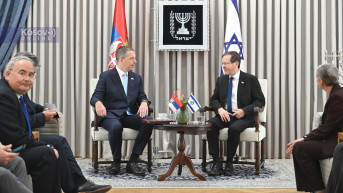
There are countries that issue statements, countries that turn ambiguous when tested, and then there are countries that show up. Serbia has proven it belongs firmly in the latter category.
Last year, The Jerusalem Post was invited to the presidential palace in the center of Belgrade to sit with President Aleksandar Vucic.
The meeting came at a time when Israel was increasingly isolated across parts of Europe during the Gaza war. The conflict already reshaped Israel’s relationship with long-time allies and friends, and many world leader were choosing their words carefully. Vucic did not.
“In Serbia, the situation will always remain the same,” he said at the time. “We will always appreciate, respect, and like the Jewish people and Israel.”
That position had already been made clear in the days following October 7. While others hesitated, Serbia moved quickly. Within days, Belgrade was coordinating with Israel, including in areas that drew criticism from elsewhere in Europe.
“I am the only one in Europe today dealing in military ammunitions with Israel,” Vucic said. “And it is why I am often criticized by colleagues.”
But he did not bow to pressure nor walk it back.
The reaction across Europe, he added, did not surprise him. “I wasn’t surprised by the level of attacks against the Jewish state and the Jewish people all over Europe.”
When Israeli sports teams could not host matches at home, Serbia stepped in. Clubs such as Maccabi Tel Aviv’s basketball team played their matches in Belgrade while Israel’s skies were closed. According to Vucic, there were no incidents, no chants, no banners. “Not a single bad word,” he said.
The relationship between the two countries continued to blossom this past week with the visit of Serbian Foreign Minister Marko Djuric, who arrived in Jerusalem to launch a new strategic dialogue between the two nations.
Speaking to the Post on the eve of his departure back to Belgrade, Djuric described the talks as a “historic step forward.” The meetings ran for hours and covered security, regional developments, economic cooperation, and technology. Senior officials from both sides were involved throughout.
“We have reached the level of strategic partnership,” he said.
Part of that work is economic. Negotiations are underway on a free-trade agreement, alongside the creation of a joint economic committee and a bilateral chamber of commerce.
Trade has already grown significantly in recent years, even without a formal framework in place. Over the past four years, trade has tripled, positioning Israel as Serbia’s leading export destination in the Middle East and its fourth-largest outside of Europe. In the coming days, flights between Tel Aviv and Belgrade will reach five weekly trips.
Israelis who have not yet visited Belgrade, with its confluence of Ottoman, Austro-Hungarian, and Yugoslavian history, or strolled down the Sava and Danube rivers, would be wise to take the opportunity of this European capital, which is a three-hour flight away.
“When we join forces in different fields, we achieve better results,” Djuric told the Post.
There is also a steady expansion of ties in defense and technology. Israeli systems have featured in Serbia’s military modernization, and cooperation continues to grow. Djuric pointed to this as an expression of the trust between the two sides.
Such language toward the Jewish state is becoming increasingly rare. While other European countries often hedge their positions or dilute their support, Serbia has chosen to speak clearly and act accordingly—and Israel values that friendship. The government’s stance has been consistent, as has the public atmosphere, at least at the moments when it is most tested.
The relationship between Israel and Serbia may not dominate headlines, but it has become something reliable—and as Israel well knows, good friends are hard to find in this world. Over the past year and a half, Serbia’s friendship has meant a great deal. There are countries that issue statements, countries that become ambiguous when their friendship is tested—and then there are countries that show up. Serbia has proven that it firmly belongs to the latter category, and for that we in Israel are grateful, the Jerusalem Post writes in its op-ed.


0 comments