
Jevtic: Solution on the implementation of the Law on Foreigners a first step toward securing the survival of Serbs in Kosovo
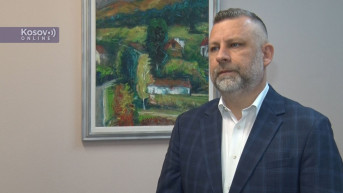
Vice President of the Serb List, Dalibor Jevtic, stated that, thanks to the agreed solution regarding the implementation of the Law on Foreigners, yesterday proceeded normally and that this represents the first step toward achieving the goal of ensuring the survival and continued presence of Serbs in Kosovo. He emphasized that the European Union was highly engaged on this issue, preventing the law from being implemented in the manner intended by Albin Kurti and, through a clear message to Pristina, influenced that such implementation did not take place.
“Compared to everything we have witnessed over the past several months and the announcements regarding how the implementation of the law would affect Serbs in Kosovo and Metohija, yesterday passed normally thanks to the agreed solution. With this solution, we have enabled thousands of people to work without hindrance and students to continue their studies. This is the first step toward achieving our goal, which is the survival and continued presence of Serbs in Kosovo and Metohija,” Jevtic told RTS.
He recalled that the process of residence registration is carried out through local authorities.
“As political representatives of Serbs, we will monitor the entire process. It is significant that the EU is the guarantor of the implementation of the solution. That is also their responsibility. However, I do not expect everything to proceed smoothly. We will monitor the process with the aim of removing any problems or potential obstacles,” Jevtic stated.
When asked whether three months would be sufficient for approximately 7,200 people who do not have Kosovo documents, as well as for around 10,000 individuals from central Serbia who work or study in Kosovo, Jevtic said that it remains to be seen how the process will unfold and called on Serbs displaced from Kosovo to use this period to obtain Pristina-issued documents, which, he added, would assist them in the process of exercising property rights and potentially facilitate their return to Kosovo.
“We aim, through facilitated procedures for obtaining Pristina-issued documents, to initiate a process of exercising basic rights in the current circumstances. These circumstances are not ideal, but we must find ways to ensure survival and return, particularly bearing in mind who is in power in Pristina,” Jevtic said.
Regarding the Law on Vehicles, he noted that the Serbian state leadership is also working on resolving the issue of operating vehicles with Serbian license plates under authorization, and that there are ideas on how this issue could be addressed.
He added that a solution is close to being reached and that the Office for Kosovo and Metohija will inform the public once it is finalized.
“I would not go into details until it is formalized. Our goal is to resolve the issue so that people do not face problems in the way Pristina intends and so that they can use their vehicles. Ambulance vehicles will not be penalized nor treated as private vehicles. However, for private vehicles there are ideas and ways in which this issue should be resolved. I expect that an agreement will be reached in the interest of ordinary citizens,” Jevtic indicated.
Speaking about EU guarantees for the implementation of the agreement, he recalled that the EU Special Representative for the dialogue, Peter Sorensen, clearly stated at a press conference in Pristina that, in essence, Pristina had reached an agreement with the EU and that these facilitations would be implemented.
“By that, we have obtained guarantees, and I want to believe that this will indeed be the case, because it is very important that there are no changes or different interpretations of what has been agreed,” Jevtic emphasized.
Noting that Serbs in Kosovo have long faced various measures introduced by Albin Kurti, he assessed that this is a positive signal that solutions to certain problems can be reached through dialogue.
“Taking into account more than a year of crisis in Kosovo and Metohija, it is good to reach agreements in order to avoid the danger of what could have occurred, namely an administrative pogrom of Serbs, following the one in 2004,” Jevtic stated.
He particularly noted that the Law on Foreigners in Kosovo was adopted in 2013, prior to the Brussels Agreements, at a time when Serbia was not actively engaged in resolving issues in Kosovo.
“However, thanks to President Vucic, the issue of Kosovo and Metohija has been returned to the negotiating table, after some believed that the matter had been concluded. Through various agreements, we have managed to preserve the Serbian people under difficult circumstances, especially since Kurti came to power. Knowing how he operates and what his objectives are, it is not easy to work and negotiate under such conditions and in the current geopolitical environment. That is why this agreement is important at this moment,” he said.
Jevtic underlined that the agreement prevented the envisaged scenario—namely, the forced integration of the Serbian education and healthcare systems into the Kosovo system on 16 March.
“This did not happen and will not happen as long as someone attempts to impose it in a manner that suits only them. Serbia will always finance these two sectors. We are clear on this—when it comes to healthcare and education, we will not allow our children to be taught a different history but rather according to the curriculum of Serbia,” Jevtic stressed.
Regarding the ongoing political crisis in Pristina, Jevtic pointed out that Kurti, by creating this crisis, sought to establish a situation in which he could claim that, since institutions had not been formed, he was unable to implement agreements from the dialogue, primarily the Community of Serb-majority Municipalities (CSM).
“The crisis certainly has an impact, because while you are trying to resolve people’s problems, you are simultaneously facing three electoral processes within a year, and now potentially new elections,” Jevtic noted.
In that context, he also observed that the cancellation of the visit by European Commissioner Marta Kos sent a message that Brussels would not tolerate such developments.
He reiterated that the EU was highly engaged in resolving the issue of the Law on Foreigners.
“We are pleased that the EU prevented the Law on Foreigners from being implemented in the way Kurti intended and, through a very clear message to Pristina, ensured that this did not occur,” Jevtic said.
Regarding the statement by EU High Representative Kaja Kallas, who welcomed the agreement on the law and expressed readiness to host a high-level meeting, Jevtic stated that without dialogue there will only be problems and that such a meeting should take place at an appropriate moment, but with the prior implementation of existing agreements.
“I am almost certain that a meeting at the highest level will take place at some point, but this requires the implementation of previously reached agreements, primarily the one on the CSM, as this is the most important element. Kallas’ announcement of a high-level meeting is a positive message, and we will continue to support dialogue in all its forms,” Jevtic concluded.


0 comments