
Jevtic: The day passed in accordance with the Agreement, an administrative pogrom against Serbs from Kosovo and Metohija prevented
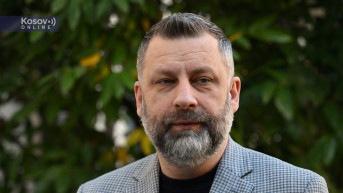
The Vice President of the Serb List, Dalibor Jevtic, emphasized that since Albin Kurti came to power in Pristina the process of obtaining Kosovo documents had become impossible, making it clear that what he described as a “Croatian model” was being applied to Serbs. For that reason, he says, the agreement regarding the Law on Foreigners is important, as it prevented what he called an administrative pogrom against Serbs in Kosovo.
Speaking to Newsmax Balkans, Jevtic said that the first working day following the beginning of the law’s implementation proceeded in accordance with the agreement.
“The first working day after everything we experienced in the previous period—the pressure resulting from the announced manner of implementing the Law—passed as stated by our state leadership and the Office for Kosovo and Metohija, normally and as usual, in circumstances where we reached an agreement and succeeded in preserving and preventing what was the aim of the authorities in Pristina: the expulsion of a certain number of Serbs who live and work in Kosovo and Metohija,” he explained.
Jevtic pointed out that 7,200 people living in Kosovo currently do not have Kosovo documents, even though they are entitled to obtain them, and that approximately 10,000 individuals who possess documents from central Serbia work or study in Kosovo.
“Since Kurti came to power, the process of obtaining Pristina-issued documents has been impossible. They did everything and imposed bureaucratic obstacles on anyone who wanted to obtain documents so that they could not get them. It was clear that a Croatian model was being applied. The aim and intention of the current regime in Pristina were evident,” he stressed.
He noted that it is a positive signal that the European Union will monitor the implementation of the agreement, but also emphasized that the agreement represents a major success of Serbian diplomacy, the state leadership, President Aleksandar Vucic, the Office for Kosovo and Metohija, and the Serb List, which worked on the ground.
“For several months there were claims that Belgrade was silent and that the Serb List, as the largest party of Serbs in Kosovo and Metohija, was doing nothing. Throughout that entire period we worked together to prevent what was Albin Kurti’s goal—a new form of administrative pogrom against Serbs,” Jevtic underlined.
Explaining the technical details of the agreement, he said that the negotiations were led by the Director of the Office for Kosovo and Metohija, Petar Petkovic, and that the entire process lasted several months.
“The problem was that in Kosovo and Metohija we had several electoral processes—parliamentary elections in February, two rounds of local elections in October and November, and again parliamentary elections in December. Politically this was problematic. Kurti deliberately provoked these crises so that he could claim there were no institutions or capacity to make decisions. At the same time, however, he could continue doing everything possible to harm Serbs while claiming that, due to the lack of institutions, he could not conduct dialogue,” Jevtic said.
He particularly emphasized that the agreement is important for displaced Serbs, whom he called on to use this opportunity to obtain Pristina-issued documents.
“I call on all displaced persons who have the right to obtain Pristina documents to do so. This is an opportunity and a chance, with EU guarantees, for all bureaucratic obstacles to be removed so that they can exercise their rights, obtain documents, and secure their rights, including property rights,” Jevtic said.
Regarding the Law on Vehicles, Jevtic stated that the Serbian state leadership continues to work on resolving that issue as well.
“We are close to reaching a good solution that is in the interest of ordinary people. In the meantime, our representatives in the institutions—legally and legitimately elected—will remain at the disposal of citizens to assist them if they encounter problems so that we can resolve them together,” he noted.
Speaking about the 22nd anniversary of the pogrom against Serbs in Kosovo, which will be commemorated tomorrow, Jevtic reiterated that the agreement on the Law on Foreigners prevented an administrative pogrom against Serbs.
“Had we not reached this agreement, today would have been very different, raising the question of what would happen to thousands of Serbs who might have been forced to leave Kosovo and Metohija,” Jevtic stated.
He added that the situation is far from easy or ideal, and that Serbs in Kosovo would prefer not to have to discuss such issues at all, but that practical solutions must be found in order to avoid greater harm to the Serbian people.
“We will continue to fight and we will not give up on our goal, which is the continued presence and survival of Serbs in Kosovo and Metohija,” Jevtic concluded.
Responding to the observation that the road toward normalization of relations is long, he said that, considering who is currently in power in Pristina, this is indeed the case, but that they nevertheless hope for better times ahead.



0 comments