
Joksimovic: We should expect the continuity of the policy toward Kosovo from the new German ambassador in Pristina
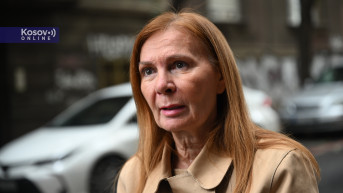
Director of the Center for Foreign Policy, Aleksandra Joksimovic, stated that it should be expected that the new German ambassador in Pristina, Rainer Rudolph, will maintain the continuity of Germany’s current policy toward Kosovo. She emphasized that the term of his predecessor, Jorn Rohde, was marked by a turbulent period in Pristina caused by Albin Kurti’s unilateral actions.
“The new ambassador will simply represent the continuation of Germany’s existing policy,” Joksimovic said.
She added that “ambassadors are not the ones who create policy, but they contribute to its implementation.”
“Changes in high-level diplomatic positions are a common occurrence. However, ambassadors are not policy-makers; they contribute to the realization of foreign policy. Foreign policy is conducted from the capitals. That is why we often don’t see major policy changes even when governments change in key EU countries, let alone when ambassadors change,” Joksimovic explained.
Commenting on Rohde’s five-year term, the former Serbian ambassador to the United Kingdom said that it was a turbulent period which, on one hand, brought visa liberalization for Kosovo, but on the other, also EU punitive measures.
“It was quite a turbulent period in Pristina, primarily due to Kurti’s actions, which were condemned by almost everyone in the EU, to varying degrees and more or less publicly. We know that the EU imposed certain sanctions against Kurti. Even though they were not fully enforced, the EU made it clear that it disagreed with Kurti’s policies toward the Serbian community in the north, and toward the Serb community as a whole,” Joksimovic said.
According to her, the political crisis in Kosovo has resulted in a frozen dialogue and a paralyzed system.
“At this moment, we are witnessing a frozen dialogue caused by the inability to form institutions in Pristina. Essentially, we have a blocked system that is not functioning. Yes, the Speaker of the Assembly has been elected, but further processes for forming key institutions and the government are still at a standstill. We are facing a prolonged vacuum,” the former diplomat said.
Joksimovic stressed that Germany remains firm in demanding that Kosovo fulfill the conditions offered last year for its Council of Europe membership, the key one being the submission of the draft Statute of the CSM to the Constitutional Court.
She clarified that, because these conditions have not been met, Pristina is now further from Council of Europe membership than it was before.
“Germany is one of the main advocates of Kosovo’s full independence. It was also among the countries that sponsored the idea of Kosovo’s accession to the Council of Europe. However, during his term, as former Ambassador Rohde also mentioned in his farewell speech, this was not achieved, and at this moment, it seems that Kosovo is further away from joining the Council of Europe than it was when the application was first submitted. This, too, is a result of Kurti’s political actions and his attitude toward the Serbian community,” Joksimovic concluded.


0 comments