
Joseph: The Kosovo model as a possible solution for Donbas

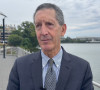
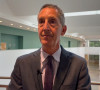
Edward Joseph, a lecturer at Johns Hopkins University in the United States and an expert on conflict management, argues that applying the Kosovo model to Donbas is the most realistic path toward ending the war in Ukraine, noting that it is a framework supported by Russian President Vladimir Putin as well.
In an interview with Radio Free Europe, Joseph stated that the model would work in Donbas because, as in Kosovo in 1999, the issue of sovereignty would not be resolved immediately but postponed for a later referendum.
“Putin supports referenda — he organized them both in Crimea and in parts of Donbas under Russian control. Therefore, he would be offered two things he does not dispute: the model of Resolution 1244 and a referendum. With this model he could ‘gain’ even more territory, in my view even more than what Donald Trump’s plan offers. He could also obtain the western parts of Donbas, which are the most sensitive for Ukraine, because that would give Russia direct influence over the entire country and even open another axis toward Kyiv,” the professor said.
He emphasizes, however, that Putin would have to accept one condition, similar to the Kosovo case: Donbas would be placed under the administration of a third party — either the UN or the OSCE.
According to Joseph, Ukraine would benefit from such an approach because it would not have to recognize Russia’s annexation of Donbas, while the status of Crimea would be left to future negotiations.
“The second reason, and the most important one for Ukrainian President Zelensky, concerns security guarantees. The Kosovo model would establish an international administration under the UN or the OSCE, which would immediately halt the process of Russification — forced issuance of Russian passports, military indoctrination of children, and obstacles for displaced persons wishing to return to their homes. Under such an administration, international property commissions would also be formed. As in Kosovo, peacekeeping forces would be deployed in Donbas, and to make this more acceptable for Russia, these forces could come from Africa or Asia, not necessarily from Europe. In short, once the question of sovereignty is temporarily set aside, every other element becomes much easier to negotiate,” Joseph explained.
Commenting on the efforts of President Trump’s administration, Joseph said that it is positive that Washington prioritizes peace and imposes sanctions on Russian energy companies, but warned that negotiations based entirely on the advantages of the stronger party — Russia — could turn into a “silent surrender” of Ukraine.
He also criticized the decision to publicly rule out supplying Tomahawk missiles to Ukraine, noting that this forfeited a key lever of pressure on Moscow.
Joseph further assessed that Serbia’s potential NATO membership would represent a significant blow to Russia.
“Because Serbia is Russia’s ‘Moscow’ in the Balkans. Serbia is the warship through which Russia maintains its influence across the region. If that ship sinks, or sails toward NATO waters, it would be a tremendous blow to Russia — even to China — because both Russia and China, formally and metaphorically, see Serbia as their strategic partner and principal platform of influence in the Balkans. Now comes your crucial question: why would Serbia do that, given the strong sentiment toward Russia? There are several reasons — including one that would make it almost impossible for Aleksandar Vucic to reject such an offer from Trump. First, Trump is extremely popular in Serbia and a highly influential figure. It would be very difficult for Vucic to say: ‘No, I do not accept.’ Moreover, during his first term, Trump attempted to bring peace between Kosovo and Serbia. This would not be new. He knows the region and often says he stopped the war between Serbia and Kosovo,” Joseph pointed out.
He believes that, in parallel, a path would open for Kosovo’s NATO membership as well, conditioned on the Kosovo prime minister signing the Statute of the Association of Serb-majority Municipalities.
“Vucic has been seeking that Association for years, and with this he would obtain it. First, we are only speaking about the pathway toward NATO membership, so none of the four NATO members that do not recognize Kosovo would need to change their position. Spain can continue not recognizing Kosovo — no problem. All that is required is that they refrain from blocking a proposed accession process. Second, Greece — as soon as the Kosovo prime minister signs the Statute of the Association of Serb-majority Municipalities — would, I am certain, recognize Kosovo, regardless of whether Serbia accepts it or not. Once Greece recognizes Kosovo, it will be easier for Romania, Slovakia, and Spain to follow suit. But they are not required to recognize Kosovo immediately — only not to obstruct NATO membership,” the professor stated.
Joseph concludes that within three years, through application of this model, tensions could be significantly reduced, accompanied by increased trade and stronger regional ties.
0 comments