
Kabasic: The participation of Serbs in the protest against illegal government decisions in Kosovo is being declared an attack on the constitutional order
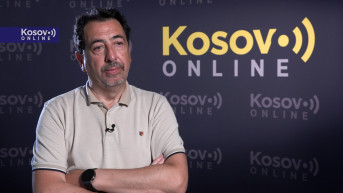
Former judge of the Higher Court in Kosovska Mitrovica, Nikola Kabasic, says that nobody knows how many Serbs are on the Kosovo authorities' arrest list for the criminal offense of "attack on the constitutional order of Kosovo," because any participation of Serbs in any protest against a government decision in Kosovo is automatically declared an attack on the constitutional order.
"If we were dealing with a developed European democracy and a developed judiciary, we would know that such charges would ultimately be dismissed because, after all, they conflict with our right to assemble and to publicly express our opinions. Those are European standards, but unfortunately, everything in Kosovo is politicized," says Kabasic for Kosovo Online.
He recalls that when Serbs expressed their dissatisfaction by blocking roads in 2022, Minister of the Interior Dželjaj Sveclja came out with accusations of an attack on the constitutional order.
"One of the demands of the people at the barricades was to nullify all possible secret indictments that were rumored to exist in Kosovo. Even the five Quint countries guaranteed to President Vucic that none of the participants in the non-violent resistance would be prosecuted, but as you can see in the case of Srecko Sofronijevic, that is not true and they did not adhere to it. That this is a case of political instrumentalization is clear, as Srecko is a wounded civilian, shot in the chest from behind while he was in his own yard. He was not hiding; he was available to the judicial authorities at all times and they could have spoken with him at any moment. It's a bit strange that after two and a half years from that event, they spectacularly arrest him and start this investigation," says Kabasic.
A large number of Serbs, as he mentions, were arrested during the protests last May in Zvecan when Albanian mayors, with the help of the police, entered the municipal buildings in the north and when there was a confrontation between the citizens and the police and KFOR.
"At that time, a large number of Serbs were arrested either for attacks on journalists or for violating the constitutional order, held in custody for several months and then released to defend themselves from freedom with high amounts of bail that their families had to pay. These processes are still active and in the investigation phase, and there are no indictments or verdicts," says our interlocutor.
According to Article 114 of the Kosovo Penal Code, as explained, the criminal offense of "attack on the constitutional order of the Republic of Kosovo" has three forms.
"The mildest form, for which the penalty prescribed is up to five years in prison, occurs when someone endangers the constitutional order of the so-called Republic of Kosovo through violence or the threat of violence. More severe forms include when someone resists the establishment of the order of the Republic of Kosovo through the use of violence or the threat of force, for which the penalty is at least five years, and the maximum penalty of 10 years in prison is for those who endanger the independence of Kosovo through violent means or the threat of violence. Essentially, everything is related to territorial integrity, sovereignty, and ultimately the independence of Kosovo, but from this formulation, you do not know what actions someone might take to fall under the law regarding these norms. Thus, any action by Serbs—active and passive resistance through demonstrations, building barricades—is subsumed under Article 2 or 3, and even protests against government decisions, though they themselves may be illegal like expropriation, can be considered as endangering the constitutional order," emphasizes Kabasic.
Regarding the attack on the constitutional order of Kosovo, our interlocutor points out that it could also be discussed in the case of high government representatives or ministers.
"When they say that Kosovo is an intermediate stage in the ultimate goal of unifying Kosovo and Albania, to be ironic, what is that if not an attack on the constitutional order of Kosovo? Then they should be held accountable because they deny the statehood of Kosovo and its borders. If the special prosecutor really wants to enforce the law equally for everyone, they should initiate proceedings against them as well. An attack on the order would also be when the government of Albin Kurti has been destroying the multiethnicity of Kosovo in recent years. An example is the construction of 13 to 15 police checkpoints and bases in northern Kosovo, because the Kosovo Police Law states that police stations must reflect the national structure of the population there. By building these paramilitary stations, Kurti and his government have circumvented existing laws and the Constitution of Kosovo, which states that all services must ensure equal representation of all citizens, which is not the case," Kabasic points out.
In response to the statement by the President of Serbia, Aleksandar Vucic, after the arrest of Sofronijevic, that all who violate the constitutional order of Serbia will be arrested and prosecuted, Kabasic says that a line must be drawn on what is subject to prosecution.
"If we do not like what is being done to us, if our freedom of speech and right to assemble are being stifled, the question is whether we can act like an undemocratic country. However, for the sake of caution, there are indeed significant attacks on the constitutional order of Serbia, but we must draw that very thin line between the right to freedom of expression and the way of prosecution. Sometimes they are simply political statements that should not be prosecuted but are part of the democratic milieu and process we all strive for," says Kabasic.
By law, the prosecution in Kosovo is responsible for criminal prosecution as an independent body, but, as our interlocutor emphasizes, over the past few years, the prosecution has become a service of the police.
"All the time, the police, i.e., the Minister of Police, directs the prosecution. There are many violations of Kosovo's laws and international standards in the field of human rights, but no one cares about that. Everyone knows that the police are instrumentalized, that the prosecution is not doing its job, and that it is a national project of the Albanians in collusion—government, police, and ultimately the judiciary," concludes Kabasic.
He adds that in recent years it has been evident that the judiciary in Kosovo has one strategy towards the north, another towards the south, all part of the same strategy—institutional pressure on the Serbs.
"The north is said to be criminalized, that terrorists, smugglers live there... and then every Serb from the north is potentially liable either for smuggling, attacking the police, endangering the constitutional order, participating in a mob committing violence, or hooliganism. In this way, pressure is applied to make young people flee from Kosovo because the practice is such that someone is first deprived of liberty, and then the investigation begins. In the south, the strategy is different; there, every Serb who was born in 1980 or earlier can be charged with war crimes," Kabasic notes.



comments