
Kacarska: The EU will not quickly reach agreement on changes to enlargement policy
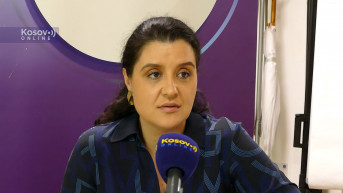
The Director of the Institute for European Policy in North Macedonia, Simonida Kacarska, assessed that the European Union has intensified its engagement on enlargement because of pressure related to Ukraine, but that it is difficult to expect member states to reach agreement on major changes to that policy in the short term.
Kacarska recalled that EU states have been working more intensively on the issue of enlargement since the Russian invasion of Ukraine in 2022, but that proposals are now being further developed, leading to the emergence of new modalities from certain member states.
“There is no doubt that one of the reasons several proposals have been put on the table, including the proposal of German Chancellor Friedrich Merz, is the pressure being created in the context of Ukraine and the development of peace negotiations, especially in light of the new administration in the United States. To this should be added the legitimate pressure being exerted by Ukrainian President Volodymyr Zelenskyy regarding guarantees for that country’s EU membership. Along with all this, some member states have not forgotten that the Western Balkan countries have in some way been left aside. It is precisely in this context that several proposals currently circulating in different forms have emerged,” Kacarska told Kosovo Online.
Asked which accession proposal would be the best solution for candidates from the Western Balkans, she replied that full membership in the European Union is undoubtedly the most favorable model.
“If that is not an option, which is also a very difficult topic for discussion within the European Union itself, because it is hard to expect any leader to build a political discourse around a different approach, then the fundamental goal should not be overlooked – encouraging democratic and economic transformation. So far, apart from EU membership, we have not seen any other model that has managed to achieve such results,” Kacarska said.
She noted that European Union member states have different concepts and demands regarding changes to the enlargement approach, recalling the 2019 proposal by French President Emmanuel Macron on changes to the negotiation process.
“However, the French proposal at the time also included the possibility of opening structural and cohesion funds before membership itself, which is legally impossible within the European Union. In the end, that did not happen, but the Union instead offered and implemented the Growth Plan for the Western Balkans, as a certain kind of compensation and acknowledgment that previous support had been insufficient,” Kacarska said.
According to her, discussions within the EU are very complex, because any change to the accession model would require a completely new institutional framework for membership or amendments to European treaties, which clearly stipulate that every member state has the same rights and the same obligations.
“So, the problem is not only the political agreement of member states. There are also serious legal issues that the European Union has been facing for a long time, but which are often not in the foreground. In short, it is difficult to expect member states to reach agreement on major changes to enlargement policy in the short term,” Kacarska concluded.



0 comments