
Karaj: Kallas's visit to the Western Balkans sends the message that Europe has not shifted its focus from the region
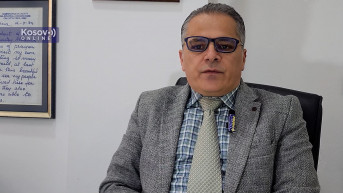
By visiting the Western Balkans, EU High Representative for Foreign Affairs and Security Policy Kaja Kallas showed that Europe has not shifted its focus from this region, and from Tirana, she sent a very important message to Belgrade and Pristina that they have not been forgotten in the EU accession process, political analyst from Tirana, Leonard Karaj, believes.
“Kallas's visit to the Western Balkans – Montenegro, Albania, and Bosnia – once again shows that Europe has not shifted its focus from these countries and that they want these countries to become part of the European Union as soon as possible, without forgetting North Macedonia, Kosovo, and Serbia,” Karaj told Kosovo Online.
He added that the Western Balkan countries should not expect EU integration to "happen tomorrow" but that the process will take the next few years.
“Montenegro is clearly ahead in this process compared to Albania and other countries in the region and will probably be the next country to join the Union. Albania strongly claims that it will open the last clusters of negotiation chapters by the end of this year. I’m not sure how achievable that will be,” the analyst said.
The tense political situation is a key reason why Kallas decided to visit not only Montenegro and Albania but also Bosnia and Herzegovina.
“The political situation in this country is quite tense, given the stance of Republika Srpska and its president, Milorad Dodik. It seems that the European Union is making efforts to steer Bosnia and Herzegovina toward Europeanization, and not down another path that could destabilize the region, a path that might lead to Moscow,” Karaj said.
He emphasized that Kallas sent an important message to Belgrade and Pristina while in Tirana.
“Kallas said something very important in Tirana, and I believe she said the same in Podgorica. She said that Pristina and Belgrade have not been forgotten, but the EU expects there to be political stability, negotiations, and goodwill from both sides, both Serbia and Kosovo,” Karaj pointed out.
He clarified that internal instability is the key reason why Kallas did not visit Kosovo and Serbia during her first visit to the Western Balkans.
“We have to consider the fact that there is no government in Pristina today because elections were held a few weeks ago. The situation in Belgrade, after numerous protests, has led to foreign policy being placed on the back burner,” he believes.
This is one of two reasons why he believes there cannot be talk of progress in the negotiations between Belgrade and Pristina at this moment.
The second reason is the fact that a new European mediator has been appointed in the negotiations, Peter Sorensen.
“It is expected that the new negotiator will signal what his stance will be, whether with the government in Pristina, which could again be a government under Mr. Kurti, but with the opposition's presence, or with the authorities in Belgrade, with the new prime minister proposed by Mr. Vucic,” Karaj explained.
Asked whether the EU has mechanisms to speed up the process, as Kaja Kallas has claimed, Karaj believes that it could be expected that "Europe will become less diplomatic and more commanding in its relations with Pristina and Belgrade."
“Diplomacy often works, but there are many cases where power politics is needed, especially in a region like the Western Balkans, which has always had issues. So, a firm stance is necessary, like what happened in Rambouillet, when Madam Madeleine Albright essentially put a 'veto' on the situation, if we can call it that, and imposed the KLA at the negotiations, leading to what happened with NATO’s bombing of Serbia and the end of the war there,” Karaj argued.



0 comments