
Stojkovski: The EU as we knew it no longer exists, the Western Balkans must understand that
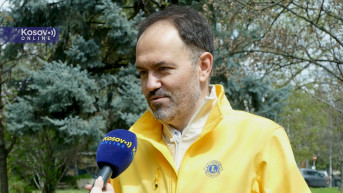
The Executive Director of the "Prespa Institute," Andreja Stojkovski, stated that the key message from the EU’s High Representative for Foreign Affairs and Security Policy, Kaja Kallas, during her visit to the Western Balkans, is that the EU is counting on their membership, but that the region must understand that the European Union as we once knew it no longer exists.
"The European Union as we knew it probably no longer exists, and we could say that phase is over. A new logic of how states function and relate to each other, the Russian invasion of Ukraine, the election of a new president and administration in the United States, and the relationships between global powers and the Union, have all shifted the focus much more toward its own defense and the functioning of the 27 member states as a unified entity. Therefore, I don’t see it continuing to operate as it once did, and I assume that we, too, will have to adapt to the next phase of the European Union and its upcoming enlargement," Stojkovski told Kosovo Online.
He expects the EU to take its first concrete steps soon, and says that the selection of Montenegro, Albania, and Bosnia and Herzegovina as the first countries on Kallas's agenda shouldn't be interpreted as having any "hidden messages."
"We could probably look for hidden meanings in the choice of countries, but given that this is a three-day trip, three countries are quite enough for those three days," Stojkovski said.
He reminds that the European Commission had previously stated that Montenegro was the most advanced in the accession process, and that Albania, by opening the first negotiation cluster last October, had formally begun negotiations with the EU.
Hence, he sees the choice of these two countries as Kallas's first destinations on her “Balkan tour” as logical.
"Bosnia and Herzegovina was probably chosen because, at this moment, it needs a bit more support than the other Western Balkan countries," he added.
He said that the messages heard during the visit were the usual ones – mainly encouragement to continue with reforms, since these countries are ideally positioned to become the next EU members.
As for Bosnia and Herzegovina, he believes that the focus was much more on the country’s stability and the functioning of its institutions.
Asked what kind of messages the remaining Western Balkan countries should expect, Stojkovski said that Kallas was very clear at the start of her term that she does not consider the EU complete without the inclusion of the region's countries.
"However, I don't see any specific message during this period or this visit. In the near future, we may hear something more direct. North Macedonia is either blocked or under an imposed veto. As for Serbia and Kosovo, at least regarding Serbia, I believe there is no real interest or appetite among the current political elites to resolve the issues," Stojkovski said.
Commenting on Kallas’s statement that the EU has “other instruments” to help move the dialogue between Belgrade and Pristina forward, he emphasized that there are several options.
"There is always the option to block or freeze negotiations until progress is made or the Serbia-Kosovo dialogue begins functioning. However, the Union also has other tools at its disposal. If you recall, not long ago we were referred to as the first country to successfully move forward with its reform agenda and receive the first tranche of funds from the Growth Plan. Those are likely some of the tools the Union could use, at least when it comes to Serbia and Kosovo, though it will probably be more difficult there. I expect a bit more or somewhat more serious political pressure," Stojkovski concluded.


0 comments