
Kasolli: Main focus of von der Leyen's visit is progress in dialogue
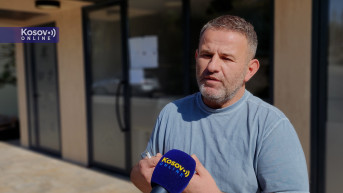
Analyst Afrim Kasolli tells Kosovo Online that during Ursula von der Leyen's visit to Kosovo and Serbia, the main focus will be on further encouraging the dialogue process.
He reminds that the President of the European Commission will visit Kosovo, Serbia, Bosnia and Herzegovina, Montenegro, Albania, and North Macedonia, and in his opinion, the main topic will undoubtedly be intensifying reforms and the European agenda as a prerequisite for accessing the EU's Economic Growth Plan and Fund for the Western Balkans, which is considered an important instrument in preparing the region for EU integration.
"In addition to completing the reform agenda set by Brussels as a condition for these countries, it should be noted that Kosovo and Serbia have two additional conditions compared to other countries: progress in dialogue and its continuation. So, aside from the reform agenda, there is the implementation of obligations arising from the basic Brussels Agreement and the Ohrid Agreement on implementation, where there are two additional conditions for these two countries," Kasolli emphasizes.
He adds that we should not forget that Kosovo, Serbia, North Macedonia, and Bosnia and Herzegovina are facing serious obstacles.
"They have not approved plans for the reform agenda and face serious challenges in EU integration precisely because of their unwillingness to fulfill obligations arising from this process. North Macedonia refused to open the process of constitutional changes at Bulgaria’s request for the Bulgarian population to be recognized as a constitutive nation, while Kosovo and Serbia remain in the process of implementing their obligations arising from the aforementioned agreements. I believe that in Kosovo and Serbia, the main focus of Mrs. von der Leyen will be her efforts to further stimulate the dialogue process," our interlocutor assesses.
He also mentions that German Chancellor Olaf Scholz stated that they expect new momentum in the dialogue between Kosovo and Serbia.
"On the other hand, Kosovo remains under Brussels sanctions precisely because of its refusal to comply with international community demands to implement obligations arising from these agreements, including de-escalation in northern Kosovo, among others. I am skeptical that these two countries will benefit from the funds unless they show full willingness to respond to the international community’s calls in line with the obligations stemming from the dialogue," Kasolli concludes.



0 comments