
Kesic: Fear prevails in Pristina over Serbia's positioning in the US
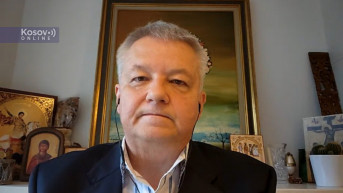
Political analyst Obrad Kesic asserts that the Pristina administration is attempting to mitigate the fact that during the US presidential campaign, it aligned itself with the Democratic Party candidate, Kamala Harris. Now, it is trying in every possible way to gain Donald Trump’s trust, fearing that his election could strengthen Serbia’s position and that a distancing of the US from the EU would mean less support for Kosovo than it has received so far.
"From the very day after the US elections, when they deleted social media posts boasting about their contacts with Kamala Harris and senior Democratic officials at the Democratic Convention, fear has prevailed. The primary concern is about potential new positioning—not only by Serbia but also by the US distancing itself from Europe, which would mean less support for Pristina than they have enjoyed so far," Kesic told Kosovo Online.
He adds that due to this fear, Pristina authorities have launched a new phase of diplomatic activity, aiming to present themselves as a side that would benefit from Trump’s return to the White House.
In this context, Kesic interprets the recent statements of President Vjosa Osmani, who expressed hope that the US would take a leading role in the negotiations between Belgrade and Pristina.
However, he warns that such a political “somersault” indicates that Kosovo is far more interested in maintaining US support as the key promoter of its independence than in EU membership.
"In this context, her statement is significant for several reasons. Firstly, it shows that Pristina is neither loyal to nor determined to pursue EU membership. There is simply no willingness to prioritize the reforms necessary for progress on the EU path. Secondly, it reveals a persistent dependency of the so-called state of Kosovo on the US. They see no perspective or future if the US does not actively support and participate in the creation and consolidation of their independence. That’s why they are now trying at all costs to establish contact with the US, with the new administration at the highest level, and afterwards to demonstrate loyalty to the new administration as much as possible," Kesic said.
He adds that such political maneuvers are "nothing new" and that Pristina alters its approach every time a key country experiences a change in administration.
"They quickly attempt to reposition themselves to regain support and trust from the new government. In this case, I believe they have absolutely no chance of success—not because the new administration will
have a clearly defined pro-Serbian policy. But all the key points announced for President Trump’s new foreign policy align not only with Serbia’s interests but also with those of Republic of Srpska and the Serbian people as a whole," Kesic said.
He notes that the competition for favor with the Trump administration will involve the Albanian lobby in the US.
"There are individuals in the Albanian-American community who are now trying to leverage their connections to establish the desired communication. Additionally, they are directing financial support towards Republicans and interests closely tied to the MAGA movement, attempting to buy influence among key figures who will play roles in decision-making within the new administration," Kesic said.
He also expects Pristina to continue sending “signals of loyalty,” which will be most visible in its support for Israel.
"We can expect a continuation of what we saw at the end of Trump’s first term—Kosovo will stand out among all Muslim-majority countries by continuing to show support for Israel. They will openly express their support not only in votes within organizations where they already have a presence but also in public positions, even in areas where they lack voting rights," Kesic concluded.

0 comments