
Kesic: Time to resolve open issues in the world, including Kosovo and Bosnia and Herzegovina
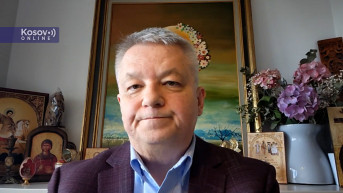
Ambassador and Head of the Bosnia and Herzegovina Mission to the EU, Obrad Kesic, stated that the arrival of Donald Trump as President of the United States has created a "new dynamic" in efforts to resolve territorial disputes around the world and that this not pointed out only by the initiative to end the war in Ukraine, but also by calls for resolving the Cyprus issue. Now is the right moment to also discuss Kosovo and Bosnia and Herzegovina, he told Kosovo Online.
“With Trump’s arrival, we have an entirely new dynamic in which ‘America First’ means that every global issue is viewed primarily through the lens of American interests, and everything else comes second. In the past, there was no space to revisit the Cyprus issue as long as the status quo existed, which held that opening up the matter could lead to renewed conflict. With Trump, that has changed, because everyone feels that if the issue isn’t resolved now, it may be resolved to their disadvantage, due to a lack of confidence in continued American support,” Kesic said.
He specifies that this is a key factor not only for resolving the war in Ukraine, but also for the future relationship between Europe and the United States.
“Europe cannot be confident that America will remain a reliable partner, because many issues previously framed as shared interests through common positions are now being reopened. That no longer exists. This worldview shows a significant difference between the perspective from America, from Washington, and that from Brussels. In that context, we definitely need to start talking, and we need to begin resolving problems in the Western Balkans as well. The first, of course, is the issue of Kosovo and Metohija, and the second is Bosnia and Herzegovina,” Kesic stated.
He believes that the West’s previous approach, especially Washington’s, has led to major crises in the Western Balkans, resulting in the Serbian community “constantly feeling under pressure from Western policy.”
“With the arrival of President Trump and a new team loyal primarily to him and his worldview, a better perspective opens up for resolving the Serbian national question throughout the former Yugoslavia,” Kesic asserted.
Asked whether this is the right moment for all unresolved global issues to be addressed through some form of international peace conference with US support, Kesic outlined at least three reasons why this is currently unrealistic.
“President Trump has little trust in multilateral and foreign policy mechanisms. He doesn’t have much faith that problems can be resolved by involving a large number of countries. His foreign policy is clearly based on bilateral relations. Even the ongoing negotiations over Ukraine are unfolding through direct talks between the US and Ukraine, and the US and Russia. In that context, there is absolutely no room right now to broaden participation. And that is one of the main priorities Trump has announced as a key foreign policy goal. It is unlikely this approach would change when it comes to other issues,” Kesic said.
He sees the idea of an international conference on Kosovo as problematic, primarily because the Albanian side would likely reject it.
“They don’t want to internationalize the issue because they see this as their last chance to achieve what they have been aiming for: the consolidation of so-called independence and of governance over the entire territory of Kosovo and Metohija. That is why I think they would be highly skeptical about entering a process without certainty that Washington would support them in the context of new international negotiations,” Kesic explained.
As a third decisive factor, he points to the lack of readiness among EU leaders and most EU member states.
“The European Union, its leaders, and even most of its member states are not prepared to reopen an issue where they believe their policy is already showing some concrete results,” Kesic concluded.



0 comments