
Korkodelovic: Anyone who wants to promote their interests in the UN must count on African countries
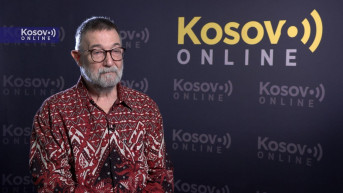
The recently elected President of Senegal, Basiru Diomaje Faje (44), is not the first leader in African countries to come to a leadership position before the age of 50. Foreign policy analyst Borislav Korkodelovic told Kosovo Online that Africa is a young continent, and as such, it often produces relatively younger statesmen. They increasingly insist that Africa must finally "belong to Africans," as former colonizers have continued the exploitation of Africa, especially through economic measures.
Korkodelovic adds that Africa is represented in the United Nations by 54 countries, which forms a significant lobbying group.
"Anyone who wants to promote their interests in the UN must consider this group of 54 countries," our interlocutor says.
When asked how much young African leaders, especially in countries like Senegal that recognize Kosovo, can be a factor for change and influence a shift in this stance, our interlocutor states that the possibility of de-recognizing Kosovo exists, but there must also be incentives from Belgrade and more concrete offers for cooperation, as these leaders are most interested in the economic development of their countries.
“They are largely severing ties with France and saying: ‘Africa now belongs to Africans’. The most important African countries, starting with Nigeria, which is an African giant and the third largest film industry in the world by production volume, do not recognize Kosovo. When asked why, the answer given also applies to a number of countries, not only African but also Latin American, Middle Eastern, and Asian: ‘We have our separatist movements and do not want to recognize such entities in other parts of the world because it is very contagious’. They also said they remember very well their civil war when Biafra seceded from the rest of Nigeria, which was a very bloody civil war,” says Korkodelovic.
Besides Faye, there are young leaders in their late 30s or early 40s in neighboring countries to Senegal, such as Mali or Burkina Faso, then Ethiopian Prime Minister Abiy Ahmed (48), and the President of Madagascar is of similar age.
“Most young people in Africa are quite educated, with about 300,000 young Africans going abroad for education each year. This young Africa in its development is achieving what economists call a ‘leapfrog’. They do not go through all the stages of development that today's developed world went through, but skip some and move to what is now dominant, so Africa is a continent that promises economically. The industrialization process is ongoing, largely thanks to China which has been building extensively across Africa, especially highways. The Chinese have built about 13,000 kilometers in certain parts of Africa, then schools, hospitals, electricity... When you now look at satellite images of Africa from 20-30 years ago and today, it is the exact opposite,” says Korkodelovic.
Thanks to the transfers made by the Chinese, he adds, there is a connection between the mainland and ports which has achieved a huge leap towards development and all this, he believes, will contribute to the increasing importance Africa has in international relations. This was particularly noted by the Russians during the war in Ukraine.
“Russian Foreign Minister Lavrov has visited African countries three or four times. No African country has imposed sanctions on Russia. They see how much the Chinese initiative and Russia's support on the political and diplomatic front mean to them. Russia continues what they call ‘diplomacy of memory’, because the Soviet Union and China greatly helped African countries in the fight against colonialism and in development years, and now Africans are in a way repaying that debt to Russia,” states Korkodelovic.
Considering that a resolution on Srebrenica is coming up on the UN agenda, our interlocutor states that it is very important to lobby in New York first and foremost, but also that all Serbian embassies across the African continent need to exert themselves to explain what actually happened in Srebrenica and that such a resolution cannot aid reconciliation, particularly between two religions.
"In Africa, 40 percent of the population is Muslim. It is necessary to appeal to them and through our Muslim population to highlight the dangers of such a decision," he says.
Explaining why many see Africa as the continent of the future, Korkodelovic notes that it is currently the second most populous continent in the world and a continent of the young.
"It is the continent of the future in every aspect—demographically, economically, and strategically. It holds about 30 percent of all global minerals, 12 percent of proven oil reserves, 8 percent of gas, and most importantly for the future of humanity—65 percent of arable land. Africa currently has 1.4 billion people, of which only 3 percent are over the age of 65. By the year 2100, Africa will have 40 percent of the global population, while at that time, Europe will have only four percent," says Korkodelovic.


comments