
Korkodelovic: It would be good for Serbia if Africa were a permanent member of the UN Security Council, but that's a long shot
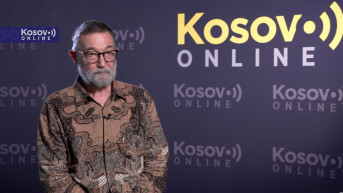
Since 2005, Africa has been lobbying to be represented in the Security Council and is seeking two permanent member seats and an additional two among those members that rotate every two years, however, this is a long shot and has less to do with Africa's desires and more with geopolitical relations in the world, foreign policy analyst Borislav Korkodelovic says for Kosovo Online.
He believes that the overall climate in the Security Council would be different with "new, fresh blood" and that this would also benefit Serbia's interests.
The issue of Africa's entry into the Security Council as a permanent member was raised by United Nations Secretary-General Antonio Guterres, who about ten days ago called for Africa to be granted a permanent seat in this body, stating that the world had changed since 1945 when the UN was founded, while the composition of the Security Council, despite some changes, had not kept pace with global developments.
Korkodelovic points out that at the time of the founding of the United Nations, the majority of African countries were colonies and were essentially invisible. Today, he notes, the continent holds three non-permanent seats in the Security Council, currently occupied by Algeria, Mozambique, and Sierra Leone.
"In addition to Africa, there are four individual countries also seeking a permanent seat – India, Brazil, Germany, and Japan. Again, the issue lies in geopolitics and the competition between the United States and its Western allies, with Russia and China on the other side. The US strongly supports Germany and Japan, their allies, while Russia and China are primarily pushing for Brazil and India, which are also BRICS members. India is a member of the Shanghai Cooperation Organization (SCO), Germany is a NATO member, and Japan is potentially a future NATO member in the Asian region. So, this is a matter of high politics, and it remains to be seen when something like this will be realized. In September, when the regular annual session of the UN General Assembly begins, there will be the Summit of the Future, which should define the vision of the United Nations for the next ten years, and there will probably be some indications of what might come out of all this for Africa," Korkodelovic says.
He adds that the estimated total number of Security Council members in all these combinations could range between 21 and 27.
When asked how it would be determined which country would represent Africa if it were to gain a permanent seat in the Security Council, Korkodelovic says that this would be voted on within the African Union, an organization of 55 countries on the African continent.
"It seems to me that the choice could be between three or four countries. One would be Nigeria, which is the most populous African country, the so-called African giant with more than 220 million people, and it is expected to have around 400 million by 2050. Then there's Egypt, from North Africa and as an Arab country, considering that there is currently no permanent Security Council member from the Arab world. South Africa and possibly Ethiopia are also in the running," he explains.
Regarding how Africa's potential entry into the "big league" in the Security Council could affect the resolution of the Kosovo issue and Serbia's interests, our interlocutor says that such a change would be beneficial for Serbia.
"Anything that contributes to multipolarity and moves toward breaking the shackles formed by small circles of hegemonic countries is in Serbia's interest and relates to the issue Serbia has with the unilateral declaration of Kosovo's independence. For example, if Nigeria and Egypt, or Ethiopia and South Africa, were to join the Security Council, these are countries that have not recognized the unilaterally declared independence of Kosovo, although Egypt's stance is somewhat elusive since their officials say they have frozen the 2012 recognition decision. That would, so to speak, give us three and a half countries against Kosovo's independence, which is good. But, overall, the atmosphere within the Security Council would be different with this new, fresh blood. And I think that would be good for Serbia," Korkodelovic concludes.

0 comments