
Waiting for EU Decisions: What can Lajcak do in his forced mandate extension?
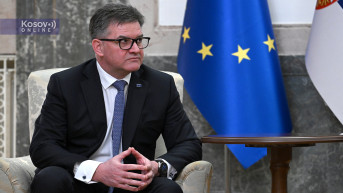
“When, after the abolition of the dinar in Kosovo, he was unable to accomplish anything, even in such a drastic situation, and when he still had the authority and full mandate for dialogue, it is unlikely that he will attempt anything now while waiting for a successor. Except to be there to 'care' and supervise.”
Prepared by: Milos Garic
The summer break for the European Union bureaucracy is coming to an end, and one of the major tasks awaiting Brussels this fall is undoubtedly related to the attempt to normalize Serbian-Albanian relations in Kosovo and Metohija and the potential dialogue between Belgrade and Pristina.
That task, during Miroslav Lajcak's four-year mandate as the EU Special Representative, has not yielded significant results, and despite his new position as the EU ambassador to Switzerland, the Slovak diplomat will, for the next few months while waiting for the relevant EU services to choose his successor for the Kosovo issue, continue to act as the person who 'cares' about it.
Given the number of unresolved problems from the previous period and the well-known inertia of European institutions regarding the situation in Kosovo, as well as the overall tensions caused by Pristina's policies, Lajcak's forced continuation in his previous role does not inspire much optimism.
The EU Council, at a meeting of member state ambassadors in early July, extended Lajcak's mandate as Special Representative until January 2025, at the request of the current High Representative for Foreign Affairs and Security Policy, Josep Borrell.
Lajcak's successor will be chosen by Borrell's successor, with Estonia's Prime Minister Kaja Kallas proposed for that position. However, the new European Commission officials can only take office by late autumn.
“Kallas, at best, will be able to start working in her new role from November 1. It will then take at least a few weeks for her to decide whom she wants to appoint as the special envoy for the Kosovo-Serbia dialogue,” sources from Brussels have reported.
First the New Commissioners, Then the Rest
Lajcak and Borrell, it should be reminded, attempted to organize a high-level meeting between Serbian President Aleksandar Vucic and Kosovo Prime Minister Albin Kurti at the end of June, but these efforts were unsuccessful due to Kurti's conditions. This was probably the last attempt on this issue for the outgoing EU foreign policy chief, Josep Borrell.
Meanwhile, new threatening tensions have emerged in Kosovo, including the unexplained arrests of Serbs, the closure of postal facilities in the north, and the insistence on opening the main bridge over the Ibar River for motor traffic.
This raises the question of whether Lajcak, in the extended time as the EU mediator for dialogue, can do anything more.
Political scientist Ognjen Gogic agrees that the delay in appointing a new mediator for the dialogue is not due to any particular reason but is simply a matter of waiting for the formation of the new European Commission to take office.
"They are waiting for the new European commissioners to take their positions, especially the new High Representative for Foreign Affairs and Security Policy, Kaja Kallas. Only then will a new mediator for the dialogue be appointed. This was also the case with Lajcak when he was chosen in 2020 after Borrell's election. The same is happening now. First, the new commissioners will be appointed, and then everything else," Gogic explains for Kontekst.
Only then, he says, will they consider what to do next with the dialogue.
"Of course, they could have decided to leave the position of mediator for the dialogue vacant, but they didn't do that; they temporarily retained Lajcak. This could be indicative for us, as it clearly suggests that they consider the situation urgent and that there is a need for someone to still oversee it. This shows that there is some level of concern," Gogic believes.
So, Lajcak's Role This Fall Will Not Be to Do Anything New, but to Monitor the Situation and Be Present.
"Nothing new is expected from Miroslav Lajcak until the end of the year and the selection of his successor. If he could have done something, he would have done it in the previous three and a half years, not now during this stoppage time when he is only there technically. His last attempt, which ended in failure, was during the crisis with the abolition of the dinar in Kosovo. In that process, he was unable to make any positive contribution. There were several meetings, and in the end, he simply concluded that there was no solution, no will, and that they should call him if something changes. If he couldn't achieve anything in such a drastic situation, and when he still had authority and a full mandate, he certainly won't be able to do anything now, and probably won't even try. He will only react in a crisis management role if new crises emerge. Perhaps during the fall, he might call a meeting about the Ibar bridge. So, he will only technically fill the vacuum that has arisen due to the changes in the EU administration after the elections," Gogic concludes.
No Real Solution
However, political analyst Blerim Burjani from Pristina believes that Miroslav Lajcak can still lead the dialogue during this extended mandate.
"He is still responsible for making his contribution until he is replaced by someone else. Lajcak's mandate is not yet over, but Brussels must, in any case, find another person to take responsibility for the dialogue as soon as possible," Burjani emphasized for Kontekst.
At the same time, he stresses that the dialogue needs to be concluded as soon as possible.
"I don't see why it is still ongoing. I think it would be better if Kosovo and Serbia finally reach a definitive agreement that normalizes relations, as it no longer makes sense to continue like this. An endless dialogue means that Brussels and others have not achieved the results they should have. The parties should be held accountable for why they won't have a definitive agreement. That’s why I think a final agreement in the dialogue should be reached by the end of this year," Burjani points out.
Journalist Lazar Stevic from North Mitrovica estimates for Kontekst that the EU retained Miroslav Lajcak in the role of representative for the dialogue until the end of the year primarily because of the complicated situation in northern Kosovo.
"He is familiar with all the issues, and Brussels did not have an almost ready solution at this moment, a person who could immediately take over that job. It was assessed that any other person would need time to familiarize themselves with the issues. Lajcak recently made some attempts to resolve disputes over the abolition of the dinar and postal branches, but it was not possible to achieve anything because the Albanian side did not want to agree. That’s why I think he won’t be able to do anything until the end of the year. Pristina does not want to respect any of the agreements, and no progress can be expected. It’s time for someone new who can make progress. Someone with more strength and will, above all. To start by persuading Pristina to submit the draft statute of the Association of Serbian Municipalities to the Constitutional Court for review. Then we can see what else can be achieved," Stevic concludes.
comments