
Kostic: Shift to qualified majority voting would also affect EU enlargement process
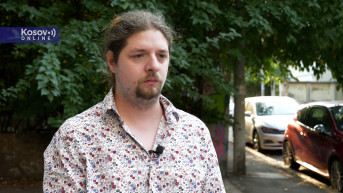
A shift from consensus-based decision-making to qualified majority voting could benefit Serbia’s European integration by facilitating the opening of clusters. On the other hand, when it comes to decisions concerning Kosovo, that qualified majority would consistently favor countries that support Pristina, Mijat Kostic of the New Third Way organization said.
Kostic assessed that the biggest problem with the existing voting system was that a single country could block key decisions, as demonstrated by decisions concerning sanctions against Russia or the provision of military assistance to Ukraine.
“One mechanism that already exists under the current system is the so-called passerelle clause. If the member states unanimously agree, they can decide to move from consensus to qualified majority voting. In that situation, voting would be based on a double majority, meaning that 55 percent of the member states, representing 60 percent of the EU population, would be required to adopt a proposal,” Kostic told Kosovo Online.
The problem, however, is that the transition to qualified majority decision-making must itself be approved unanimously, meaning that a member state that has blocked a particular decision can also block the decision to introduce a new voting system.
The proposed reform, he explained, would specifically seek to prevent constant blockages and situations in which a country obstructs a decision because of interests that are not directly related to the substance of that decision. As an example, he cited Hungary, which, he said, had blocked assistance to Kyiv because of its own bilateral issues with Ukraine and sanctions imposed on certain Hungarian companies in Ukraine.
“To prevent that, a shift to qualified majority voting would probably reduce the leverage individual states have to hold up decisions and would enable decisions concerning humanitarian assistance, military assistance and foreign policy in general to be adopted without any single state being able to block them. There are various proposals in this regard. Apart from qualified majority voting, there is also the concept of abstention—a state could abstain without that constituting a veto. It would simply not have voted in favor of a decision and would not necessarily have to comply with it. All these proposals form part of the broader discussion about centralized decision-making and politically limiting the ability of individual countries to hold the process hostage, centralizing political decision-making and making it easier for the EU to act as a political whole rather than as a collection of confederal states,” Kostic explained.
Asked whether this method of decision-making could also apply to enlargement-related decisions and the opening of negotiating chapters, Kostic said that this was certainly one of the issues under consideration.
“Cluster 3 has not been opened because certain countries voted against it for different reasons. The Baltic countries did so because they believed Serbia had not aligned itself with the European Union’s Common Foreign and Security Policy, while Croatia did so because of its border dispute with Serbia. We can see that, in such a situation, even if certain reforms have been achieved, a single country has the right to veto and prevent the opening of a cluster. If the system shifted to qualified majority voting, one small country would no longer be able to block a decision or exercise a veto. Essentially, under such a voting system, particularly for the opening of chapters and enlargement, blocking a decision would require at least four states representing more than 35 percent of the EU population. That would make it considerably more difficult to block any decision and would, of course, prevent a situation in which one country obstructs the entire decision-making process because of its own individual interests,” Kostic said.
On the other hand, he warned that such a solution would also entail risks, particularly regarding Kosovo’s European integration.
“In that situation, if countries with greater demographic and political weight were voting—for example France and Germany, which recognize Kosovo—it would become easier to adopt decisions concerning Kosovo and its potential accession as an independent country from the European Union’s perspective. Such decisions could no longer be blocked so easily because the qualified majority would probably consistently favor the countries that support Kosovo,” Kostic pointed out.
He therefore concluded that, for decisions aligned with Serbia’s national interests, such as accession to the European Union, a transition to qualified majority voting would be more favorable and would facilitate Serbia’s EU integration. However, when it came to Kosovo and other issues of national interest where the outcome might not favor Serbia, it could create additional problems.
“Qualified majority voting would mean that countries which have so far protected Serbian interests by not recognizing Kosovo could be outvoted and would no longer have the right to exercise a veto. The situation is therefore not that simple, which is precisely why there is considerable debate over the reforms themselves—whether they are necessary and what consequences they would produce,” Kostic said.



comments