
Qualified majority instead of consensus in the EU—a double-edged sword?
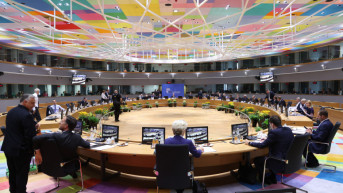
Every European Union member state can block a decision supported by all the others. That mechanism, which for decades has been at the very heart of European decision-making, could now be changed, as 11 EU member states have called for consideration of a shift from unanimity to qualified majority voting. Kosovo Online’s interlocutors assess that such a measure could benefit Serbia by accelerating its European integration and making it easier to open clusters without individual blockages, but could, on the other hand, weaken the protection Belgrade currently receives from the five EU member states that do not recognize Kosovo.
Written by: Katarina Saicic
The initiative comes at a time when divisions among member states have repeatedly hampered joint EU action, particularly regarding the war in Ukraine, sanctions and other foreign policy issues. The signatories are Austria, Belgium, Denmark, Finland, France, Germany, Luxembourg, the Netherlands, Romania, Spain and Sweden.
For the countries behind the initiative, consensus remains an important principle, but, as they argue, it should not be turned into an instrument allowing one or a handful of states to block a common decision of the entire Union.
Qualified majority voting in the Council of the EU generally requires the support of at least 55 percent of member states—currently 15 out of 27—representing at least 65 percent of the EU population.
No deadline for a vote
For now, however, no decision has been made to abolish the veto. This is a political initiative and a call to explore ways of making decision-making more efficient. Changing the voting rules would be a considerably more complex process than the declaration by the 11 states itself and would raise one of the most sensitive questions of European integration: how much national sovereignty member states wish to retain in the area of the Common Foreign and Security Policy.
There is no immediate deadline, nor is there currently a formal decision on the agenda for a vote.
The Lisbon Treaty already provides for so-called passerelle clauses, under which unanimity can be replaced by qualified majority voting in certain areas without formally amending the treaties. However, activating such mechanisms is itself subject to demanding political conditions—in some cases requiring the unanimous consent of the member states.
Initiative launched by some of the most influential countries
Researcher at the Institute of European Studies in Belgrade Petar Curcic believes it is uncertain whether the EU will succeed in reforming its decision-making system, as smaller countries see their power precisely in their ability to block initiatives they oppose with a single vote.
“The initiative came from some of the largest and most influential countries, and their influence is certainly sufficient to make a substantial contribution to policy change. However, there are smaller European countries that see their power precisely in this ability to block initiatives with a single vote and thereby increase their own foreign-policy leverage. We have seen the phenomenon of Viktor Orban, who has used this very frequently,” Curcic told Kosovo Online.
He said there were two reasons behind the initiative by 11 EU member states to allow qualified majority voting instead of consensus on certain issues: EU defense and rearmament and sanctions against Russia on the one hand, and European integration on the other.
“Bulgaria has been blocking North Macedonia for years, and that is why I do not believe Bulgaria would relinquish that right so easily. It will always use it to influence other member states. In that sense, there are two reasons why this initiative was launched. However, we must bear in mind that changes are unlikely in the short term. All countries must agree, and that requires a certain procedure. Ultimately, simple majority voting has been introduced in some areas, and the European Union is gradually adopting such practices, with other members accepting them or not. The initiative also includes something known as constructive abstention. That is one of the measures proposed. But in practice, we will have to see whether such changes actually occur. The EU has 27 member states; it is a large mechanism. It takes time for all of them to align their positions,” Curcic explained.
Asked whether the new decision-making method could apply to enlargement or the opening of clusters, he replied that this was precisely one of the reasons the initiative had been launched. However, he added that Serbia’s Cluster 3 remained unopened for other reasons, with Baltic and Scandinavian countries blocking it over the Russia issue, while Croatia, Bulgaria, the Netherlands and Belgium had objections of their own.
“Ultimately, I do not think they will change the fundamental principle that EU membership itself will not be decided by a simple majority, but will require consensus among all member states. It seems unrealistic to expect these changes to be introduced quickly, particularly simple majority voting on negotiations and enlargement, because this is an area in which all member states have coordinated their positions for decades. It is unrealistic to expect a simple-majority principle to be introduced for enlargement. Perhaps they will introduce it for certain other foreign-policy issues,” Curcic said.
Asked whether the new decision-making principle could pose a risk regarding Kosovo’s European integration, given that five EU member states do not recognize Kosovo’s independence, Curcic assessed that the Kosovo issue would remain within its current framework.
“The European Union cannot fundamentally change its positions. Most EU member states recognize Kosovo’s independence, while on the other hand there are five that consistently do not. I think the Kosovo issue will therefore remain within the current framework, in which Europe will essentially continue its negotiating policy and act as a mediator in the lengthy talks between Belgrade and Pristina,” Curcic concluded.
Disagreements among member states
Introducing qualified majority voting on matters relating to the EU’s Common Foreign and Security Policy could significantly limit the ability of individual member states to block common EU decisions, former diplomat Albert Prenkaj told Kosovo Online. However, he noted that disagreements could also arise among the countries proposing the change, particularly when it comes to opening clusters in the accession process.
Prenkaj pointed out that key EU decisions have traditionally been taken by consensus, recalling that former Hungarian Prime Minister Viktor Orban had blocked a EUR 90 billion loan for Ukraine, thereby halting important assistance to the country.
He noted that High Representative for Foreign Affairs and Security Policy Kaja Kallas was already facing disagreements with larger member states over reform of both EU foreign and defense policy, and that on several occasions individual member states and senior officials in Brussels had disagreed with Kallas’s public positions.
“Countries of Central and Northern Europe—France, Germany, the Netherlands, Belgium and Austria, as well as the Scandinavian countries Denmark, Sweden and Finland, together with Spain and Romania—put forward five proposals for decision-making reform in their letter. Among other things, they advocate replacing the ability to block decisions through a veto with the principle of ‘constructive abstention,’ as well as applying the so-called passerelle clause, which enables the European Union to change its decision-making method without formally amending the founding treaties,” Prenkaj explained.
This could, among other things, enable qualified majority voting to be used in certain areas of foreign and security policy.
“Qualified majority voting is already used in a large number of EU decision-making areas, and the Lisbon Treaty further expanded its application, particularly in justice and home affairs and in certain aspects of economic governance and policy coordination. However, in sensitive areas such as taxation, amendments to the founding treaties and key decisions under the Common Foreign and Security Policy, consensus remains the fundamental principle of decision-making. Although there is currently discussion of a possible shift to qualified majority voting within the CFSP through the passerelle clause, such a change has not yet been established as a general rule,” Prenkaj said.
He added that this could also relate to preventing “unrelated issues” from being linked to the matter under consideration, as well as to compliance with the principle of “sincere cooperation” among EU member states.
“This could be particularly significant in the context of potentially opening new clusters in accession negotiations with candidate countries such as Montenegro, Albania, Serbia and other Western Balkan countries,” Prenkaj noted.
Regarding Kosovo, Prenkaj recalled that Pristina was still waiting for the European Commission to conduct a comprehensive assessment within the European integration process.
Revision of the Lisbon Treaty
If the European Union adopts the principle of qualified majority rather than consensus-based decision-making, it would amount to a revision of the Lisbon Treaty and, consequently, a revision of the EU itself, career diplomat Zoran Milivojevic said.
“If this is adopted, it means revising the Lisbon Treaty, revising the European Union’s constitution, because it calls into question the equality of the member states”, Milivojevic told Kosovo Online.
He explained that the initiative to introduce qualified majority voting instead of consensus on certain issues reflected the current situation—the dominance of geopolitical interests over what the EU had previously represented, as well as the problems the Union was encountering with enlargement.
“It faces two problems. One is functioning, the other is decision-making. With geopolitics now dominant, both problems have shown themselves capable of undermining the prevailing policy, particularly regarding Ukraine. The Hungarian case is well known, but it is not the only one. Because of the dominance of geopolitics, the EU is simply neglecting its internal reform processes, and this is an attempt to introduce a forced solution that would enable functioning and decision-making in the service of the geopolitical considerations that now dominate,” Milivojevic said.
However, he believes this would create problems because it remains uncertain whether other countries would accept it, given that it calls into question equality and the fundamental principles on which the European Union rests—equality and unanimity on key matters such as the budget, enlargement policy and the admission of new members.
He said that, if such a change were eventually extended to enlargement policy, Montenegro would provide the clearest test.
“We saw what happened with Iceland. Iceland has already decided by referendum to remain sovereign and not take that risk. Such a change would mean revising enlargement policy because accession under those conditions would not constitute full membership but reduced membership, subject to what is now dominant—geopolitical interests—with future enlargement becoming phased, deferred, without voting rights and so on,” Milivojevic assessed.
He therefore described it as a dual challenge—for both the Union and candidate countries.
“For the EU, the question is what enlargement policy would then mean and how far it would depart from its fundamental principles and positions, because the Lisbon Treaty envisages accession with full membership. Would the EU also be embarking on a revision of its basic documents? Second, there are challenges for the candidate country—whether it agrees from the outset to relinquish equality. Whether that concerns voting rights or something else, it is nevertheless a question of equality. In Serbia’s case, this remains a long way off because political rather than substantive conditions are being applied to Serbia. We are therefore in that situation, and the political conditions being imposed on Serbia conflict with its state and national interests. So we remain in a status quo ante, as before,” Milivojevic said.
In Serbia’s case, he added, opening clusters was not fundamentally linked to the traditional principles and procedures of accession but to political conditions.
“As things stand, Serbia has no intention of relinquishing two key elements that form part of those political conditions—Kosovo and Metohija and its refusal to impose sanctions on the Russian Federation,” Milivojevic said.
Serbia’s accession remains a distant prospect
Asked whether the measure could be risky given that five EU member states do not recognize Kosovo, Milivojevic said this would bring the matter closer to a system such as that of the Council of Europe, where decisions are taken by a two-thirds majority. He added that Serbia’s progress was conditional on Chapter 35, which, like Chapters 23 and 24, contains a suspension clause—if there is no progress in that area, there is no overall progress.
“Serbia’s accession remains a distant prospect. It is uncertain whether, under these conditions, Serbia will ever reach the point at which an accession treaty can be discussed. As things stand, I am not convinced that it will. Therefore, this is not yet applicable to Serbia. It could be applicable in a pragmatic sense in connection with the idea once put forward by Aleksandar Vucic and Edi Rama of access to the Schengen area for the free movement of goods, services, people and capital and access to the market, as a pragmatic solution that could be treated separately from the procedure for full membership,” Milivojevic said.
A shift from consensus to qualified majority voting in the European Union could benefit Serbia’s European integration and the opening of clusters, but, on the other hand, when it came to decisions concerning Kosovo, such a qualified majority would consistently favor countries supporting Pristina, Mijat Kostic of the New Third Way organization said.
Kostic assessed that the greatest problem with the current voting system was that a single country could block key decisions, as demonstrated by sanctions against Russia or the provision of military assistance to Ukraine.
“One mechanism that already exists under the current system is the so-called passerelle clause. If the countries unanimously agree, they can decide to move from consensus to qualified majority voting. In that situation, there would be a double-majority requirement—55 percent of member states representing 60 percent of the EU population would have to support a proposal,” Kostic told Kosovo Online.
The unanimity problem
The problem, however, is that the transition to qualified majority decision-making must itself be adopted unanimously, meaning that a member state blocking a particular decision can also block the decision to introduce a new voting method.
The proposed reform, Kostic explained, would seek precisely to prevent constant blockages and situations in which a country obstructs a decision because of interests unrelated to the substance of that decision. He cited Hungary as an example, saying that because of its own bilateral issues with Ukraine and sanctions imposed on certain Hungarian companies in Ukraine, it had simply blocked assistance to Kyiv.
“To prevent that, a shift to qualified majority voting would probably reduce the leverage of individual states and allow matters concerning humanitarian assistance, military assistance and foreign-policy decisions more generally to be decided in a way that prevents any single state from blocking them. There are various proposals. In addition to qualified majority voting, there is also the possibility of abstention—a state could abstain without that constituting a veto; it would simply not have voted in favor of a decision and would then not necessarily have to comply with it. All these proposals are part of a broader discussion about centralized decision-making and politically limiting the leverage of individual countries, centralizing political decision-making and making it easier for the EU to act as a political whole rather than as a collection of confederal states,” Kostic explained.
Asked whether this decision-making method could also apply to enlargement and the opening of chapters, Kostic said that this was certainly one of the issues.
“Cluster 3 has not been opened because certain countries voted against it for different reasons. The Baltic countries did so because they believed Serbia had not aligned itself with the European Union’s Common Foreign and Security Policy, while Croatia did so because of its border dispute with Serbia. We can see that, even if certain reforms have been achieved, one country has the right to veto and prevent the opening of a cluster. Under qualified majority voting, one small country would no longer be able to block a decision or exercise a veto. Essentially, under such a system, particularly for opening chapters and enlargement, blocking a decision would require at least four states representing more than 35 percent of the EU population. That makes blocking any decision considerably more difficult and prevents a single country from obstructing the entire decision-making process because of its own interests,” Kostic said.
On the other hand, he warned that such a solution would pose risks, particularly regarding Kosovo’s European integration.
“In that situation, if countries with greater demographic and political weight were voting—for example France and Germany, which recognize Kosovo—it would become easier to adopt decisions concerning Kosovo and its potential accession as an independent country from the European Union’s perspective. Such decisions could no longer be blocked so easily because the qualified majority would probably consistently favor the countries supporting Kosovo”, Kostic said.
He therefore concluded that, for decisions aligned with Serbia’s national interests, such as accession to the European Union, qualified majority voting would be more favorable and facilitate Serbia’s EU integration. However, regarding Kosovo and other matters of national interest where the outcome might not favor Serbia, it could create additional problems.
“Qualified majority voting would allow the countries that have so far protected Serbian interests by not recognizing Kosovo to be outvoted, and they would no longer have the right to exercise a veto. The situation is therefore not that simple, which is precisely why there is considerable debate over the reforms themselves—whether they are necessary and what consequences they would produce,” Kostic said.
A stronger position for Kosovo, but not automatic recognition
Skopje-based analyst Petar Arsovski assessed that the initiative to introduce qualified majority voting instead of consensus for certain EU decisions was primarily focused on accelerating enlargement, but could also weaken the protection Belgrade receives from the five member states that do not recognize Kosovo, although it would not automatically resolve Kosovo’s final status.
“Some foreign-policy decisions could be taken more quickly and efficiently, but not all of them, because the initiative itself does not apply to every decision,” Arsovski told Kosovo Online.
He added that the initiative was currently focused on accelerating the enlargement process.
“That means opening clusters, opening individual chapters and removing some blockages caused by individual vetoes by member states, but it does not change the principle governing membership itself. At the end of the negotiating process, there is also the procedure for a country’s accession to the European Union, which differs among many EU member states. In some countries, even a referendum is required. So this would accelerate the intermediate stages, but it would not remove the final barrier to full membership,” Arsovski said.
Nevertheless, Arsovski believes that removing the requirement for a full veto, or complete consensus, would weaken the political protection Belgrade receives from the five countries that do not recognize Kosovo, although it would not automatically mean Kosovo’s membership or recognition.
“For example, Spain and Romania are part of the initiative, yet they do not recognize Kosovo. This means that member states draw a distinction between their political position on Kosovo and the initiative to facilitate decision-making. Yes, it would create a more favorable climate and legitimize Kosovo to a certain extent, but it would not amount to final recognition or resolution of its final status. That would still await some form of negotiations between Belgrade and Pristina,” Arsovski concluded.




0 comments