
Kovacevic: Elections in the region will not divert international community's attention from the Kosovo issue
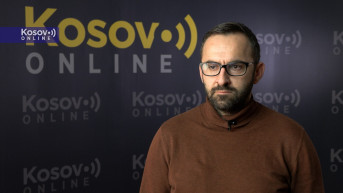
The coming year is election season in many countries in the region, from North Macedonia, through Bosnia and Herzegovina, to EU members Croatia and Romania. However, according to Despot Kovacevic, an associate professor at the Faculty of Political Sciences, this should not divert international attention from the process of normalization of relations between Belgrade and Pristina. The extent to which the Kosovo issue will be a topic in upcoming campaigns will depend on the level of the elections and the country in which they are held, but regardless of their outcome, Kovacevic does not expect significant changes in the policies of these countries.
"The international community is actively dealing with the relationship between Belgrade and Pristina, and in this regard, there should be no diverting public attention because it is still one of the key issues. For example, during the elections in Germany, it was expected that tension regarding the relationship between Belgrade and Pristina, generally the relationship towards the independence of Kosovo, would decrease and the focus would shift to Bosnia and Herzegovina. However, the acute situation in Kosovo, in various parts of Kosovo and Metohija, shows that no matter how much the international community might focus on something else, events on the ground often pull them back to deal with these issues," Kovacevic says for Kosovo Online.
Regarding how much relations between Belgrade and Pristina will be a topic in pre-election campaigns in the region, Kovacevic says it will depend on the level of the elections and the country in which they are held.
"Although local elections are held in Bosnia and Herzegovina, we are used to often treating them as if they were national parliamentary ones, and Kosovo can often be a topic. In Bosnia and Herzegovina, there is often talk in that patriotic tone about defending national interests, the Serbian people, and Serbia," Kovacevic notes.
As for North Macedonia, Kovacevic says that it might be the most interesting and specific case because these elections will revolve around the relationship between the Macedonian and Albanian people.
"In Macedonia, you have a specific situation, discussions about constitutional changes, the need for more significant agreements, and questions about the Ohrid Agreement that was reached in Macedonia and on which the state is based. So, overall relations will be very interesting. In the previous period, Albin Kurti toured Tetovo and other municipalities with a predominantly Albanian population in Macedonia, which caused a certain storm, given that there was no standard diplomatic protocol, but there was talk of the 'Greater Albania,' and flags that were controversial were raised. So, these narratives will obviously 'work' in the elections," Kovacevic says.
However, he believes that the Albanian community in Macedonia is much more integrated into processes and institutions.
"So, I think that situation is important on that national level; the national question and national identity are certainly important. Still, it seems to me that the Albanian community does not have significant problems to create substantial internal problems in Macedonia, where they have good positions in institutions and the government and are always represented," he notes.
He points out that there are also various divisions among Albanian parties, mentioning that there are those that welcomed Kurti in Macedonia and those that did not participate in that.
"It seems to me that only within the Albanian community and divisions among parties representing Albanian interests can lead to certain clashes, but I wouldn't say that it could spill over to a higher level. Kurti obviously wanted to send certain messages and talk about some national unity, namely to be probably the national leader of Albanians, but certainly, in this process, so far, and in a much more rational way, the Albanian Prime Minister Edi Rama leads. He sends messages of peace and tolerance and often tries to understand all sides in these processes. These disagreements between Kurti and Rama can go to the extreme if the situation deepens further and if there are problems like we had in the previous period," Kovacevic says.
Speaking about elections in EU countries, Kovacevic does not expect them to have the topic of Kosovo and the relations between Belgrade and Pristina. Still, he adds that in the elections for the European Parliament next June, there will likely be discussions about what has been done.
"In that regard, candidates in the EU, but also in the US, where presidential elections are coming up, addressing the public will undoubtedly seek to have as little tension as possible in all regions, including our Western Balkans region. Of course, that place is certainly Kosovo, so I believe that international actors will strive to have a peaceful situation so that nothing is problematic during election campaigns," our interlocutor notes.
Croatia will have general elections next year for the EU, the Sabor, and the presidential elections. Kovacevic believes that regardless of their outcome, there should not be any radical changes regarding Kosovo and the normalization of relations between Belgrade and Pristina. He points out that the position of Zoran Milanovic, the current Croatian president, will be interesting.
"On this strange, populist wave, he is trying to gather voters from various political parties, including the Croatian Democratic Union, and can give messages, in his style so far, that seem realpolitik and attract attention. We have seen that Mr. Milanovic has different messages toward Serbia and the Republika Srpska, which he supports significantly more. Whether it is about an agreement on the potential of some third entity or about a good personal relationship with Milorad Dodik, that needs to be left to time. What is interesting is that Mr. Milanovic will certainly mention the issue of Kosovo's independence, and, as he has already said, Serbia needs to recognize reality. When it comes to who will lead in that campaign and whether there will be a change in the narrative, it seems to me that all candidates will have the same position on the issue of Kosovo's independence, but, on the other hand, the intensity of these positions will probably be necessary to excite the electorate," Kovacevic concludes.
0 comments