
Kozarev: Focus of Skopje Summit participants will be dedicated to OSCE's future

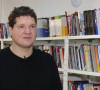
Prof. Dr. Atanas Kozarev, dean of the Faculty of Law, International Relations, and Diplomacy in Skopje, emphasizes that hosting the OSCE Summit, which marks half a century of existence and three decades of annual gatherings, is a great honor for North Macedonia and also a significant challenge for its security system.
"This event represents a major challenge for our security system, and I firmly believe that it will demonstrate a high level of professionalism in securing the summit's venues," Kozarev says, reminding that this is not the first major event entrusted to North Macedonia, as the Interpol Conference was held in Ohrid last year.
The OSCE Ministerial Council in Skopje is expected to include the participation of 70 delegations from 57 participating states and Mediterranean and Asian groups.
Prof. Dr. Kozarev emphasizes that North Macedonia is ready to handle everything smoothly.
"The atmosphere itself is very significant for our country, and I think it will make a difference to the public in terms of how ready our institutions are to organize such an event. I firmly believe that the Ministry of Internal Affairs and Minister Oliver Spasovski, as well as the Minister of Foreign Affairs, Mr. Bujar Osmani, have invested all human and logistical capacities to ensure that the event is held in the best light," Kozarev says.
Kozarev emphasizes that the main focus of the summit participants will be dedicated to the future of the OSCE.
"This is a very important issue because they need to show unity; otherwise, the integrity of this organization will be called into question. Furthermore, I believe that relations in Ukraine will be reconsidered; we will see how much attention will be given to that. It is also debatable whether Russian Foreign Minister Mr. Lavrov will attend. According to the information obtained, attention will be given to climate change, youth, and civil society. Although it is claimed that some concrete issues will be opened since some peripheral issues will be discussed alongside these key topics. Of course, this will depend on the availability of all participants. The OSCE is an organization that operates on the basis of consensus. It is not about any individual desire, nor is there a magic wand that can provide answers to many unresolved questions that exist," the dean of the Faculty of Law says, adding that there might be discussions about security challenges in the Western Balkans.
"The fact that there are so many leaders from the region speaks volumes because every issue can be put on the agenda since there is no country that does not face certain security challenges in its existence," Kozarev explains.
Earlier, the Minister of Foreign Affairs of North Macedonia, Bujar Osmani, stated that the "lights could go out" for this organization in Skopje.
Kozarev explains that to avoid this, representatives of OSCE member states must play a more significant role in the functioning of this organization.
"So, I do not expect the OSCE to end here and that this will be its last destination or that it will return to Vienna, where its headquarters are. However, I think that the leaders will overcome their narrow interests and national frameworks to show a broader global perspective because the OSCE must exist. It has a defined mission supported for years, and I think all of this will contribute to strengthening its role in the future because a crisis resolution follows every crisis. I expect that the organization itself will be even stronger than in the past," Kozarev points out.
Commenting on Malta's selection as the next host, Prof. Dr. Atanas Kozarev says that from the beginning, there was unserious speculation about choosing the future host country and that Malta was chosen by consensus.
"Of course, in an organization where decisions are made by consensus, a common solution must be reached that will not raise doubts about the credibility of this organization. Elections are approaching in Serbia, and next year in North Macedonia too, where the role of the OSCE and their observers is very significant," Kozarev emphasizes.
0 comments